


 Join on WhatsApp
  Join on Telegram
 Rabat – Thousands of locust eggs have been found in Oued El Bour, in the Chichaoua province near Marrakech. According to Moroccan newspaper Al Massae, locusts have laid their eggs across at least 60 hectares of land, alarming the National Anti-Locust Center and regional authorities.
Technical anti-locust groups have assessed the situation and are taking urgent measures to prevent a locust plague.
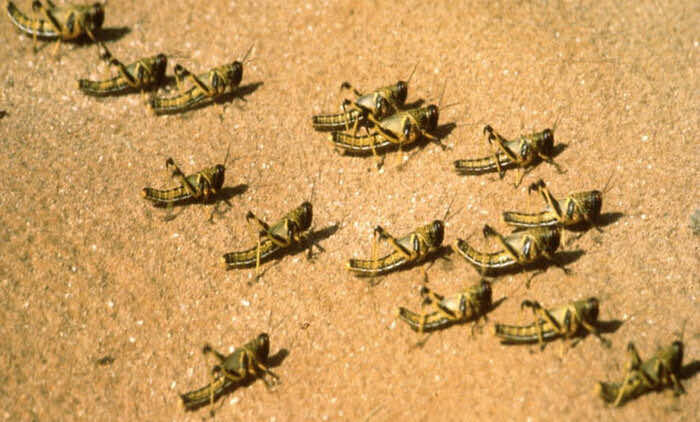
According to the National Anti-Locust Center, locusts were also identified today in the Fask region in southern Morocco near Guelmim. Both larvae (up to 100 larvae per square meter) and adult specimens (25 specimens per hectare) have been recorded.
Locusts can have a fast, ravaging effect on crops. According to the UN Food and Agriculture Organisation (FAO), a 1 square km cricket swarm can eat the same amount of food in one day as 35 000 humans. Locust swarms can quickly threaten a country’s food security and economy.
The swarms are extremely mobile and can move up to 100km a day.
Destruction of the eggs before they hatch is therefore very important.
The National Anti-Locust Centre works to prevent locust invasions in Morocco. If locusts are discovered, it responds through pesticide treatments. The organization uses vehicles and airplanes to spray pesticides over large at-risk areas.
The FAO-run website “Locust Watch” does not currently identify Morocco as being at risk of locust infestation. It notes that some breeding occurred in northwest Mauritania, but control measures were put in place in April. Breeding is also occurring in eastern Algeria, but according to Locust Watch “the situation is expected to remain calm.”


