 Join on WhatsApp
 Join on Telegram
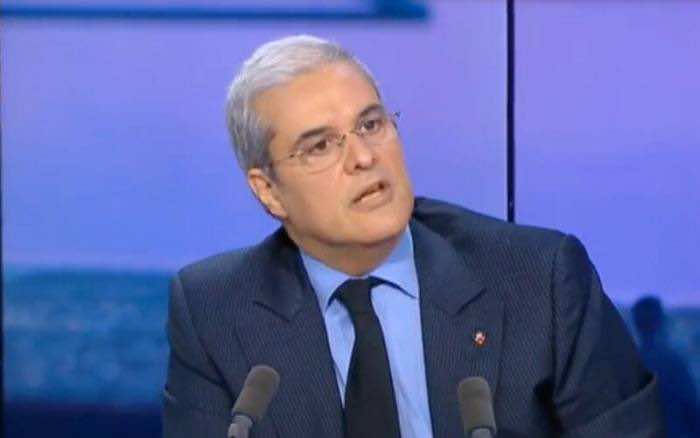
Prince Moulay Hicham, cousin to Morocco’s King Mohammed VI, has risked public backlash during the COVID-19 pandemic by penning an analysis for Belgian newspaper Le Soir de Bruxelles, seemingly designed to stir ill-feeling in his home country.
While the Moroccan government can well withstand constructive criticism and questions about its approach to the crisis, one might argue that a time of national emergency should call for solidarity and mutual support rather than a thinly veiled attack on the kingdom’s best efforts.
The prince has set tongues wagging across Europe and Morocco with his take-down of the Moroccan approach to the global COVID-19 pandemic, written from a distinctly orientalist viewpoint.
In direct contradiction of numerous newspaper reports from the French and Spanish press, praising Morocco’s swift and efficient response to the crisis, Moulay Hicham alleged Moroccan authorities are hiding a “disturbing reality” behind their preventive measures.
In early May, a group of Spanish politicians spoke out in praise of the Moroccan response to the pandemic. The president of the Foreign Affairs Committee in the Spanish Senate, Antonio Gutierrez Limones, described the Moroccan response as efficient and effective.
“Morocco has launched the largest field hospital in Africa, which was completed in two weeks, with a capacity of more than 700 beds, while more than 83 million masks have been produced to date,” he said.
The Moroccan government should be satisfied with their response and the rapid implementation of a state of emergency, Gutierrez added.
Renowned French politician Jean Luc Melenchon described Morocco’s response as inspirational. “Morocco has performed well in its plan to combat Covid-19 by commandeering its textile industry to make protective masks. France should be inspired by it,” he told the French National Assembly.
French news outlet Le Monde also spotlighted Morocco’s preventive measures and actions to limit the spread of COVID-19, citing the country’s decision to begin exporting masks as a mark of the government’s exemplary response.
“The initiative was a source of pride for Moroccans and admiration of politicians around the world,” LeMonde reported. Around 34 textile companies are now producing medical masks.
In addition to Le Monde, leading Spanish newspaper El Pais welcomed Morocco’s quick preventive measures, including the lockdown.
“The North African country did not hesitate to take bold actions to protect its 34 million inhabitants,” the news outlet explained.
Analyzing social inequality
Moulay Hicham claimed the motives behind the Moroccan government’s fast response were self-interest, and the lockdown was designed to mask holes in the health and education systems, not to protect the population.
A swift, proactive approach was the only option to safeguard the interests of the Moroccan population, both during the pandemic and in the long-term.
The prince pessimistically warned Morocco’s economy would never recover from the pandemic and the virus would kill swathes of the population.
“Without significant reduction of the social inequalities, the effective response to COVID-19 will not be enough to save the majority of the population,” he claimed.
Social inequalities and rumblings of political dissent will be the cause of death, Moulay Hicham wrote.
“We are witnessing today a new rupture, one that could unite the entire Moroccan society through shared trauma and frustration” to rise up in a second Arab Spring, Moulay Hicham explained.
Moulay Hicham’s comments on the Arab Spring are in distinctly bad taste. The uprisings across the Arab world in 2011 led to long-term turmoil in the Middle East and North Africa, with affected countries still struggling to regain stability as foreign powers vie for control.
The COVID-19 crisis has, in countries such as Libya and Yemen, heaped yet more troubles on already vulnerable and desperate populations.
A young democracy
According to the BBC, the EU viewed King Mohammed VI’s reforms as a signal to a clear move towards more democratic governance. Morocco managed to retain stability during the period of region-wide unrest. King Mohammed VI’s approach to handling the shrapnel of the Arab Spring through reforms calmed protests in Morocco.
“Moroccans have approved constitutional reforms put forward by King Mohammed VI in response to recent pro-democracy protests,” the BBC reported in 2011.
The news outlet highlighted how the reforms came after protests inspired by the “so called” Arab Spring.
Later in the analysis, Moulay Hicham warns against veering off the path towards liberalization, suggesting the pandemic offers an opportunity for a return to autocratic rule. The prince calls on Morocco to “favor common participation rather than orders from on high.”
The Moroccan democracy is relatively young, but, though times of crisis can lead to unilateral decision making for the protection of the population, the suggestion that the state of emergency may be masking totalitarian rule is not entirely logical.
Social distancing measures and lockdowns only work by consensus. If the majority of the population do not willingly adhere to the lockdown, it simply will not work, regardless of police or military intervention.
The lockdown, in fact, reflects solidarity and communal decision making in action, since the vast majority of the Moroccan population are choosing to follow the government measures.
Prioritizing a humanitarian approach
The number of COVID-19 cases in Morocco since March 2 stands at 5,711. The number, though high, is significantly lower than that of the UK, the US, and many other developed countries who have deployed billions of dollars to curb the crisis.
To date, the US has recorded 77,000 deaths despite being one of the countries with advanced health care systems.
While President Trump focuses on his reelection campaign and the US economy amid the crisis, Morocco has put the safety of its citizens first, despite the very real economic challenges. The preventive measures that Morocco has taken have enabled it to avoid 200 coronavirus-related deaths a day.
The monarch leads by example and consistently models social distancing measures, always remaining two meters away from officials during emergency meetings, and wears a face mask.
In early March, the monarch met with new government officials, retained the two meter distance and refrained from shaking hands with them. In April, he led by example by wearing a mask during a meeting with members of the government.
Meanwhile, in the UK, Prime Minister Boris Johnson proudly boasted of shaking hands with coronavirus patients while advocating social distancing measures.
The British prime minister contracted the virus and was admitted to intensive care at a London hospital.
In Morocco, the COVID-19 outbreak led to the suspension of the activities of 62% businesses. The government, however, aims to support all affected enterprises through a Special Fund.
On March 15, King Mohammed VI instructed the government to create a fund to purchase medical equipment and mitigate the fallout of the crisis . The fund, which had an initial deposit of MAD 10 billion, has reached MAD 32 billion through donations, as of April 24.
Head of Government Saad Eddine El Othmani said on May 2 the government had budgeted MAD 2 billion to buy all necessary equipment, including test kits, to contain the spread of the virus.
Big pharmaceutical companies weigh in
Morocco was also among the first countries to open up on the anti-malaria medicine chloroquine as a potential treatment for COVID-19.
The sovereign decision to deploy the medication came as Western countries continued to underline the side effects and debate possible impacts. Morocco’s leadership chose to accept the risk.
Morocco’s decision also reflects a refusal to bow to pressure from global pharmaceutical companies.
The financial interests and power dynamics of Western governments and pharmaceutical giants have arguably just as much to do with the decision not to use the chloroquine as the potential side effects. In the first nine months of 2019, September 2019 , pharmaceutical companies spent $129 million on lobbying in Washington
Throughout his tenure as president, Trump has repeatedly vowed to lower drug prices in the US and failed to do so. Meanwhile, industry insiders take more and more of the key seats within the administration.
Read Also: Pan-African Parliament Welcomes King Mohammed VI’s COVID-19 Initiative
The Moroccan government has launched over 400 initiatives as part of its nation-wide efforts to protect the population amid the crisis.
The government implemented a state of emergency just 18 days after Morocco reported its first COVID-19 case on March 2. The country has been on lockdown since March 20.
Morocco continues to monitor the global situation and recommendations from the World Health Organization (WHO). The international body acknowledged Morocco’s efforts and its capability to defeat and manage the pandemic.
The government made the wearing of masks mandatory on April 7. Health professionals praised the move, saying the decision helped the country to contain the spread of the virus.
Despite a rocky start, Morocco now produces more than 7 million masks per day and has started exporting the materials to hard hit countries in Europe such as Spain and France.
Unhelpful comparisons
Moulay Hicham’s analysis of the Moroccan response and the state of Moroccan society draws from a Western model of governance and culture.
Morocco’s leadership consciously charts its own path in terms of development models and governance, understanding that comparisons to Western societal and political models are not always relevant within the historical, cultural, and political context of Morocco.
The kingdom’s independence remains relatively recent, and so the development model is still under construction.
Morocco’s response to the pandemic came with a thorough understanding of the pitfalls within its societal structure and the infrastructure of its institutions. Though it may have fallen short, it should remain a source of pride for the Moroccan people.
Considering the actions of the Moroccan government under the leadership of King Mohammed VI, Prince Moulay Hicham’s analysis of the Moroccan response and the crisis in the country raises a number of questions about both timing and motivation.
While one could dismiss Moulay Hicham’s article as a well-meaning but poorly timed analysis of Morocco’s societal spectrum, it is, in reality, something much more malign. His observations are carefully timed, and the article is a calculated stab at a government in a still-developing democracy doing its utmost to protect its people in a time of global crisis.
The thinly veiled ill-will in the article is clear, and the prince’s argument does not require closer examination. The motives behind his foray into the world of journalism, however, do.