 Join on WhatsApp
 Join on Telegram
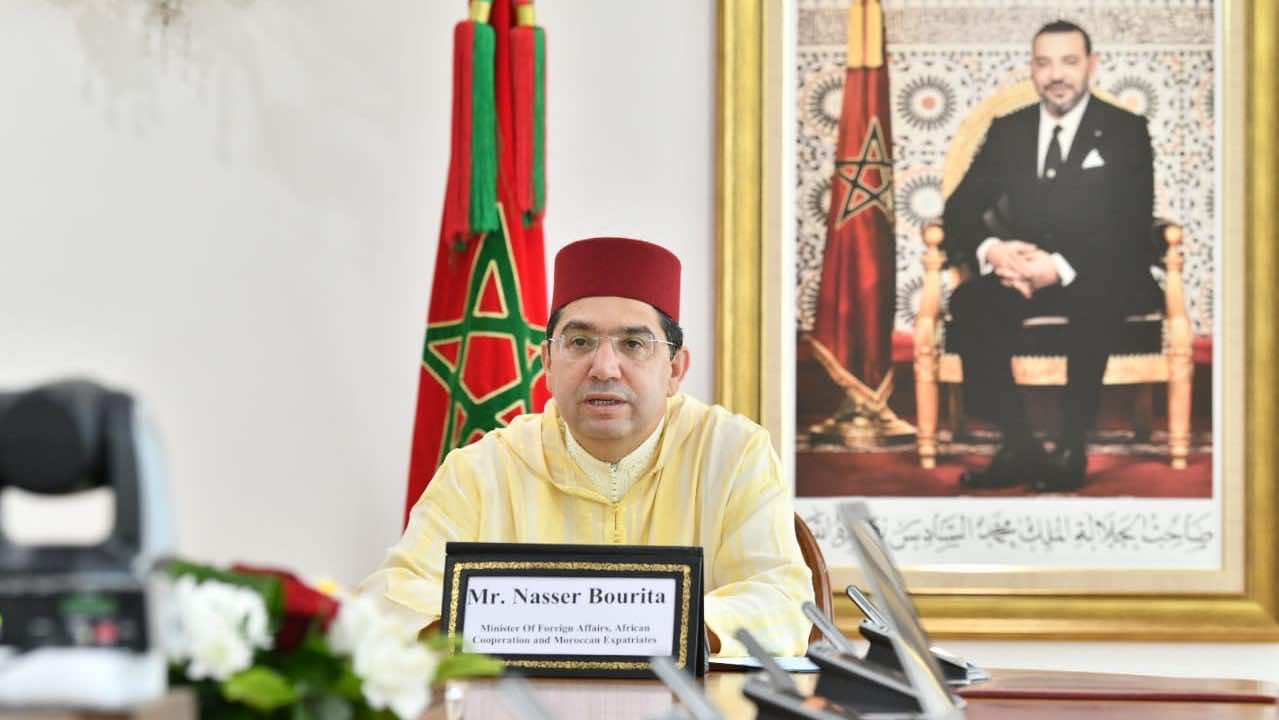
Rabat – During Morocco’s first participation in a meeting of the American Israel Public Affairs Committee (AIPAC), Nasser Bourita, the Moroccan minister of Foreign Affairs and African Cooperation, spoke with the AIPAC’s President, Betsy Berns Korn, on a number of points of shared interest to Morocco, Israel, and the US.
At the center of the high-level discussion between Korn and Bourita were the tripartite agreement of cooperation between the three countries, Morocco’s historical ties with Israel, recent developments in Western Sahara, as well as Morocco’s leadership role and growing assertiveness in the MENA region.
Morocco’s historical ties with the Jewish community
On Morocco’s history of openness and cultural diversity, Bourita said that the Jewish-Moroccan community has lived in peace and prosperity in Morocco. What is more, he argued, Morocco has always considered its Jewish citizens as a foundational element of the Moroccan identity.
“They have enriched the Moroccan identity and that is why our constitution is the only one in the Arab and Islamic world that mentions the Jewish as an important component of the Moroccan identity,” Bourita explained.
Many of the Jewish community were forced to flee Andalusia in the 15th century, ending up mainly in Morocco. In the 1940s, again, Morocco protected the Jewish community against the Nazis under the instruction of the late King Mohammed V.
As well as speaking about King Mohammed VI’s initiatives for the preservation of Morocco’s Jewish heritage, Bourita stressed King Mohammed VI’s commitment to protecting Morocco’s rapport with its Jewish community.
In recent weeks, the Moroccan King ordered the restoration and renovation of 170 cemeteries and holy sites in Morocco, in addition to 20 synagogues. In fact, Morocco has initiated many projects to restore, rehabilitate, and preserve Jewish cultural heritage, highlighting the country’s attachment to its Jewish diaspora.
Bourita also mentioned the introduction of the Jewish culture in the Moroccan national curriculum.
Moroccan-Israeli ties
To a certain extent, Bourita suggested, Morocco’s resumption of diplomatic relation with Israel was informed by the North African country’s relation with the Jewish-Moroccan community that has long lived in peace with their Muslim Moroccan fellow citizens.
Speaking about Morocco normalizing ties with Israel, he explained that the people-to-people relations and connections were maintained unlike the diplomatic relations between the two countries, which experienced a rift for some years.
Bourita also said that Morocco’s decision to normalize relations with Israel was out of conviction, given the historic ties between the two countries and Morocco’s advocacy for regional peace, including in the Israel-Palestine question.
As part of implementing the tripartite agreement between Morocco, the US, and Israel, many liaison offices have opened in Rabat and Tel Aviv. In addition, there has been the establishment of eight Morocco-Israel working groups to discuss diplomacy, security, water, agriculture, and tourism, stated Bourita.
Bourita expressed Morocco’s eagerness to further develop the bilateral cooperation for the benefit of the Moroccan and Jewish people by organizing working visits to both countries.
After normalizing ties on December 10, Morocco and Israel have worked on promoting relations through establishing cooperation and opening a direct air route linking Tel Aviv to Rabat.
Morocco-Iran tensions
On May 1, 2018, Morocco cut diplomatic relations with Iran after discovering links between the separatist Polisario Front and Iran-backed Hezbollah. But Iran denied the existence of such links, unconvincingly shrugging off the satellite footage and photographs Morocco provided as proof of Hezbollah-Polisario collision.
For Morocco, Iran’s denial of Rabat’s “incontrovertible proof” was an indication of Tehran’s expansionist intentions in North Africa. By providing support to the Polisario Front through Hezbollah, Rabat interpreted, Iran is actively seeking to expand its regional influence far beyond its traditional strategic backyard in the Levant.
“Iran is acting through proxies to destabilized North African and West Africa. It has been threatening Morocco’s territorial integrity and its security by supporting Polisario and providing it with arms, and conducting military training sessions to attack Morocco,” Bourita said at the AIPAC meeting.
“Iran is spreading its activities in West Africa through Hezbollah.”
Bourita added that Morocco is acting with vigilance to counter Iran’s hostile intentions to undermine the country’s stability and sovereignty.
As the Sahara issue is crucial for Morocco’s stability and territorial integrity, many countries use the Western Sahara file in an attempt to destabilize Morocco, explained Bourita.
Leadership role among Arab leaders
Morocco had a leadership role among Arab states in normalizing ties and promoting peace with Israel and is against countries opposing the existence of Israel, said Bourita.
The Moroccan foreign affairs minister emphasized that the north African country has long advocated for peace with Israel, in particular during the reign of the late King Hassan II.
In reference to the Arab Summit that was held in Fez in 1981, Bourita recalled that Hassan II made it clear that normalizing ties with Israel could be a tool for peace but this can only happen with the engagement of all parties, including Israel.
Such efforts, Bourita explained, are aimed at promoting genuine peace that would preserve the security of Israel and its people and also grant the Palestinians their fundamental rights.
Bourita concluded his remarks by expressing Morocco’s readiness to build on King Hassan II’s endeavors by persuading other Arab countries to engage in the positive regional dynamic to promote peace and talks between Israelis and Palestinians.
He recalled King Mohammed VI’s special attention drawn to the status of Jerusalem as the land of coexistence of the three monotheistic religions and to promote tolerance and empathy.