Rabat – Morocco is expected to have the third lowest green hydrogen production cost in 2050 ranging between roughly $0.7/ kgH2 and $1.4/kgH2, the International and Renewable Energy Agency (IRENA) said in its latest report.
IRENA recently shared forecasts for energy production costs in the third part of its latest report titled: “Global Hydrogen Trade to Meet the 1.5°C Climate Goals.”
The study found that China’s “high-quality solar resources” can provide the Asian powerhouse with the world’s lowest production cost for green hydrogen in 2050, ranging between $0.65/kgH2 and roughly $1.2/kgH2.
Chile comes second in the ranking ahead of Morocco, Columbia, Australia, Mexico, Oceania, and India. The United States placed 9th with a minimum cost of $0.78/kgH2.
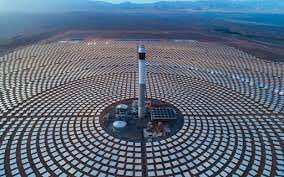
Morocco’s installed renewable energy capacity and its plans to increase its share in the energy mix to up to 80% in 2050 as well as cut greenhouse gas emissions by 45.5% in 2030 reflect the country’s ambition to accelerate the green energy transition and obtain net-zero by 2050 – the internationally agreed upon deadline.
Morocco also adopted last year a green hydrogen roadmap to accelerate the national transition to green hydrogen with the support of partners within and beyond the newly-created African Green Alliance such as UNIDO.
However, the high cost of electrolysis technology – used to create green hydrogen from water with renewable energy – remains a major burden for the adoption of the relatively new technology.
Read Also: UNIDO, OCP Group Keen To Partner in Capacity-Building, Green Hydrogen
As Morocco is faced with water scarcity, IRENA expects the country to lose 63% of its hydrogen potential in the next three decades, which represents an additional challenge to the North African country. Yet, desalination can provide a solution to the problem.
“In water-scarce regions, desalination could be used,” IRENA said. “Even in regions far from the coastline, water transport could be considered, which will increase the cost of water supply, but it will still represent a relatively small share of the total hydrogen production cost.”
Well aware of its water scarcity challenges, Morocco has recently invested in desalination plants in Dakhla, Laayoune, and Casablanca to address water stress and demand for drinking water.
However, the technology raises concerns about its energy and environmental bills, including the impact of salty wastewater on marine life and the need for green energy to support the operations.
By benefitting from the global trend in favor of green hydrogen, Morocco can use the new technology along with its renewable energy assets to meet local and regional energy demands in transportation and heavy industries as well as export to Europe.
But some experts warn of an increased focus on export at the expense of local demand, saying that this will lead to increasing demand for coal electricity in the national market.