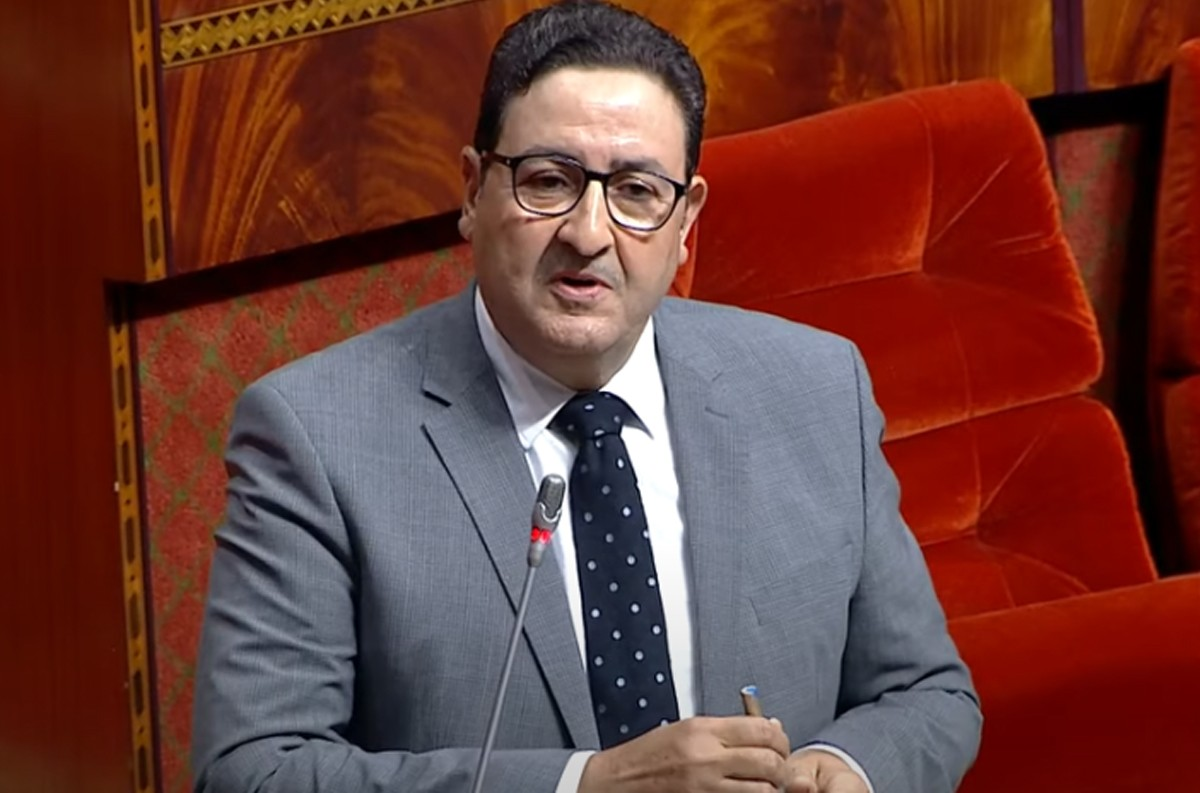
Morocco is entering a decisive stage in its development journey as it prepares for major international milestones, including the 2030 FIFA World Cup, said Transport and Logistics Minister Abdessamad Kayouh on Wednesday.
Speaking at the opening of the international seminar “Accessibility and Mobility in Urban and Peri-Urban Areas: Challenges and Opportunities for the Cities of Tomorrow,” Kayouh said Morocco has undergone deep transformations in transport and mobility, particularly in intercity connectivity and the movement of people and goods.
He noted that these changes are part of a comprehensive national vision to build a modern, sustainable, and integrated transport system that supports economic and social development.
For him, Morocco – guided by King Mohammed VI’s strategic leadership – is pursuing a transformation of its development model toward greater territorial integration, environmental sustainability, and policy efficiency, with transport serving as a key driver.
Kayouh cited major rail projects such as the high-speed train network, including the recently launched Kenitra-Marrakech axis spanning 430 km, which strengthens the link between Morocco’s north, center, and south. He also pointed to the Casablanca Regional Express Network (RER) project as an innovative solution for urban and suburban mobility.
The minister further outlined Morocco’s rapidly expanding air transport sector, which aims to boost airport capacity to 80 million passengers a year by 2030, positioning Casablanca’s Mohammed V Airport as a major hub connecting Africa to the world.
The plan also includes expanding Royal Air Maroc’s fleet to enhance domestic connectivity and regional competitiveness.
On urban freight transport, Kayouh spotlighted the creation of logistics zones on city outskirts – such as the 32-hectare Ras El Ma zone in Fes – to streamline goods distribution, ease city-center congestion, and improve flow to markets and shopping areas.
He also announced that the ministry is finalizing a National Charter for Sustainable and Inclusive Mobility by 2035, which will serve as a reference framework to align the efforts of all stakeholders.
According to Kayouh, Morocco is determined to prove its capacity to build an integrated, safe, and inclusive mobility system, ready to meet the logistical and infrastructural demands of hosting the 2030 World Cup.
The three-day seminar, organized by the Moroccan Permanent Association of Road Congresses (AMPCR) in partnership with the World Road Association (PIARC) and the Private University of Fes (UPF), brings together national and international experts to explore innovative solutions in transport planning, safety, and resilience, while addressing social equity, inclusion, and sustainability.
MWN with MAP