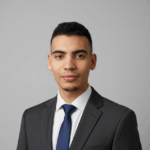

Benguerir – For decades, Morocco’s education reforms suffered from a recurring flaw. Each new minister brought a new strategy, discarding the work of their predecessor and restarting from scratch. Ali Bouabid, Director of the Institute of Education Sciences at Mohammed VI Polytechnic University (UM6P), told Morocco World News (MWN) that the Roadmap 2022-26 has broken that cycle.
“The main issue in previous reforms is that there was no continuity from one minister to another, from one government to another,” Bouabid told MWN at UM6P’s 6th Science Week. What distinguishes the current reform, he argued, is that when former Education Minister Chakib Benmoussa left the department, his successor Mohamed Saad Berrada retained both the strategy and the team behind it.
View this post on Instagram
Generalization in preschool education has reached 80%, with more than 985,000 children now benefiting from the program.
That institutional memory matters. The Pioneer (Riyada) Schools program, launched in 2023-24, now covers half of all primary schools and was extended to 232 lower secondary schools in 2024-25, expanding to 500 schools in 2025-26. Designed for primary education, it is set to expand to cover 80% of primary schools starting in the 2026-27 school year.
The number of primary Pioneering Schools has risen to 4,626 for the current school year, benefiting nearly 2 million students – 56% of the total primary-level population. In the Collèges Pionniers, dropout rates fell from 8.4% to 4.45%.
Bouabid pointed to these models as early proof of progress, describing them as instruments “helping Moroccan public schools to upgrade their potential and also to help kids to better learn the fundamentals.” That last point about foundational learning was the core problem diagnosed when the roadmap was drawn up in 2022.
World Bank data showed that 64% of Moroccan children aged 10 could not read and comprehend a simple text. By 2019, nearly 70% of pupils had not mastered basic skills by the end of primary school, a figure that climbed to 90% by the end of lower secondary.
Project-based courses
The Roadmap 22-26 responded with a structured pedagogical overhaul anchored in the Teaching at the Right Level (TARL) method and explicit instruction, grouping students by actual competency rather than grade level.
Bouabid’s remarks came during UM6P’s 6th Science Week, a gathering of over 100 international scientists and experts running from March 30 through April 5 under the theme “Convergence(s).” The week-long program explores how scientific disciplines are increasingly merging at their boundaries, a framework that Bouabid connected directly to the future of Moroccan classrooms.
He made the case for STEM education – the integration of science, technology, engineering, and mathematics – as a natural next step once students master the basics. “These disciplines are not in silos,” he told MWN. “Mathematics is used in science or engineering to solve problems. It is not a discipline that we just learn because we need to learn mathematics.”
By embedding math and science into project-based courses, Bouabid contended, students begin to see the practical connections between subjects rather than treating each one as an isolated exercise. He cited the United States and Canada as models where this integrated approach has delivered measurable results, and expressed hope that Morocco would adopt similar frameworks in its public schools.
Localized teaching
Research on Moroccan teaching practices has found that while STEM-based instruction can positively affect student achievement in mathematics, the country’s education system has largely maintained a traditional knowledge-transmission approach that does not promote skill development. Bouabid’s call for integration aligns with a growing body of evidence suggesting that the shift is overdue.
Asked whether Morocco risks merely importing foreign pedagogical models without adapting them, Bouabid offered a nuanced response. Teaching methods such as problem-based and project-based learning, he maintained, are universal. What must change is the content.
“Teachers need to use examples of problems that their students will try to solve in different regions of Morocco, based on the reality of these regions,” he told MWN. That localization, he added, helps students grasp the importance of what they are learning and apply it to challenges they observe in their own communities.
The task ahead, he concluded, is to develop regionally grounded case studies and classroom activities, and to equip teachers with the tools to create them – linking knowledge not to abstract theory, but to the world outside the classroom door.