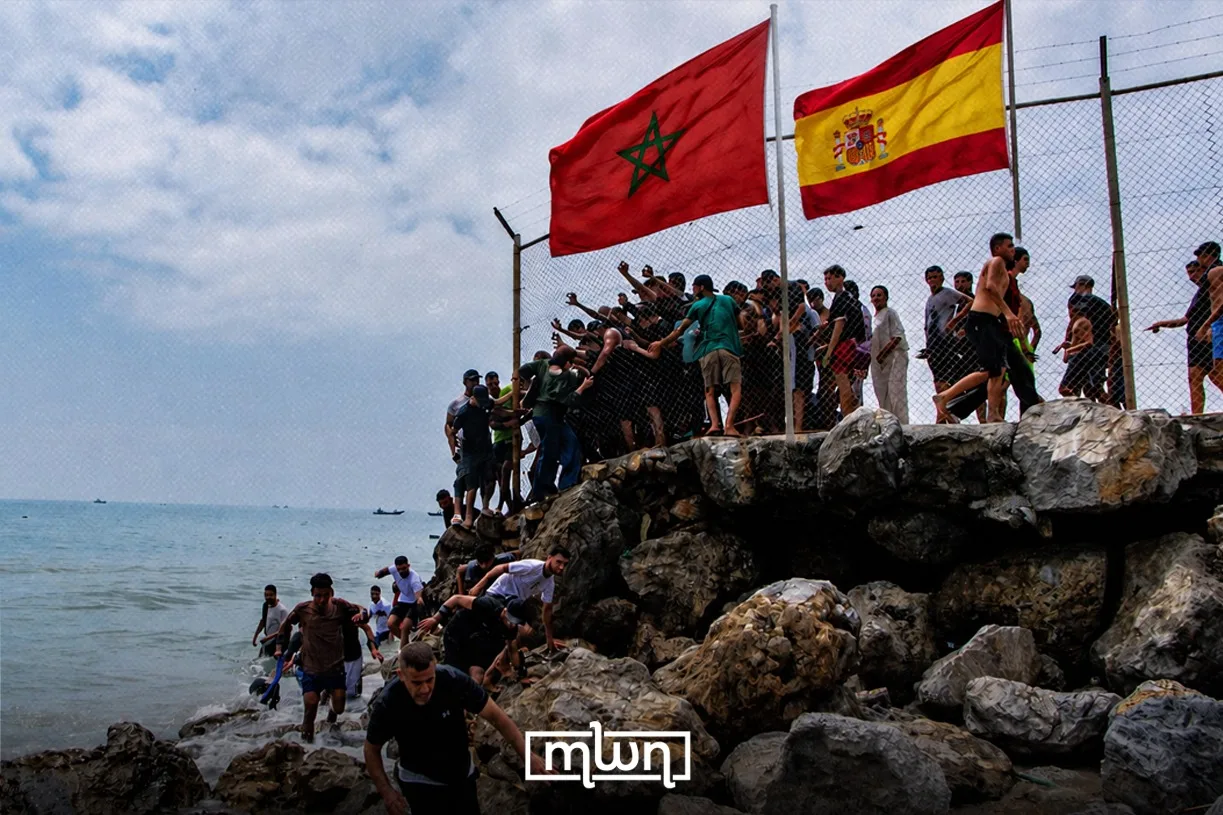
Rabat – Spain is seeking to transfer more than 1,000 unaccompanied migrant children from the occupied city of Ceuta to mainland Spain after a record migration surge overwhelmed local shelters, prompting Madrid to release €25 million in emergency funding to support the relocation effort.
The funding, announced by Spain’s Ministry of Youth and Children, will be distributed among the country’s autonomous regions to help accommodate the minors and expand child protection services.
Ceuta has struggled to cope since around 72,000 migrants crossed into the territory over the course of a week.
Although most have since returned to Morocco, approximately 1,100 unaccompanied minors remain in the enclave because Spanish law prevents their immediate return and requires individual child protection procedures.
Juan Jesus Vivad, Ceuta’s president, has urged Madrid to accelerate transfers to mainland Spain, warning that the enclave’s reception system is operating far beyond capacity.
The emergency follows a 2025 immigration reform requiring unaccompanied migrant children to be redistributed among Spain within 15 days once their administrative files are completed. However, implementation has faced delays amid legal procedures and resistance from some regional governments.
According to Spanish authorities, more than 400 minors have already been relocated under the redistribution mechanism, while roughly 1,100 remain in Ceuta awaiting transfer.
The latest developments come after last week’s unprecedented migration surge into Ceuta, one of the European Union’s only land borders with Africa. Spanish authorities reported dozens of deaths during the crossings, making it one of the deadliest migration episodes involving the enclave in recent years.
While most adult migrants were swiftly returned to Morocco, the legal protections afforded to unaccompanied minors have left hundreds in temporary shelters pending relocation.
Ceuta crossings ease, Spain debates migration
The situation has renewed debate in Spain over responsibility-sharing among regional governments, while also highlighting the humanitarian challenges posed by irregular migration at the EU’s southern border.
Crossings into Ceuta have eased significantly following last week’s surge, with Spanish authorities reporting no new large-scale attempts to enter the enclave.
According to Spanish news agency EFE, activity along the Moroccan side has dwindled to sporadic incidents, usually involving small groups attempting to reach the coast by swimming. Police describe these efforts as rare and limited, often involving only a few young migrants testing access points despite reinforced security measures. A strong security presence remains in place across Ceuta.
Discrepancies persist over the scale of the crisis. Moroccan authorities challenge higher figures reported in Spain, placing the number of arrivals at around 40,000. Spanish estimates, however, suggest the total may have reached as many as 80,000.
The situation has also extended to Melilla, where Moroccan officials say more than 1,000 people entered. Rabat has confirmed 11 deaths linked to the events, though Spanish sources cite a higher toll, with some estimates reaching 88. Moroccan authorities maintain that these figures are still under review.
While reiterating its role as a central partner in tackling irregular migration, Morocco emphasized that it cannot serve as the European Union’s “concierge” or “policeman”, arguing that migration management should be a shared responsibility rather than one placed solely on its shoulders.