
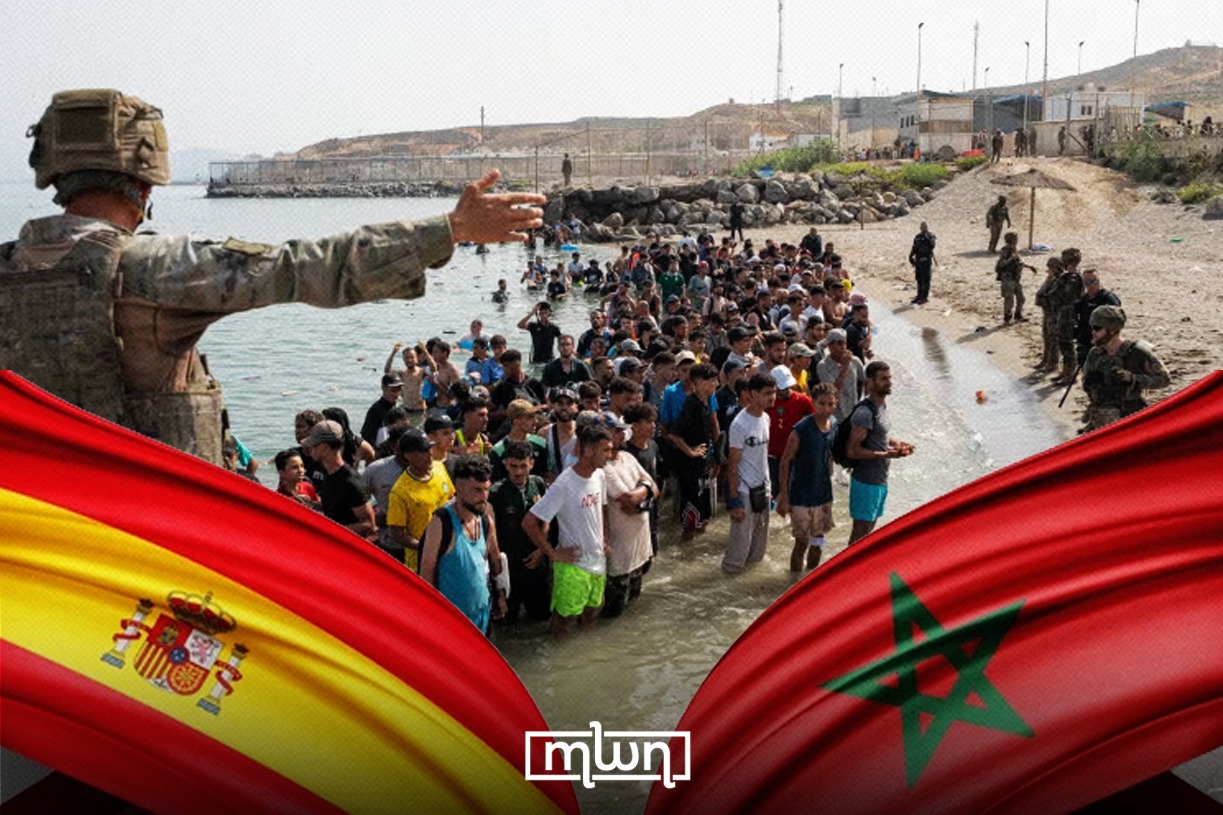
Casablanca – The Spanish government has taken temporary control of 16,000 square meters of the port of Ceuta to install facilities for the humanitarian care of migrants following the mass arrivals to the enclave in late July.
According to EuropaPress, the measure was authorized today by Spain’s Ministry of Transport and Sustainable Mobility, which approved the temporary use of public port land in the Poniente Extension, Phase I, within the port’s service area. The decision allows the Secretary of State for Migration to use the site for migrant assistance.
Transport Minister Óscar Puente signed the order under Article 73.3 of Spain’s Law on State Ports and the Merchant Marine. The ministry said the measure was justified by “reasons of general interest” linked to the management of a situation considered relevant to national security.
Under the resolution, tents and other provisional facilities will remain in place until December 31, 2026. The site will include rest areas, an infirmary and dispensary, spaces for social assistance and intervention, sanitary services, offices for staff from the organization responsible for the service and a security booth.
The resolution said the State Ports Authority had warned that the temporary occupation could increase some risks related to critical infrastructure, sensitive installations and port operations. It nevertheless concluded that the public interest justified the authorization, provided measures were taken to ensure the facilities did not interfere with the security and normal operation of the port.
Read also: Sánchez Continues to Reject Claims Morocco Orchestrated Mass Entry Into Ceuta
The decision came one day after the governing board of the Port Authority of Ceuta voted against installing the tents to accommodate migrants. The government’s resolution ends the administrative process, although the Port Authority can file an optional appeal within one month or challenge the decision before Spain’s National Court within two months.
The events follow Ceuta’s continued efforts to deal with the effects of the mass arrival of migrants on July 30 and 31. The episode has since triggered political and diplomatic tensions between Spain and Morocco, with Spanish authorities investigating claims about the role of Moroccan security forces.
Prime Minister Pedro Sánchez has rejected claims that Rabat organized the operation, while Morocco has told Madrid that it is investigating the mass crossing.
The pressure on local facilities has also affected the accommodation of minors. Almost 300 migrant girls who arrived during the July crossings were transferred from the sports hall at Reina Sofía School to a warehouse in El Tarajal, today.
The girls, reportedly numbering 290 according to volunteers working with them, were taken by buses operated by Amgevicesa under a heavy police presence. Reports say that they will remain in facilities in the El Tarajal industrial area while authorities determine their next destination.