


 Join on WhatsApp
  Join on Telegram
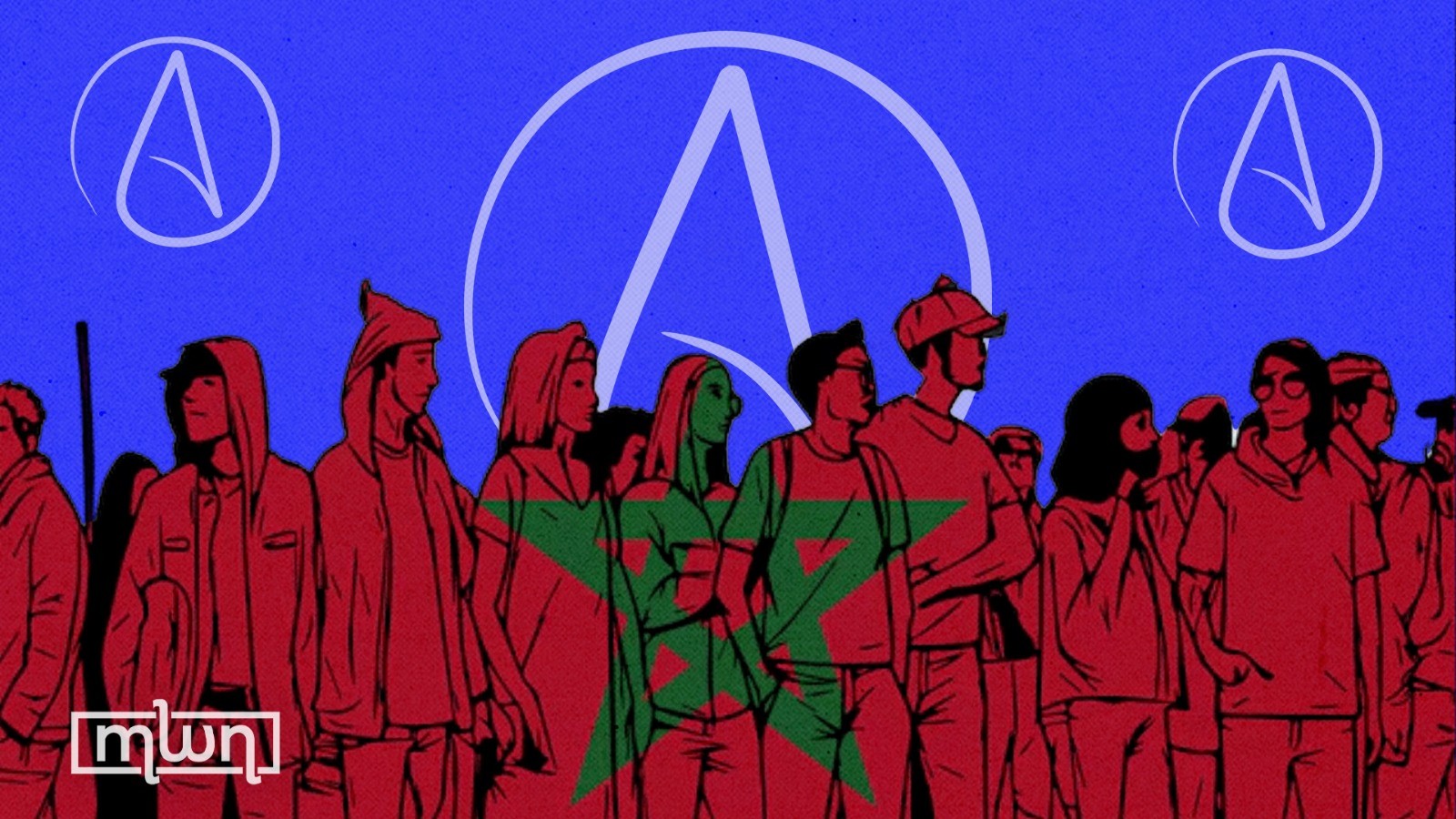
 Doha – In a predominantly Muslim country like Morocco, where religion is deeply intertwined with society and culture, a growing group of young, urban Moroccans are identifying as non-religious.
While this minority may not be as visible as their religious counterparts, their experiences and subtle forms of activism are shedding light on the complexities of religious identity in Morocco.
According to a recent study by anthropologist Lena Richter from Radboud University in the Netherlands, young, educated atheists and agnostics from the urban middle class in Morocco and Europe are finding ways to express their non-religious views indirectly through subtle actions that challenge the ideal image of a “good Muslim.”
These acts of “everyday activism” can range from getting a tattoo or drinking alcohol to skipping prayers or making jokes about Islam on social media.
Richter, who interviewed 50 young non-religious Moroccans aged 18 to 35 for her research, found that while non-religious views are not openly appreciated in Moroccan society, they are tolerated to a certain extent as long as individuals do not make a big issue out of their beliefs.
“Non-religious views are not appreciated, but as long as the person doesn’t make a big thing out of it, people in their network won’t either,” Richter explains.
Interestingly, Richter’s research suggests that it can sometimes be easier to be a non-believer in Morocco than in Europe, where Moroccans are already a minority and Muslims face discrimination.
In Europe, non-religious Moroccans risk having their narratives manipulated by right-wing groups who use them as examples against Islam, even when that was not their intention for leaving the faith. As a result, many non-religious Moroccans in Europe avoid public debates about their beliefs.
While atheism within Islam is not a new phenomenon – with critical poets and philosophers dating back to the ninth century – social media has played a significant role in making non-religious views more visible and enabling discussions among young Moroccans about faith. Traditional media in Morocco tend to promote a national view of Islam, but social media platforms provide a space for diverse perspectives and debates.
Read also: Freedom of Religion in Morocco: The Silent Minorities
Richter’s research aims to create a more nuanced understanding of religion among Moroccans, highlighting the diversity within the non-religious community. “Moroccans are often seen as a homogeneous group – every Moroccan is a Muslim – and that, of course, is not true,” she says.
“There are also many differences within the group of non-religious Moroccans. It matters a lot whether you have parents who are themselves less strictly religious or whether you come from a more conservative family.”
While there is no official data on the number of non-religious individuals in Morocco, a 2019 survey conducted by Arab Barometer suggests that 13% of Moroccan respondents self-identified as such.
Despite the challenges facing these groups, the country has made strides in promoting religious tolerance and pluralism.
A recent article by the London School of Economics and Political Science (LSE) noted that Morocco has been making headlines for its role in the Marrakech Declaration and its commitment to protecting religious minorities.
The article recalled the warm welcome King Mohammed VI extended to Pope Francis in 2019, which served as a public display of tolerance and coexistence.
The LSE article also acknowledged that while Morocco has a 99% Sunni Muslim majority, there is a diversity of beliefs about the role of religion, citizenship, and human rights in multi-faith engagement.
In addition, the article emphasized the importance of building religious literacy and intellectual networks through scholarly companionship and human fraternity to foster sustainable solidarity among different religious communities in Morocco.
While challenges remain, the growing visibility of this minority group and the efforts to promote religious tolerance and pluralism in Morocco offer hope for a more inclusive and understanding society.


