Join on WhatsApp
 Join on Telegram
Rabat – Just days before the D-Day, June 13, when the FIFA Congress will convene to decide the 2026 World Cup host, the Moroccan organizing team is buckling down on persuading the world of the merits of the country’s candidacy.
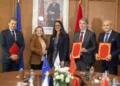
Last Tuesday, surrounded by over 200 journalists gathered for the International Sports Press Association (AIPS) Congress in Brussels, Moroccan bid representative Hicham El Amrani seized the opportunity to reveal Morocco’s hosting vision for the footballing world’s most celebrated tournament.
Transcending the label of a “bidding nation,” the Moroccan representative told attendees that Morocco 2026 actually encapsulates the realization of a national dream. The bid is ultimately about the whole African continent, the belief that the continent is once again capable of hosting the biggest sporting event.
Read Also: Morocco’s 2026 World Cup Bid Could Surprise the World: Sofoot
This is echoed in the concept that the Morocco 2026 executive committee has chosen for the Moroccan candidacy: Africa meets Europe, an indication of the country’s unique location as a bridge linking the two continents.
While United 2026 officials in Brussels highlighted the huge financial benefits that the North American bid could yield, saying that they would “expect to… generate the most successful and profitable World Cup ever,” El Amrani brought in the social aspect of sports, how the World Cup should primarily be based on desire to have a defining impact on people’s lives. According to El Amrani, helping emerging countries should be an essential element of sports, especially the organization of a World Cup.
“The World Cup is not attributed only to the number of seats you offer in stadiums or who makes more money,” the Moroccan official insisted, adding: “We will make enough money to make FIFA profitable. That is a crucial end. We proved that our bid will make double the amount of what was accomplished in South Africa and Brazil.”
If the sporting world continues to fixate its hosting criteria on formidable infrastructures and big financial returns, El Amrani warned, hosting rights of tournaments such as the World Cup and the Olympics will always be rewarded to the “same countries around the world,” namely the developed countries. “The power of sport is also to help develop certain areas of the world,” he said, a suggestion that the developmental aspect of the game should never be taken out of the picture when it comes to hosting the World Cup.
El Amrani also mentioned Morocco’s thriving and dynamic economy and its developing and modernizing infrastructures. Perhaps most importantly, he added, is “Moroccans’ exceptional passion for football.”
Asked about the chances of Morocco 2026, Kamal Lahlou, a member of the Morocco 2026 team, said that Morocco’s candidacy puts forward the humane side of sports—touching and changing lives, which he believes is more important than the economic calculations. Besides, he added, “FIFA will be responding to the desire of millions of football fans who have given so much to the sport, namely Africans and their representative [Morocco 2026].”