 Join on WhatsApp
 Join on Telegram
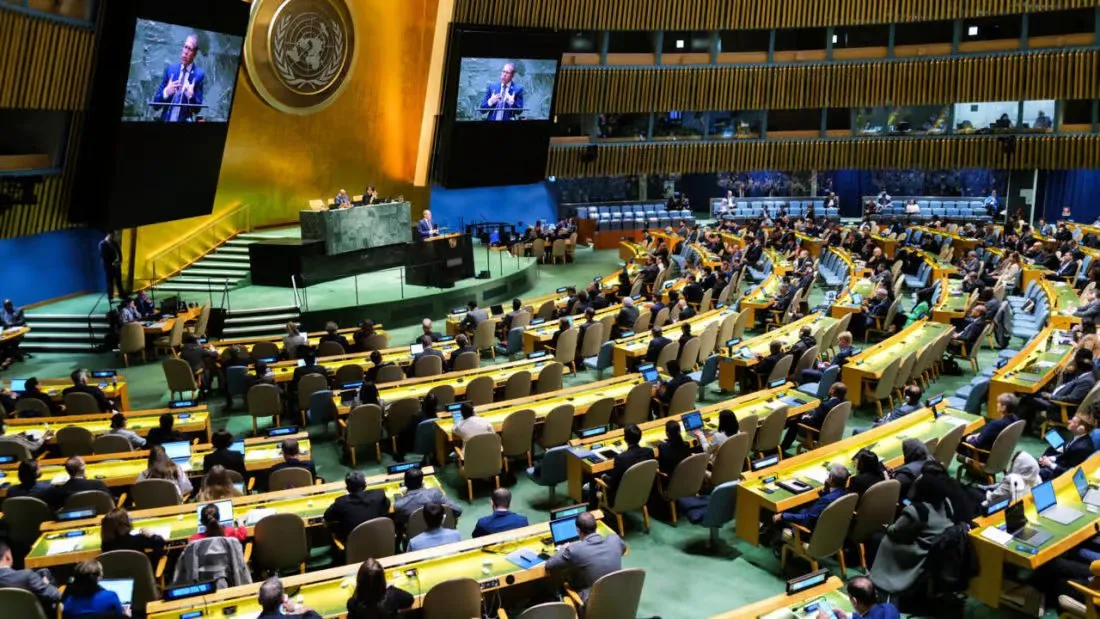
Rabat – Minister of Solidarity Naima Ben Yahia shared Morocco’s approach to promoting gender equality and bolstering women’s rights during a ministerial roundtable in New York.
The discussion took place as part of the 69th session of the UN Commission on the Status of Women (CSW), which focuses this year on progress since the 1995 Beijing Declaration.
Ben Yahia noted Morocco’s creation of the Authority for Parity and the Fight Against All Forms of Discrimination (APALD), an independent institution that advises the government and parliament on gender equality policies.
The mission of this organization, she says, is to ensure that equality remains a core value in education, training, media, and culture. The authority also tracks discrimination against women and supports institutions in the public and private sectors to adopt fairer policies.
Ben Yahia pointed to her ministry’s central role in coordinating legislation and public policies related to gender equality, always developing government action plans to address gender gaps and challenge stereotypes that limit opportunities for women and girls.
To consolidate oversight, Morocco has set up a national committee for gender equality and women’s empowerment. Chaired by the head of government, the committee brings together representatives from civil society, the private sector, and national institutions.
The UN Commission’s discussions this year revolve around the commitments outlined in the Beijing Declaration, which set priorities in twelve key areas such as poverty, education, health, violence, economic inclusion, and political representation.
Countries also assess the challenges that continue to stand in the way of full gender equality and explore ways to accelerate progress toward the UN’s 2030 agenda for sustainable development.
Morocco has taken gradual steps to address women’s rights, with legal reforms and institutional mechanisms designed to create lasting change. Efforts to promote gender equality have gained traction, but gaps remain.
The reality for many Moroccan women still falls short of the vision outlined in policies and strategies. Legal protections do not always translate into real improvements in daily life, and cultural and economic barriers continue to slow progress. While there is clear political will to advance women’s rights, the path forward remains uneven.
This challenge is not unique to Morocco. The global conversation on gender equality has been ongoing for decades, yet solutions often remain theoretical. Governments and international organizations announce policies and frameworks, but real, transformative change remains elusive.
Women around the world continue to face systemic barriers, and progress, when it happens, moves at a pace far slower than expected. The gap between commitments and concrete action tells the limitations of current approaches, leaving many to question whether the world is truly ready to address gender inequality in a way that brings about lasting change.