Rabat – France’s Foreign Affairs Minister Jean-Noel Barrot reiterated his country’s unwavering support for Morocco’s territorial integrity and sovereignty over its southern provinces, recalling the growing improvement in Franco-Moroccan relations and the deepening international consensus in support of Morocco’s Autonomy Plan for Western Sahara.
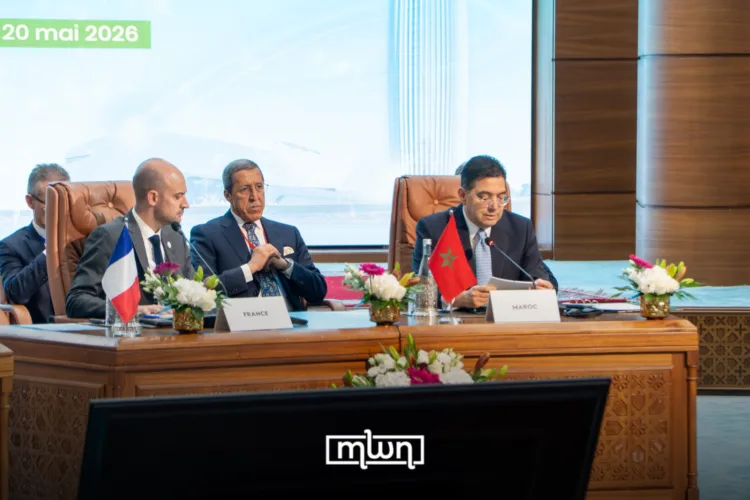
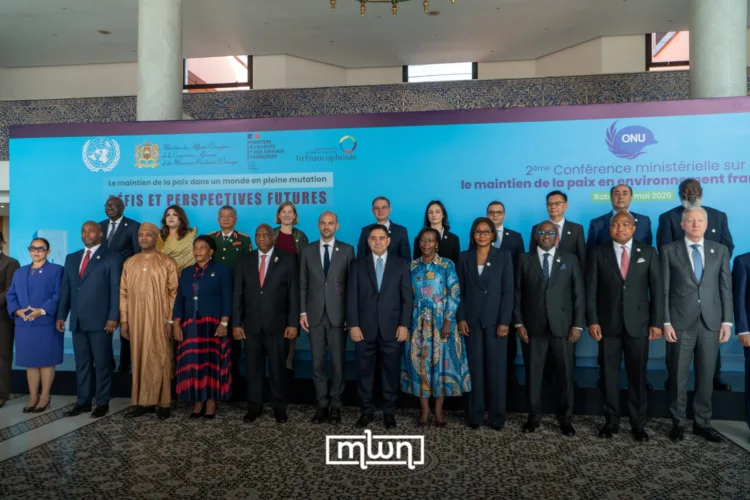
Barrot made the comments in Rabat today, following a meeting with his Moroccan counterpart, Nasser Bourita. The chief of France’s diplomacy is on an official visit to Morocco to hold talks with senior officials and also to co-chair the second ministerial conference on peacekeeping in Francophone Environments with Morocco.
The Western Sahara region is ‘existential’ for Morocco
In his speech at a press conference with Bourita, Barrot recalled Paris’s position on the Sahara issue, “which is existential” for Rabat.
He renewed the position France announced in 2024 in a letter President Emmanuel Macron addressed to King Mohammed VI. The “present and future of this territory fall within the framework of Moroccan sovereignty, and the autonomy plan proposed by Morocco is the only basis for a just, lasting, and negotiated political solution,” Macron said in his letter.
Barrot stressed Paris’s unchanged commitment to that spirit while pointing to its alignment with UN Security Council Resolution 2797, which the Council adopted last year in October.
The resolution recognizes the Moroccan autonomy plan as a genuine framework to find a realistic and lasting political solution to the dispute.
For Barrot, the resolution is an eloquent illustration of the deepening international consensus in support of Morocco’s autonomy plan.
“I can only welcome this positive momentum, as well as the resumption of direct discussion between all parties based on this autonomy plan,” Barrot said, expressing his hope that this dialogue could lead to a swift resolution for a conflict that lasted for too long.
“France remains proactive,” he added, renewing support for Morocco’s efforts to develop the region while recalling France’s decision to strengthen consular presence and cultural activities, including the opening of a visa application center and the creation of an “Alliance française” branch in Laayoune.
“Our companies are investing, and the AFD and our operators are supporting them- and this is the only beginning,” he said.
The French FM also expressed satisfaction with multilateral and bilateral ties with Morocco, recalling Rabat’s importance as a strong ally.
A strong, deepening bilateral partnership
“Morocco is our leading economic partner in Africa; it is a major logistics, energy and financial hub between France and parts of the continent,” he said, noting the strength of bilateral cooperation at all levels – including industry, energy security, defense and digital.
“We have also launched a unique initiative,” Barrot said, referring to a bilateral treaty between the two countries. “Few countries enjoy such a framework… It would be the first treaty of this kind with a non-European country.”
The objective of this new Franco-Moroccan dynamic is to set the framework for Paris-Rabat ties for decades to come, he said, citing joint action to foster ties and exchanges between the two societies.
“I am pleased with this prospect, which will confirm that the Franco-Moroccan relationship is, and will remain, an experienced model,” Barrot said.
France is one of Morocco’s largest trading partners.
A report from the Office des Changes last year said Morocco recorded a trade surplus of MAD 15.9 billion with France in 2024, marking a notable increase from the MAD 11.9 billion surplus registered in 2023.
This makes France Morocco’s second trading partner.
UN Secretary-General Antonio Guterres expressed gratitude today to Morocco and France for co-sharing the peacekeeping in Francophone countries today in a recorded address.
He emphasized the importance of peacekeeping as one of the most tangible roles of the UN, particularly at a time when the world is experiencing the highest number of conflicts since 1945.
Peacekeeping continues to be one of the international community’s most robust and effective tools, Guterres said.