 Join on WhatsApp
 Join on Telegram
Rabat – The country’s fragile political climate has lead to suggestions in some circles that amid unrest and demonstrations, election is more likely to be postponed.
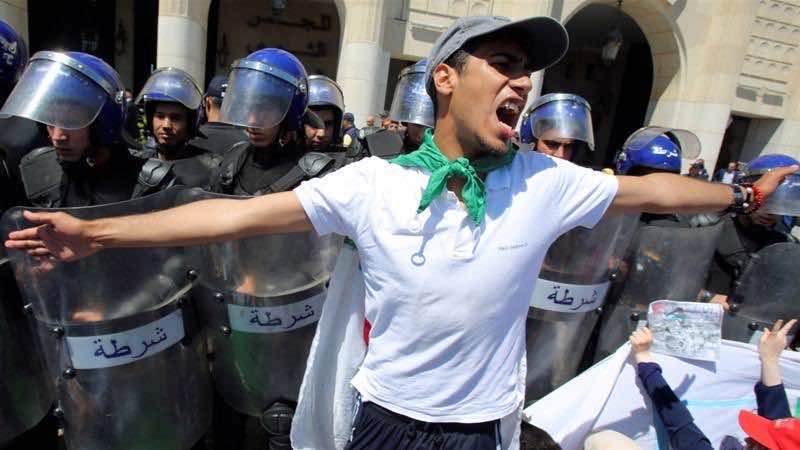
As protests continue well into the 13th consecutive week, the likelihood that the July 4 election will take place grows increasingly distant, according to a source close to the issue.
Speaking anonymously with Reuters, the source claimed that heavy opposition in the streets, as well as difficulties with organization and logistics, are likely to postpone the election until later this year.
“There won’t be elections on July 4,” the source told Reuters.
Read Also: Algerian Army Under Pressure, Urges End of Crisis Before July 4 Election
The person went on to further explain that the election could be delayed until the end of the year, with unstable conditions leaving much of the country in a standstill.
The North African country was plunged into unrest on February 16, when then-President Abdelaziz Bouteflika announced his candidacy for a fifth consecutive term after holding the presidency for nearly two decades.
Growing popular discontent and late-minute pressure from the military forced Bouteflika to resign last month; however, protests continue as demonstrators seek the removal of all members of the old political establishment that served under Bouteflika.
Protests have ultimately sought to remove government officials perceived as corrupt as well as oust wealthy elites in the country accused of corruption and nepotism.
Naming the interim president, Abdelkader Bensalah, and Prime Minister Noureddine Bedoui as two of the many survivors of the Bouteflika regime,protests continue to grow larger and more intense as the opposition grows closer to its goal.
Earlier this week, dozens of Algerian police forces were injured while attempting to disrupt protests in Central Algeria. With demonstrators continuing to seek large-scale change in Algeria, protests are likely to grow in intensity for the foreseeable future.
There is also a lack of clarity surrounding potential candidates for the election, with two familiar names seeming to be the main contenders: Ahmed Taleb Ibrahimi and Ahmed Benbitour, both former prime ministers. Meanwhile, protestors seeking large-scale, radical change to the government may be unlikely to be satisfied with either of these candidates.
The army is currently overseeing the 90-day transition period before a new government is elected, but the July 4 deadline grows increasingly unlikely as time goes on. As things currently stand, stability is unlikely to return to Algeria in the near future.