


By Hinna Sheikh
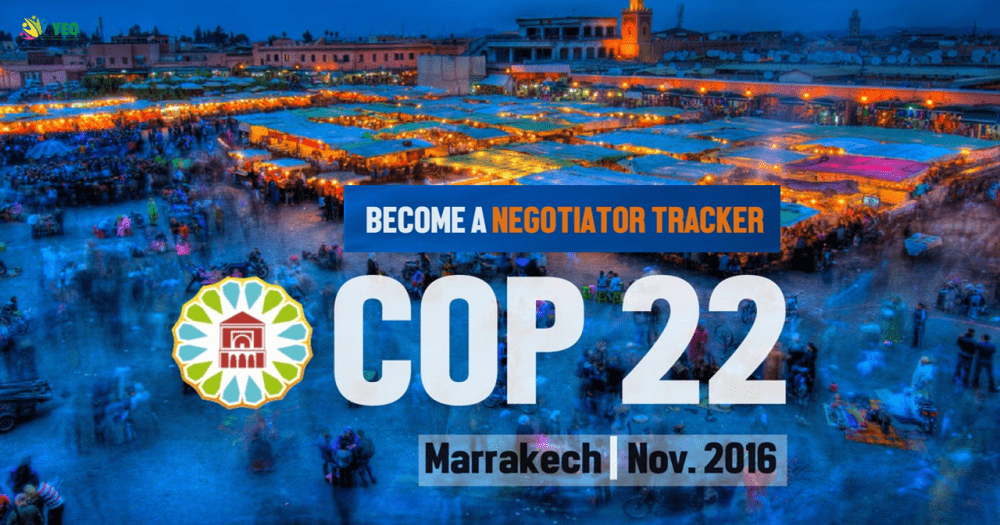
London – Set to take place in Marrakech during November, the 22nd session of the Conference of Parties to the UNFCCC (COP22) will discuss some of the most pressing climate change concerns
The follow up from COP21 held in France last year, it is now time for the world to set their sites on Morocco for COP22, as the world’s states prepare to discuss initiatives to combat climate change.
COP22 is the supreme decision making body of the United Nations Framework Convention on Climate Change (UNFCCC). Taking its beginnings at the Earth Summit in Rio de Janeiro in 1992, the summit was introduced as a structure through which states could organise their efforts to combat climate change.
Meeting on an annual basis, it reviews and develops previous pledges and assesses the implementation of the UNFCCC. The main aim of the COP, as it has become to be known as, is to reduce the levels of greenhouse gas emissions in the atmosphere. The Paris Agreement particularly highlighted this. Formulated at the COP21 last year, the agreement looks to limit the rise in global temperature. This will be achieved by member states committing to reduce CO2 emissions by 50% by 2050 and 100% by 2100.
Adopted by 195 countries last year, it will require the reorientation of the world economy. As part of the Agreement, states are obliged to actively reduce emissions and will review progress every 5 years.
Due to take place in Marrakech from November 7 to 18, Morocco is now in the spotlight, as leaders and change makers are preparing to make their way to the Kingdom over the coming weeks.
As the host country, Morocco has made numerous pledges for this year’s summit. In a speech made at the Crans Montana Forum in March 2016, HM Mohamed VI spoke of the various initiatives that Morocco will adopt. Amongst them he pledged: to improve governance for the achievement of sustainable development, to introduce concrete programs to achieve measurable outcomes of growth, and the well-being of the populations of the South in the economic, social, cultural, environmental and religious domains.
In this forum, King Mohammed VI also stated that he supports a vision of a strong and united Africa; this comes four months before Morocco announced its intentions to return to the African Union. Furthermore, he spoke of the mobilisation of funds, the implantation of national contributions and the strengthening of adaptation measures.
COP22, as described by the Moroccan monarch is a litmus test for climate diplomacy. With the state of world’s environment becoming increasingly worrying, it is necessary that heads of states come together not only to discuss real developments but also, to actually see their implementation.
The Kingdom of Morocco has also stated that it will seek to establish a process for the gradual mobilisation of funding for the benefit of developing countries. As an offshoot of this, the country will also propose mechanisms to facilitate access to climate finance and maximise benefits.
Whilst the summit is dedicated to fighting climate change, it is understood that technology and technological development play a crucial role in world affairs and thus must be incorporated into environmental plans. The summit is also set to consider an action plan devoted to technology, with Morocco highlighting the importance of technological development.
Morocco itself has committed itself to reducing greenhouse gas emissions by 32% by 2030. Morocco’s environment minister said that she hopes the summit will be a chance to review the pledges made in Paris last year and will recommit governments to fulfilling them.




