 Join on WhatsApp
 Join on Telegram
It’s a vindication of OCP Group’s versatile corporate strategy that the Moroccan company has been linked to many developments in different fields – from being a digital trendsetter in Africa to promoting sustainable agriculture worldwide and being a keen actor of social empowerment. Although already the world’s largest phosphate mining and global leader in the fertilizer market, OCP sees – and projects – itself as so much more.
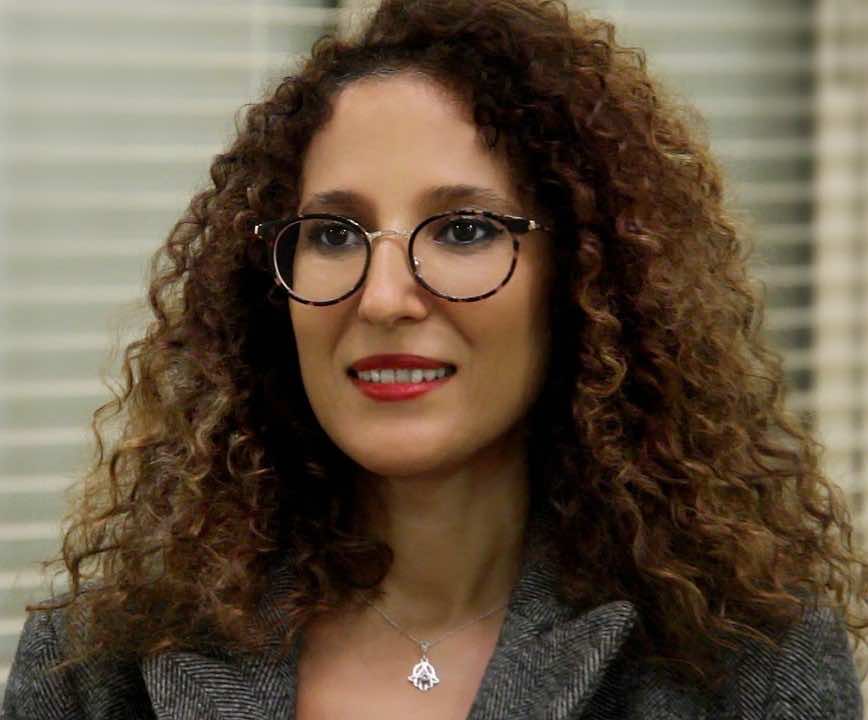
For Nabila Tbeur, Head of OCP’s Act4community Platform, an initiative that encourages OCP employees to put their expertise at the service of the development of local communities, OCP is essentially about channeling transformative projects, vision, and talents to have a sustainable impact on the surrounding environments. Be it in its different sites in Morocco and its dozens of subsidiaries across Africa, Tbeur says, driving OCP’s strategy is a desire to be an actor of sustainable change, a promoter of sustainability, and a vector of socio-economic empowerment.
Act4Community recently made headlines in the Moroccan media for its impressive number of projects of youth empowerment and community engagement in rural Morocco, and it is against this backdrop that MWN spoke to Tbeur to get a much clearer sense of what the project has achieved so far and what its long-term projections are.
On its website, OCP describes Act4Community as “an integral part of our vision for sustainable development.” Listening to Tbeur breakdown what this actually means, one gets a heightened sense of a self-driven urgency to embrace the need of creating added value for communities, “having a real and sustainable social impact,” and promoting youth empowerment and capacity-building.
A running theme here is that sustainable and impactful change is a point of real concern for OCP Group. And in its unallowed enthusiasm for being a linchpin of sustainability and positive change, Tbeur suggested, throughout our conversation, that the Moroccan company operates with the belief that there is always value in the willingness to enact meaningful social change, in the readiness to chase after possibilities with an eye to making things better. The conversation below has been redacted and edited for clarity.
MWN: In recent weeks, many Moroccan media have covered the social actions of Act4Community, an OCP community engagement initiative based on employee volunteerism. I would like to know the origin of this initiative. What projects have been completed to date? How many employees are involved? And what is the impact on them and on the communities?
Nabila Tbeur: Act4Community was born around September 2017 following a decision by our CEO to encourage the development of skills and the volunteering of employees so that they can give their time and expertise to the communities around us, whether in the sites where we operate or in the countries where we are present now. This applies to all 23,000 employees: there is a community service branch which we set up globally to allow each employee, during his or her working hours, to dedicate time – it could be a month or more – to carrying out actions in the service of the local community.
Again in 2017, there was also the launch of “the movement” program, which is more like a gathering of collective intelligence groups that were set up in all the sites where we operate to develop high-impact actions that are relevant to the communities. So a lot of work has been done by several people who are dedicated to this program in the sites. They have been able, through a proximity approach, to go and see the populations, cooperate with local associations, work with cooperatives, engage very small and medium enterprises, see all the stakeholders around the sites where OCP is located to study which projects will have the most impact according to the issues the Act4Community dynamic must address.
There are currently about thirty people in all the sites who are dedicated… who work a bit like facilitators or agents of development and community change. These are OCP employees with different profiles. They are dedicated to this dynamic at their request and that mobilize other volunteers and other collaborators to ask for their expertise in the different axes defined in the framework of Act4Community.
The initiative has now been in existence for about three to four years; it has been able to mobilize about 7,400 collaborators and initiate actions and projects in different areas that I will try to summarize in about three. We work for instance in youth development by boosting the local economic ecosystem and strengthening the capacities of the local economic fabric.
There is a second axis that aims to improve the yield of farmers around the mines where we are located through the training of farmers, the establishment of education platforms to improve yield, and the support of agricultural cooperatives.
There is a third axis that we call social innovation which aims to work with associations and the civil society, mainly by encouraging social entrepreneurship through the training of associations, through territorial diagnoses to see what the most salient social problems are and how to address them in a sustainable way. So we have in this axis several volunteers who initiate bottom-up projects in several fields: education, environment, culture, sport, entrepreneurship
And we have a fourth axis which is the inclusion of youth through culture and sport. As you know, we have in the sites various cultural facilities, proximity fields, media libraries. So through all this socio-cultural and sports infrastructure that we put at the disposal of the local populations, we also encourage cultural entrepreneurs to be trained to be facilitators in these facilities. And then we help the civil society working in the fields of culture and sport to lead activities on these sports grounds, to make the most of these cultural infrastructures by organizing cultural events, to train young people on culture and sport and also to detect talents and accompany them in the sports or cultural field.
We have, for example, programs for cooperatives, including one that has supported more than 80 cooperatives in different areas of agribusiness, cosmetics, and which has also enabled these cooperatives to access the market through the organization of several solidarity fairs, through the establishment of digital marketing platforms, and also through local procurement that OCP does with cooperatives by buying local products.
We have the economic ecosystem program and there, for example, we have incubation platforms for SMEs. We have industrial incubators in Khouribga, Jorf Lasfar … where we support very small, and medium enterprises. We identify them, we support them so that they raise their standards to meet the requirements of the local supply chain. And we also act on our internal processes to be able to open the supply to these MSEs to give them the opportunity to access the market of OCP on the territory, given that this market is a form of priming that allows these cooperatives and MSEs to take off and access other markets.
MWN: In your answer, you spoke a lot about social innovation, social entrepreneurship, community development, job creation, and support for cooperatives. So it appears that entrepreneurship is a very important pillar for the Act4Community initiative. Could you specify what you mean by entrepreneurship and what are the programs carried out in this area, especially concerning social and community development?
Nabila Tbeur: It is true that social entrepreneurship is not yet well known in Morocco. It is something that is emerging. There is not yet a framework law defining it. When we talk about social entrepreneurship, it has to do with everything that the associations around our sites and not-for-profit associations in general do. It is about developing projects for communities by adopting an entrepreneurial business approach that allows for more sustainability and impact.
I will give you a concrete example: we usually work with associations on everything related to environmental education through awareness-raising actions for young people in schools, in high schools, or through specific actions that can last one day, two days, or a week. The idea now is to transform this into more sustainable actions.
We have, for instance, a group of volunteers in the Khouribga site who have proposed and developed a technique of aquaponics and everything that is soilless culture. They developed this with OCP’s ressources; they are engineers who did this work and they went to a high school in Khouribga to encourage students to grow soilless crops in their school, to grow vegetables, organic products in their school.
In a sense, this was organized as a way to expose these students to sustainability education. At the same time, the goal of such initiatives is for these students in a rural school to be able to generate perhaps some income, which can in turn allow them to either rehabilitate some of the classrooms or repaint the school’s walls, etc.
So, this is the logic of social entrepreneurship: to develop income-generating activities through not-for-profit associations. This requires a lot of innovation and a break with what the associations and cooperatives used to do. And this is what we are also trying to do in the field of culture, where we used to subsidize or give cultural sponsorship. The idea now is rather to train cultural entrepreneurs in the associations who can be cultural facilitators or mentors and can organize income-generating events where they can make a living, either through OCP sponsorship or through other culture-promoting actors in their respective regions.
When it comes to the health sector, we used to finance medical caravans that would travel to rural areas and stay for one or two days to make consultations and leave. But we have now developed a community health program in Jorf Lasfar where we have trained young people from the communities who have been certified by some of our partners working in the health sector to administer first, basic medical aid on a permanent basis and refer the population to specialized health centers for more serious concerns. The objective is therefore to move away from the one-off and campaign-driven social action towards more sustainable actions that local communities can take ownership of in the long term.
MWN: I would like to come back to the Act4 Community component that has to do with the use of culture and sport as means of social inclusion and individual or personal growth. Is it fair to conceive of this aspect of your initiative as OCP’s way of contributing to the thorny debate of youth inclusion?
Nabila Tbeur: Of course, we relate to this as a form of education. Morocco is a very young country where the youth population is preponderant and we have indeed this population that exists, that lives around our facilities, that is an enormous potential, and that has an energy that can be positively co-opted by channeling it towards culture, towards sport, by allowing this energy to develop, to create value in fact.
So we invest in sports, arts, and culture as a way of engaging with youth on their own terms; we try to give them a framework that stimulates their creativity. I’m speaking of the kind of creation that is adapted to their time and needs, adapted to social networks, to the digital age, to everything young people like to do. And this way, we are actually investing in sports and culture, not in terms of infrastructure because there is enough infrastructure in the regions where we operate, but by bringing programs that allow young people to train and record their creation for example.
For instance, we have partnered with the NBA to set up basketball competitions and training programs for sports coaches in our sites. We also have football programs in rural areas with many local stadiums where we encourage local associations to manage this infrastructure by training sports leaders. We have also launched within the media library of Khouribga a great program of incubation of cultural entrepreneurs with a set of workshops of dance, theater, and cinema.
We have also initiated training programs on photography and cinema. So all of this effectively allows us, in addition to the creation of jobs and what we do at the level of the ecosystem, to accompany and support many local young entrepreneurs who need to be boosted by better access to the market. In addition to that, we support, in partnership of course with local stakeholders, all aspects of culture and sport as a means of inclusion.
MWN: Do you have any concluding remarks? Would you, for example, like to highlight other tenets of the Act4Community initiatives or anything in relation to OCP’s social and community engagement in general?
Nabila Tbeur: In terms of concluding remarks, I’d like to stress some of the lessons learned through this very interesting field experience that we are living in OCP. One encouraging and crucial lesson: There is a huge local potential for young people, entrepreneurs, ideas, and creativity. This potential needs to be supported. At OCP, we are really invested in the term “empowerment,” by which we mean capability-building.
It is therefore all about accompanying the local potential to help it become autonomous. We start from the idea that entrepreneurship, business education, and professional qualification are sure guarantees of empowerment. But this local potential also needs to have a conducive environment that can allow it to blossom and become open to possibilities. So you could say we are striving to cultivate a critical spirit among local youth as a way of helping them and to develop their creativity.
Within OCP, we have a huge strength, which is our employees and partners and the diverse, multi-profile expertise they bring to the table. So are putting and want to put even more of that expertise at the service of the communities. This allows us to create a link, to reinforce the link with the community, but also to give meaning to what we do within OCP beyond the production and the valorization of the group’s main financial activities.