


 Join on WhatsApp
 Join on Telegram
The ongoing series of terrorist attacks in the Sahel countries has become a concern for West African countries, as well as for Europe and the United States of America.
The latest attacks in northern Burkina Faso on the night of June 4-5, 2021, that left 160 people dead, exposed significant weaknesses of the intelligence coordination accompanying military intervention efforts, particularly in the Mali-Niger-Burkina Faso triangle.
Set up by the five Sahel countries (Mali, Niger, Chad, Senegal and Mauritania) at France’s request, with the goal of clearing the border triangle of terrorist elements, the joint regional force known as G5 Sahel was left unfunded until 2021.
Poor coordination, limited and unpopular foreign intervention (public opinion in both France and in the Sahel countries is unsatisfied with the French military operation “Barkhane”), and the poor preparedness of local forces in terms of equipment, motivation and management, resulted in the creation of new initiatives such as “Takuba” in October 2021.
A Swedish and Estonian intervention corps, Takuba is supported by Danish, Norwegian, Lithuanian, Irish, and Dutch elements that train and accompany local special forces tasked with supporting and backing up French and ordinary local forces.
The French President’s decision to end direct intervention through “Barkhane” and replace it with a new model based on training, logistical support, intelligence, and the strengthening of local special intervention forces in coordination with European, American, and North African partners, represents a new turning point in Western countries’ approach to the intricacies of terrorism in the Sahel and Sahara countries.
Complicating the work of European and U.S. partners in the Sahel is the spread of armed groups in various Sahel countries, including Mali, Niger, and Burkina Faso, as well as continued Boko Haram violence in northern Nigeria, Cameroon, and even in some Sahel countries.
The influence of terrorist groups in the region can be limited to two major groups: Al Qaeda-affiliated “Ansar al-Islam and Muslims” in the Islamic West, led by the Tuareg Iyad Agh Ghali. This group is a merger of four extremist movements and has field experience and significant striking powers. It is notably “active” in Mali, Niger and Burkina Faso and is considered, according to General Marc Conruyt, commander of the French forces in the Sahel, one of the most dangerous challenges facing Malian forces and France’s “Barkhane” mission.
The other group is the “Islamic State in the Greater Sahara,” (ISIS-GS) which emerged from a split in the “Al-Mourabitoun” group in 2015, whereby Abu Walid al-Sahrawi created the group and immediately after its creation declared his allegiance to ISIS. This group is widely present in the border triangle between Mali, Niger, and Burkina Faso, but unlike the “Ansar al-Islam” group, it does not engage in domestic politics nor negotiate, as it has loyalties outside of the Sahel and the Sahara.
The two groups are hostile to each other and have sporadically engaged in bloody conflicts, resulting in both armed and civilian casualties.
Niger’s border strip with northern Nigeria, especially the cities of Dir, Maradi, Zinder and Diffa, is also considered a hotbed of intrusion and security breaches by local precarious youth. Some observers have decried the anti-social behaviors of these groups which, coupled with the region’s chronic unemployment levels, feature among the factors that drive some of the local youths into the arms of extremist movements, especially “Boko Haram.” According to on-the-ground reports, some young people in these fragile regions view membership of groups like Boko Haram as a refuge and a venue for self-realization, training, and social integration in the face of systemic misery and impotent or irrelevant government institutions.
At the same time, extremist groups exploit conflicts over water and grazing land between nomadic pastoralists and sedentary farmers in the Sahel, particularly in Mali and Niger, where ethnic differences can turn into violent skirmishes between nomadic pastoralists and farmers. Such groups use these conflicts to fuel ethnic separation and attract young elements moved by the mixed passion and desire to defend both their tribal identity and their religion.
Approaches taken so far to develop the Sahel and protect it from targeted intrusions by terrorist groups have failed. Added to this is a corrupt political elite and a weakened fighting morale of local military forces due to lack of ammunition, low and delayed salaries, blocked horizons for many young people, and successive conflicts over water, pasture, and other resources.
All of this facilitates the mission of terrorist groups that cooperate with human trafficking groups and groups specializing in transporting cocaine to the Gulf of Guinea from Latin America, which have created secure land routes through Algeria and Libya to supply the European market with white drugs.
Trafficking across the Sahel, passing either through Libya or Algeria, could, given a few changes, be curtailed by the armed forces of both countries. Political stability in Libya and any political transformation in Algeria may have an impact on the management of border control. This could especially be the case if an effective Libyan army and security forces are formed, and if the Algerian army’s management of border areas, especially with Niger, Mali, and Mauritania, is significantly improved.
Such developments would undoubtedly lead cocaine and human traffickers to take other routes, with the help of terrorist groups. One possible route is through Mauritania to the Canary Islands, and from there to the Moroccan coast, or through the Moroccan Sahara and then north to Spain.
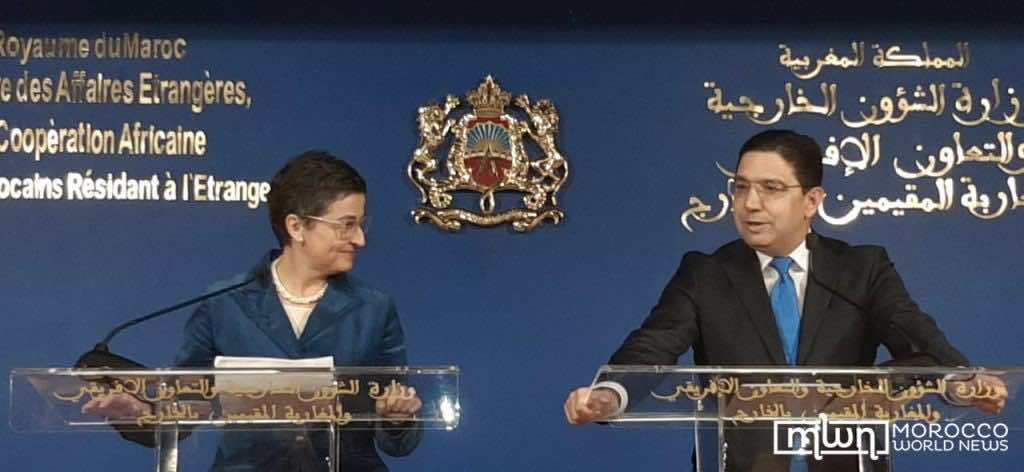
In such a configuration, coordination between Morocco, Spain and Mauritania is strategic and vital. Spain‘s reluctance to recognize Morocco’s sovereignty over the Western Sahara region, despite having signed the 1976 Madrid accords under which the Sahara was handed over to Morocco, does not serve the interests of a much-needed coordination in the fight against transnational criminal and terrorist groups.
Spain should choose between flirting with the Polisario Front, which is considered a destabilizing factor in the region, and vital cooperation with Morocco and Mauritania to shield the region, Europe, the Sahel countries, and West Africa from the spate of attacks and security breaches they might encounter from a wide range of actors if the situation in the Sahel worsens in the coming years.
Over the past 20 years, Spain has been able to thwart dozens of terrorist plots thanks to cooperation with the Moroccan intelligence and security services, internationally recognized for their competence, experience and effectiveness. Neither Spain nor Europe can – or should – risk losing this vital strategic coordination for a separatist movement that serves an agenda that has nothing to do with stability, peace, and security in North Africa, the Sahel, and Europe.




