 Join on WhatsApp
 Join on Telegram
Mannheim – On Friday, the French Parliament passed the controversial Anti-Separatism bill with a final vote of 49-19, with five abstentions, after months of acrimonious debate.
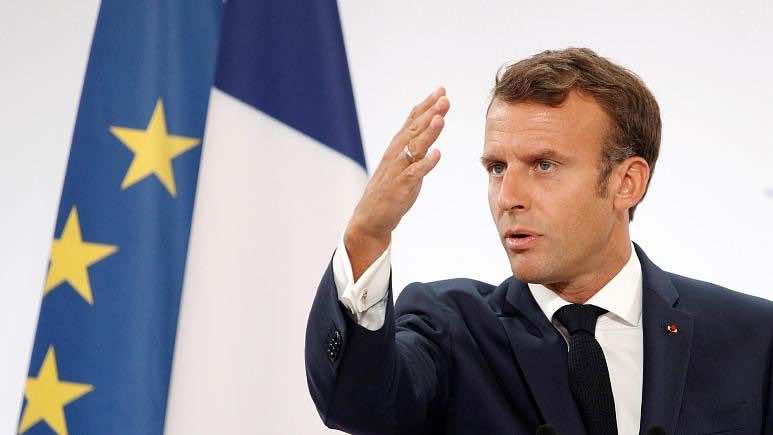
According to the French government, the bill is designed to “protect the Republic” against Islamist extremism, bolstering France’s secular system. The bill must still be presented to the Constitutional Council before President Emmanuel Macron signs it into law.
Opponents of the bill, however, claim that the law limits freedom of religion and unjustly targets France’s Muslim community- the largest minority community in the country.
What could the bill mean in practice?
If passed into law, the anti-separatism bill can ban private Islamic schools, and homeschooling for Muslim children. “Schools must first and foremost instill the values of the Republic and not those of a religion” Macron stated. The bill would force Muslim parents to send their children to public schools where the headscarf is forbidden.
In addition, the bill will oversee religious institutions and organizations, extending the powers of the government to dissolve Muslim organizations, as they did in 2020. Local authorities will be given the power to shut down places of worship if the government disagrees with any remarks, ideas, or theories being expressed.
Any religious groups will also have to declare donations over 10,000 euros made from abroad. Marlene Schiappa, Secretary of State for Gender and Equality, said that this measure is meant to ensure that “not one euro of public money is given to the enemies of the Republic.”
The bill can also impact private companies from acting on religious grounds. In practice, this could mean public swimming pools are no longer permitted to have separate swimming times for men and women. Violations of this can be punishable with five-years in jail and a 75,000 euro fine.
Although the bill itself does not specifically mention Muslims or Islam, it uses terms such as Islamism, radical Islam, and Islamist separatism. In the past, the government has categorized typical Islamic beliefs as a “signal of radicalization” such as the willingness of a Muslim woman to shake a man’s hand, whether they would drink alcohol, or even if they are growing a beard.
The Forum of European Muslim Youth and Student Organisations (FEMYSO) spoke out against the French government for politicizing Islam and Muslims. “Such actions by the government are intentional and actively feeds the culture of denunciation and suspicion towards Muslims and increases Islamophobia in France” and Macron’s actions will only “further stigmatize and alienate Muslims” they stated.
As of May 2021, 37 mosques, 4 schools, and 210 public houses run by French Muslims were closed down by the government. In the same year, 559 Muslim-owned businesses were shut down, while 22,000 of them were investigated. The state was able to seize over 43 million euros from the Muslim community.
Many Muslims fear the discrimination and state-sanctioned Islamophobia will exacerbate.