 Join on WhatsApp
 Join on Telegram
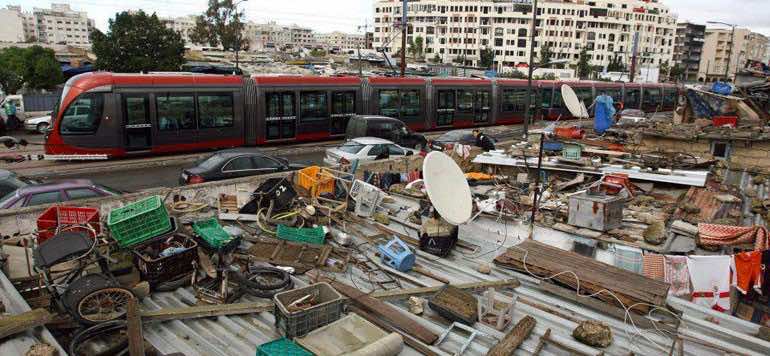
Rabat – Morocco’s Minister of Housing Fatima-Zahra El Mansouri outlined a new approach for the reabsorption of Casablanca’s remaining slums.
El Mansouri spoke before various actors and local stakeholders in a meeting held on January 3 with the governor of the prefecture of Casablanca Said Ahmidouch. She recalled Morocco’s efforts to enable citizens living in slums to benefit from decent housing conditions, the ministry noted in a statement.
The minister stressed that the new approach will focus on rehousing families living in slums while implementing the recommendations of the New Development Model (NDM). These recommendations aim to provide the necessary housing, job opportunities, and public facilities in partnership with the private sector and local stakeholders.
The NDM presents a nationwide vision, requiring the private and public sectors to collaborate to achieve sustainable development and economic growth.
El Mansouri stressed the ministry’s aim to improve the housing conditions of citizens.
The population of slums across Morocco grew 5.6% per year between 1992 and 2004, according to the World Bank.
With the rapid urbanization and the increase of the number of people in cities throughout the years, many families opted for slums, especially those who are facing unemployment and struggling financially.
Morocco has introduced several reforms to improve the life of citizens from different aspects.
In 2004, King Mohammed VI launched the “Cities Without Slums” program in the wake of the 2003 Casablanca terrorist attacks, when 12 suicide bombers from the shantytown of Sidi Moumen, a poor suburb of Casablanca, killed 45 people and injured hundreds more.
The program aims to ensure decent housing for low-income Moroccan families.
In January 2021, the Ministry for Planning and Urban Policy relaunched the “Cities Without Slums” program’s to rehouse around 22,000 households for the benefit of nearly 100,000 people in the Skhirat-Temara area in a period of less than three years.
Read Also: Morocco’s ‘Cities Without Slums’ Project to Rehouse 22,000 Households