 Join on WhatsApp
 Join on Telegram
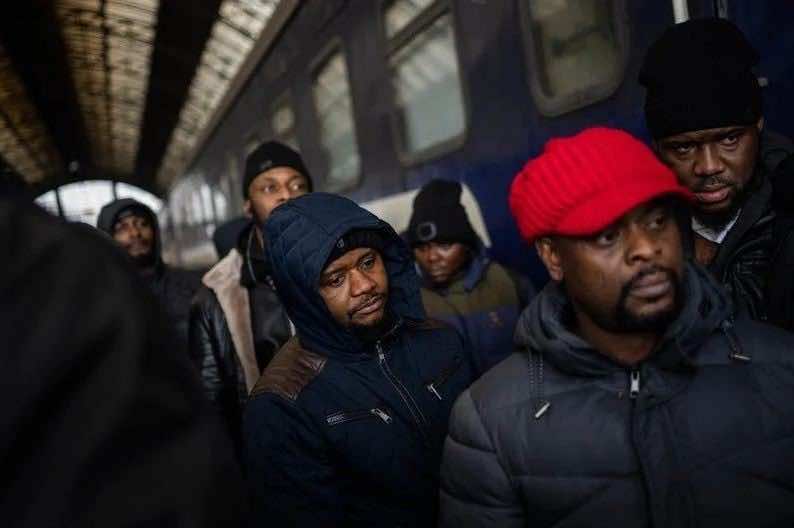
Rabat – Foreign students and migrants in Ukraine, particularly African and Indian students, have continued reporting encounters with racism when trying to cross Ukraine’s borders to safety.
Press organizations are reporting stories of people of color who were not allowed to cross the borders, in favor of white Ukrainians or Europeans, and social media sites have seen several viral tellings of similar stories by the people experiencing them.
Ayoub, a Moroccan 25-year-old pharmaceutical student, reported his story to Al Jazeera, describing the encounter as the first encounter with racism to such a degree during his six years in Ukraine.
The student said that he was proud of the life he had built in Kharkiv, where he became fluent in Russian, studied the culture of Ukraine, and made many international friends.
While he had initially intended to wait out the conflict, believing that the military operation would end soon, Ayoub tried crossing with some of his friends to Poland when that possibility started becoming less likely.
“They wanted Ukrainians to go first, so it was white people who got priority,” Ayoub told Al Jazeera. “Taxi drivers were also charging us crazy money, but I thought there will always be opportunists, even in war. It wasn’t until I reached one of the ‘checkpoints’ on the approach to the Polish border that I was actually pushed back and told to wait.”
Ayoub was successful in crossing the border to Hungary, but still faced troubles to get there, particularly with his speaking of Russian.
“When I spoke to the guards in Russian, they told me I should be speaking Ukrainian and questioned whose side I was on,” he said. “That was really upsetting because I had worked so hard to learn Russian, not just speak it, but read and write it as well.”
Russian is widely spoken by the 1.4 million people who inhabited the city of Kharkiv, where Ayoub lived.
Tens of thousands of students from Africa, India, and the MENA region have tried to exit Ukraine since the conflict started. The country is a popular study destination due to the high quality of education and the relatively low cost.
In fact, students from these countries – including Morocco, which represents the second largest international student group in the country – helped economically stimulate Ukrainian cities such as Kharkiv, and many stayed and got jobs in Ukraine after graduating.
Ukrainian authorities, including the Ministry of Foreign Affairs, have denied allegations of racial discrimination, stating that priority is only given to women, children, and the elderly regardless of nationality or race.
International students have expressed frustration with the lack of communication from the Ukrainian side prior to, and during, the armed conflict.
While several countries around the world advised their nationals to evacuate Ukraine in the period leading up to the conflict, Ukrainian universities themselves were vague in their messaging, only telling students that classes would be held online, while urging against panic.
“No one helped us to leave or coordinate anything, we were just left on our own,” a 19-year-old Nigerian student Deborah told Al Jazeera. “My friends went to the Polish border and were treated awfully by the Ukrainian guards. It wasn’t just Black people like me; it was anyone who wasn’t white.”
Ayoub also expressed worries of the war affecting his long-term academic career, annoyed that he is expected to be back in class on March 12, as per an email from his university.
“I understand they want to keep morale high, but I am afraid they will charge us, or stop our studies if we don’t go back. I don’t understand why they cannot just suspend everything until further notice,” he said.
The treatment of people of color at Ukrainian borders and the double standards applied to refugees from the Middle East and North Africa has been a huge point of contention during the conflict.
Read Also: ‘Good Refugees, Bad Refugees,’ the War on Ukraine and Western Media Racism
The racial bias in Western media coverage also came under fire for insulting remarks towards people in the MENA region that many reporters made while talking about Ukraine.