 Join on WhatsApp
 Join on Telegram
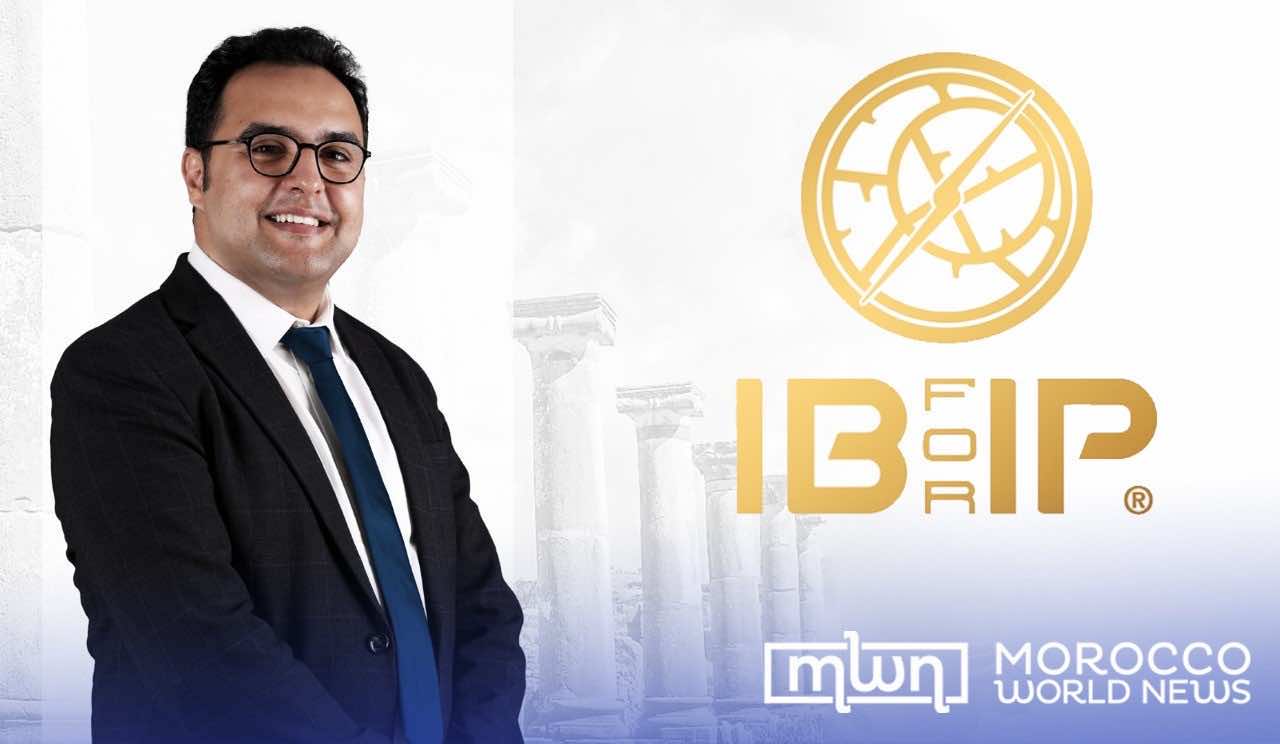
Casablanca – As the world celebrated Intellectual Property Day last month — April 26, to be exact — MWN reached out to Issam Benhssine, the founder of IB FOR IP, an industrial property consulting firm and a leading player in Morocco’s intellectual property landscape, for insights on Morocco stands today when it comes to the protection of IP rights.
Intellectual property protection is crucial to supporting innovation because, without it, firms and individuals would not gain the full advantages of their innovations and would focus less on research and development.
Intellectual property rights’ origins can be traced back to two British statues built in the 17th and 18th centuries.
The Statute of Monopolies, passed in 1624, outlawed most royal monopolies while preserving the ability to award letter patents for new innovations for up to 14 years.
The Statute of Anne, often known as the Copyright Act of 1709, provided book publishers with 14 years of legal protection and 21 years of protection for publications already in print.
Over 400 years after the Statute of Monopolies became law, intellectual property rights have continued to alter and evolve across the world. But why are intellectual property rights so vital nowadays?
For Benhssine, the answer is simple and two-fold. First, intellectual property rights are more crucial than ever because we live in a global, interconnected digital landscape. And second, because the internet has made it simpler to share information and ideas, it has also made it easier for ideas and works to be stolen, damaging both national economies and creativity.
As Benhssine sees it, intellectual property is important in both economic and cultural life as it refers to all of an author’s exclusive rights over intellectual creations. Thus, for him, entrusting intellectual property concerns to attorneys and/or industrial property counselors is a must in today’s creative or knowledge economy.
The following interview, in which Benhssine explains in-depth the categories of intellectual property and clears up the misconceptions about the topic, has been edited and redacted for clarity.
MWN: What is IB FOR IP? And what kind of services does it provide?
Issam Benhssine: IB FOR IP is a certified industrial property consulting firm based in Casablanca, Morocco. It provides a full range of legal services covering counseling, registration, prosecution, licensing, and litigation related to intellectual property rights.
MWN: What is the difference between intellectual property and industrial property? And what are some examples of these types of properties?
Issam Benhssine: Intellectual property plays a key role in both economic and cultural life. It refers to all exclusive rights granted to an author over intellectual creations.
Intellectual property is divided into two categories: industrial property, copyright, and related rights. Industrial property includes in particular patents for invention (e.g., Bluetooth technology), trademarks (e.g., Morocco Now, Salamatouna), industrial designs (e.g., design of a perfume bottle), geographical indications (e.g., Argan oil), and appellations of origin (e.g., Taliouine saffron).
In order to set out the rights and obligations between parties as to the use of IP, and protect and recognize the IP owner’s exclusive rights, there are a number of treaties ensuring this aim.
The Paris Convention for the Protection of Industrial Property, enacted in 1883 and maintained by the World Intellectual Property Organization (WIPO), is the primary international treaty protecting industrial property. It currently has 178 contracting parties, with Morocco joining on February 27, 1917.
The Berne Convention for the Protection of Literary and Artistic Works, enacted in 1886 and maintained by WIPO, is the primary international convention protecting copyright and associated rights. It now has 181 contracting parties, including Morocco, which ratified the treaty on June 16, 1917.
Both the Paris and Berne conventions have been in force in Morocco for almost a century. Morocco is also a contracting party to the patent cooperation treaty (PCT), the Madrid System, and the Hague system, all of which assist right holders, both Moroccan and foreign, in obtaining an international patent, trademark, and industrial design protection.
At the national level, the legal framework of intellectual property is primarily comprised of law No. 17-97 on industrial property protection promulgated by Dahir No. 1-00-91 on February 15, 2000, as modified and supplemented by laws No. 31-05 and 23-13, and law No. 2-00 on copyright and related rights promulgated by Dahir No. 1-00-20 on February 15, 2000, as modified and supplemented by laws No. 34-05 and 79-12.
The Moroccan Industrial and Commercial Property Office (OMPIC) and the Moroccan Copyright Office (BMDA) are the two intellectual property regulating bodies in Morocco.
MWN: What is the procedure to register a brand and gain legal rights over it?
Issam Benhssine: A trademark, as defined in Article 133 of Morocco’s law on industrial property protection, is a sign that serves to distinguish the goods and/or services of a natural or legal person (e.g., a company, a government department, a non-governmental organization, a political party, a university, a sporting club, a cooperative, etc.), such as denominations, figurative signs, sound signs, and olfactory marks. The trademark must be available, legal, and distinctive.
Following the submission of a trademark application to the Moroccan Office of Industrial and Commercial Property (OMPIC) and its formal and substantive examination for absolute grounds of refusal, it is published in the official catalog of trademarks.
According to Article 148.2 of Morocco’s law on industrial property protection, opposition to the trademark application may be filed before OMPIC within two months of its publication by the owner of a registered mark, the owner of a previously filed trademark application, the owner of a trademark with an earlier priority date, the owner of a well-known trademark, the holder of an exclusive trademark license, or the holder of a geographical indication or an appellation of origin.
If there is no resistance to the trademark application, OMPIC will issue the certificate of registration in the third month following its publication in the official catalog of trademarks.
The registered mark may also be registered with the Moroccan Customs and Excise Administration (ADII) to allow, at a national level, the suspension of the release into free circulation of products suspected of being counterfeit for a one-year renewable period.
MWN: What is counterfeiting?
Issam Benhssine: Counterfeiting is a growing worldwide problem. According to a joint study published on June 22, 2021, by the Organization for Economic Cooperation and Development (OECD) and the European Union Intellectual Property Office (EUIPO) titled “Global Trade in Fakes: A Worrying Threat,” global trade in counterfeits amounted to USD 464 billion in 2019, accounting for 2.5% of global trade.
The most commonly seized goods categories include footwear, apparel, leather products, electronics, perfumes, cosmetics, toys, and games.
The National Committee for Industrial Property and Anti-counterfeiting (CONPIAC) in Morocco commissioned a study titled “Study on the Economic Impacts of Counterfeiting in Morocco.”
This study, commissioned at the end of 2011 and released in February 2013, is the first of its sort in the Middle East and North Africa (MENA) region.
According to the study, the value of counterfeit and fraudulent products in the Moroccan market is projected to be between MAD 6 billion ($607 million) and MAD 12 billion ($1.2 billion), representing 0.7% to 1.3% of the Moroccan GDP. The study also stated that counterfeiting results in an annual tax loss of almost MAD 1 billion ($101 million) and roughly 30,000 job losses.
The study identifies textiles, leather products, automobile spare parts, cosmetics, electrical items, and equipment as the most vulnerable economic sectors to counterfeiting. Hopefully, the study’s findings will be revised by next year.
According to Article 201 of Morocco’s law on industrial property protection, any infringement of the rights of the owner of a patent, an industrial design, a trademark, a geographical indication, or an appellation of origin (offering for sale, reproduction, use, holding with a view to using or putting on the market, imitation, etc.) would constitute an infringement.
In the case of trademark infringement, the right holder has the option of pursuing civil or criminal action.
In accordance with Articles 225 and 226 of the same law, trademark infringement by reproduction is punishable by imprisonment of three months to one year and/or a fine of between MAD 100,000 ($10,117) and MAD 1,000,000 ($101,176), whereas trademark infringement by imitation is punishable by imprisonment of two to six months and/or a fine of between MAD 50,000 ($5,058) and MAD 500,000 ($50,588).
MWN: Who can assist us to protect our IP rights?
Issam Benhssine: Basically, an attorney-at-law and/or a certified industrial property counselor may assist clients in the prosecution and/or litigation of intellectual property rights.
As a certified industrial property counselor, I usually inform the brand owners that they have a choice of 26 industrial property counselors across Morocco, with women accounting for 20% of all industrial property counselors in our country.
The area of Casablanca-Settat has the most industrial property counselors, followed by Rabat-Sale-Kenitra, Souss-Massa, and Marrakech-Safi.
MWN: Can you give us some statistics about the IP field in Morocco?
Issam Benhssine: The Global Innovation Index (GII) ranks national economies based on their ability to innovate. It is issued annually by WIPO in collaboration with other entities.
The 2021 edition of the GII, released on September 20, 2021, included 81 indicators from international, public, and private sources, divided into two sub-indices: innovation inputs (institutions, human capital and research, infrastructure, market sophistication, and business sophistication) and innovation outputs (knowledge and technology outputs, creative outputs).
The index is derived by taking the average of the sub-indices of innovation inputs and innovation outputs.
MWN: What is Morocco’s ranking in IP? And What are the factors that determine this ranking?
Issam Benhssine: Morocco is ranked 77th out of 132 nations in GII 2021, and it performs better in innovation outputs (67th) than in innovation inputs (84th), precisely the business sophistication indicator in which Morocco is ranked 105th.
Improving innovation linkages and university-industry collaboration in research and development are critical for making a significant leap in the forthcoming edition of GII.
Israel (15th), the United Arab Emirates (33rd), and Turkey (41st) are the top performers in Northern Africa and Western Asia, whereas Egypt ranks 94th, Tunisia 71st, and Algeria 120th out of 132 economies.
Switzerland, Sweden, the United States of America, the United Kingdom, the Republic of Korea, the Netherlands, Finland, Singapore, Denmark, and Germany are the top ten achievers in GII 2021.
MWN: As an intellectual and industrial property counselor, what advice can you give new creators and brand owners to protect their rights and avoid the negative effects of counterfeiting?
Issam Benhssine: My advice would be to entrust intellectual property matters to attorneys and/or industrial property counselors.
What could be filed as a trademark? How to conduct a prior art search of a trademark and analyze the results? How to monitor a registered trademark? How to prevent your brand from becoming generic? What is the preferred legal action in case of a trademark infringement? What is the best and most cost-effective strategy to enforce your trademark rights? How to draft a trademark license? These questions and many others can only be answered by an intellectual property professional.