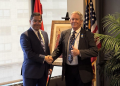
Rabat – Morocco’s former head of government Abdelilah Benkirane commented this past Sunday on the diplomatic tensions between Morocco and Tunisia, noting his regret of the Tunisian government’s decision to extend an invitation to and host Polisario leader Ibrahim Ghali during the eighth Tokyo International Conference of African Development (TICAD) late last month.
Benkirane recalled the long-running Algerian-Moroccan diplomatic crisis, saying that Tunisia has long been seen as a potential mediator to help the two countries mend their historically strained relationship.
“This was an irresponsible act,” Benkirane said of President Kais Saied’s hosting of the Polisario chief Brahim Ghali, emphasizing that the Tunisian president’s decision to welcome the separatist leader as a “president” was “disturbing.”
The former Moroccan PM stressed, however, that President Saied’s act neither has nor will have an impact on the Western Sahara dispute.
For Benkirane, the Tunisian government’s decision was all the more surprising because of the historically cordial relations between Rabat and Tunis. He cited King Mohammed VI’s visit to Tunisia in May 2014 as an illustration of Morocco’s policy of showing support and solidarity to its friends and neighbors, especially when they are going through rough times as Tunisia was in the aftermath of its Arab Spring episode.
Read Also: Morocco’s Foreign Affairs Ministry: Tunisia Can’t Invite Polasio to TICAD
With his visit taking place amid Tunisia’s chaotic post-Arab Spring marked by terrorist strikes in Tunis and elsewhere across the country, argued Benkirane, the Moroccan monarch aimed not only to show that Morocco stood in solidarity with Tunisians, but also to tell the rest of the world that Tunisia was still a place to visit despite intermittent security threats.
“When I was a head of government I recommended a King visit to Tunisia and his majesty, may Allah protect him, responded to my recommendation,” Benkirane recalled, revealing that King Mohammed VI was only supposed to spend two days in Tunisia but ended up prolonging his stay to ten days to promote tourism in the country amid tourists’ fear due to terror-related issues.
“I personally was scared and concerned about the King’s safety. He was visiting public areas and deployed minor security,” Benkirane said as he continued to express astonishment at president Saeid’s decision to welcome Ghali.
He added that he hopes to see the Tunisian president review his actions by reverting back to his country’s historical position of positive neutrality on the Western Sahara dispute.
As Morocco and Tunisia have both had a policy of maintaining good ties with neighbors, Benkirane appeared to argue that Tunis should strive to be a reliable broker in the Algerian-Moroccan rivalry, instead of picking one of the parties’ side and damaging the fraternal and strategic relations it has long nurtured with the other.