


 Join on WhatsApp
  Join on Telegram
 Rabat – A new report from the Policy Center for the New South has revealed that women’s participation in the workforce in Morocco has been “on a decline that has become structural for 20 years.”
The report, entitled “Accessibility of Economic Opportunities for Women in Morocco,” highlights how female participation (including both those actively working and those looking for work) has been on a slight decline since 1999.
In 2022, female participation was at 19.8%, compared to 69.6% for men, and also well below the total for both genders, which stood at 44.3%.
Professional participation declined across all age groups since 2010. Only 29% of women aged between 25 and 34 years are part of Morocco’s workforce in 2021, compared to nearly 32% in 2021.
Notably, the employment rate for girls aged 15 to 24 fell from 19% to 12.1%, a development credited to the improved schooling rate of said demographic.
“According to the HCP, the rate of schooling for 15-17 year olds rose from 46.3% in 2010 to 70.9% in 2020,” the report noted.
Additionally, the relative lack of women in the workforce can be attributed to their underrepresentation in education, as the number of women who have finished their education remains low, especially among older generations.
Read also: Open Letter to My Dear Moroccan Women of Tomorrow
“Compared to the rate of participation for the men, in the same demographics, we can see a decline in urban areas and a near stabilization in rural areas,” the report explains.
The report highlights some reasons for the discrepancies, specifying that the paid labor and entrepreneurship markets both remain hostile and limited for women.
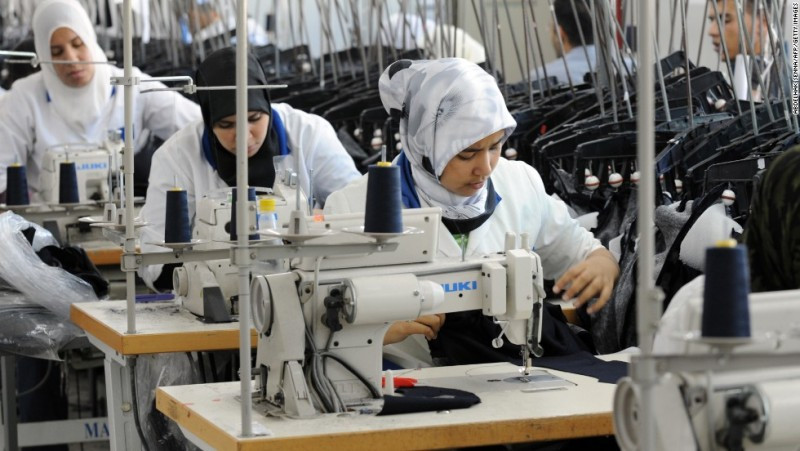
Entrepreneurship for women suffers from amplified problems such as a lack of funding and support, forcing many out of necessity to use their skills in trades like sewing, as pastry chefs, and catering in informal businesses.
Job insecurity in the paid labor market also disproportionately affects women, the report highlights, as they are more likely to be employed on short-term contracts and receive lower wages than men.
Societal barriers such as stereotypes and a lack of educational opportunities also often stand in the way of women’s economic opportunities.
Women in Morocco also suffer from some of the overall problems in the job market, such as the low level of job creation, especially as more and more people graduate from universities and enter the workforce.
Finally, the report highlights measures and goals that the government set for itself in the field, highlighting that improving value-added sectors and creating more job opportunities can contribute significantly.
Measures to ensure an environment that is empowering to women, and training and support programs, have been launched by the government and the private sector, it concludes.
A report from Morocco’s Higher Commission for Planning (HCP) in February showed that 75% of the 15 million active population who are outside the labor force were women, highlighting persisting inequalities in Moroccan society.


