 Join on WhatsApp
 Join on Telegram
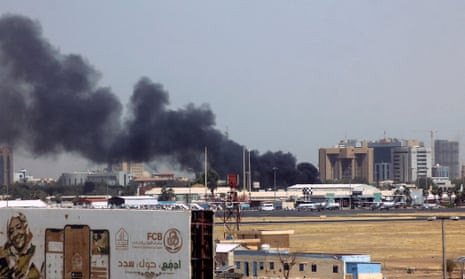
Rabat – Intense fighting between Sudan’s army and Rapid Support Force (RSF) began in the northern part of the Sudanese capital, Khartoum, on Sunday.
Witnesses in the area reported that the RSF attempted to attack Sudanese army positions, particularly in proximity to an air base where fighter jets have been targeting the RSF take off.
Witnesses also observed air strikes in the northern areas of Khartoum, accompanied by the use of heavy artillery in the eastern part of the city. The RSF claimed to have downed a Sudanese army fighter jet in Bahri, one of the three cities comprising Greater Khartoum.
Since April 15, clashes between forces loyal to army chief Abdellah Fattah al-Burhan and the RSF have resulted in the deaths of nearly 3,000 people.
The International Organization for Migration reported that approximately 2.2 million people have been internally displaced within Sudan, with an additional 645,000 individuals seeking refuge across international borders due to the conflict. The United Nations said that a record 25 million Sudanese people are in need of humanitarian aid and protection.
Doctors Without Borders (MSF) issued a statement highlighting the dire conditions faced by displaced Sudanese individuals residing in nine camps in the White Nile state, which borders South Sudan.
The situation is particularly critical in Darfur, where the worst fighting has occurred. The RSF and its allied militias have been accused by residents, the United Nations, the United States, and others of targeting and killing civilians based on their ethnicity.
The death toll is believed to be significantly higher than reported, with two-thirds of health facilities in conflict-affected areas being non-operational, according to the World Health Organization, leaving many wounded individuals unable to access medical care.
‘Amid the escalating violence’
The Sudanese Doctors Union accused the RSF of attacking the Shuhada hospital, one of the few functional medical facilities in the country, resulting in the death of a staff member, but the RSF denied the allegations.
Moreover, the Combating Violence Against Women Unit, a government agency, reported 88 cases of sexual assault in Khartoum, El Geneina, and Nyala (the capital of South Darfur).
Victims in most cases attributed the crimes to the RSF, although it is believed that the reported cases represent only a fraction of actual incidents.
The ongoing war has further crippled Sudan’s already fragile infrastructure, leaving residents without adequate access to water and electricity, particularly during the sweltering heat of summer.
Despite various attempts at ceasefires, including those brokered by the United States and Saudi Arabia, the fighting has persisted, even during the recent Eid al-Adha holiday when separate unilateral truces were announced by the warring factions.
The deteriorating situation in Darfur serves as a grim reminder of the region’s tragic past.
In 2003, former leader Oman al-Bashir armed and unleashed the RSF’s predecessor, the Janjaweed militia, resulting in the death of over 300,000 people and the displacement of 2.5 million.
Omar al-Bashir and others were charged by the International Criminal Court with genocide, crimes against humanity, and war crimes. A UN official has now warned of potential new “crimes against humanity” in the current conflict in Darfur.
Aid organizations are urgently appealing to the warring parties to establish a secure corridor that would allow them to reach the injured and displaced individuals.
Sudan’s army has been fighting with the RSF since April when the paramilitary group mobilized their forces in a rebellion against the military in charge of the country.
Calls for a democratic transition had been ongoing since Al-Bashir was overthrown in 2019, after ruling for 30 years. Despite promises of an election and transition of power, the military has remained in charge throughout this period.