


 Join on WhatsApp
 Join on Telegram
Following two years of negotiations involving the five most prominent unions and the Ministry of Education, the talks failed to produce any outcomes, with teachers expressing their discontent with the new regulations introduced by the Ministry of Education.
The list of participating unions included the National Union of Education (UMT), the National Education Syndicate Union (CDT), the Free Union of Education (UGTM), the National Education FederationUnion (FDT), and the National Teaching Federation (FNE).
The Ministry of Education introduced the new mandate on September 27, 2023, sparking strong opposition from teachers and four major unions (UMT, CDT, UGTM, and FDT). These unions criticized the reform, asserting that it was solely the ministry’s decision.
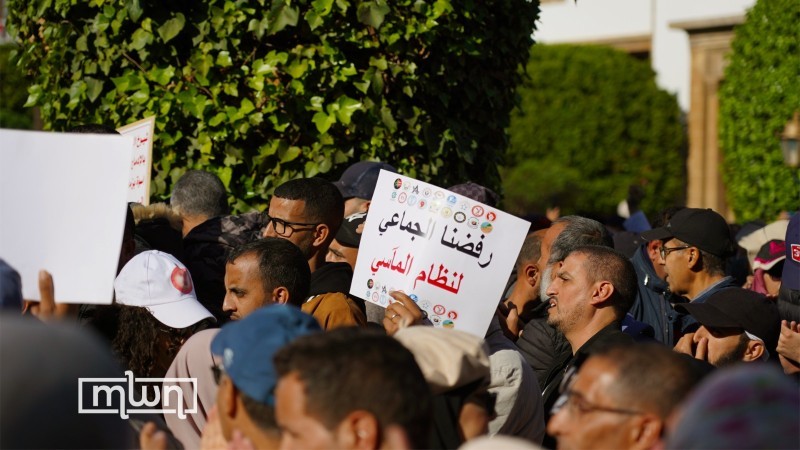
Convinced that teacher unions’ attempts to engage in a dialogue with the Ministry of Education were futile and unproductive, teachers united under a national coordination and responded to a call for a four-day strike in October, and have initiated new strikes in November.
They also held a national march in front of the parliament on Tuesday, November 6th.
In one of his videos commenting on the new mandate, Moroccan political analyst and university professor Abderrahim El Manar Esslimi said that the reform does not provide adequate motivation for teachers, particularly since they have not received a salary increase since 2011, in contrast to employees in other sectors.
He further emphasized that proposing a reform without addressing the issue of salary raises is inherently flawed, especially in the context of today’s evolving economic landscape, where inflation is significantly affecting the quality of life for educators.
Esslimi also strongly expressed that the teachers’ strikes are justifiable, as they perceive themselves as undervalued by the Ministry of Education, which has failed to acknowledge their essential contributions to the education system according to him.
Unfair mandate
The new reform, commonly known as the New Mandate, comprises 98 articles.
Despite its claim of aiming to unite teachers, the first article sharply contradicts this goal by categorizing teachers into two groups: employees of the ministry and employees of regional academies (referred to as contract-based employment).
The wording of the first article explicitly highlights this differentiation; otherwise, both groups would have been referred to simply as employees of the Ministry of Education. As a result, the very first article of the decree divides teachers into two factions rather than fostering unity among them.
The proposed alterations in the education system have also raised concerns due to the inclusion of several contentious articles.
Article 15, for instance, introduces additional mandatory duties for teachers without any accompanying compensation, which could potentially result in an increased workload without corresponding benefits.
Articles 67 and 68 grant the Ministry the authority to assign tasks and determine working hours at its discretion, establishing working hours without specifying a set schedule. Moreover, Article 69 requires teachers to participate in training during interim holidays, which could encroach on their personal time.
Additionally, Article 70 reduces the end-of-school-year holiday to just 22 days, which may negatively also impact teachers’ rest. Lastly, Article 52 places greater emphasis on assessing mandatory tasks rather than evaluating teacher performance, potentially failing to accurately represent their contribution to the education system.
These articles have raised concerns regarding teacher rights and workload. Overall, the escalation resulted from the unfair education reform that presented more duties for teachers without compensation.
My personal experience
As a teacher with seven years of experience teaching English to high school students, I can personally attest that the new mandate falls short of my expectations. Teachers in Morocco consistently make significant sacrifices for their students.
Over my seven years in the profession, I have frequently borne the cost of photocopying exam materials for my students out of my own pocket. Additionally, I transformed a classroom that was far from suitable when I was initially assigned to my new school. I have even purchased gifts for outstanding students and designed certificates of appreciation to recognize their achievements.
Teaching English necessitates the use of technology, and I have consistently brought my personal laptop to the classroom, using my own data to showcase English-speaking videos and play English songs for my students.
I found it necessary to purchase a loudspeaker to facilitate these activities. These examples only scratch the surface of the sacrifices made by teachers. Some educators working with elementary students in remote areas go as far as providing clothing and food for underprivileged students.
Despite all these sacrifices, the Ministry of Education’s response has been minimal, with meager pay increases offered, even though teachers are notably underpaid compared to other professionals in the same sector.
However, the new reform introduced seemingly trivial ideas to motivate teachers, such as presenting them with certificates of appreciation at the end of the school year, while superintendents and principals in the same school receive monetary compensation starting from MAD 1,500.
Teachers’ demands
In the wake of the recent teacher protests, Moroccan educators are voicing a series of demands, seeking significant changes and improvements within the education sector.
The key points raised by the teachers include a repeal of the new mandate. Educators are urging the abolishment of the fundamental system and are appealing to the government to adopt a more collaborative approach in crafting new education reforms, emphasizing the need for their voices to be heard instead of relying solely on a hierarchical approach.
They are also requesting a salary increase of no less than MAD 2,500, emphasizing the current government’s commitment to the pay raise, when they made a pledge during the 2021 elections.
Abolition of contract-based employment is another key issue, as contracted teachers aspire to attain full employment status under the Ministry of Education, on par with their colleagues, and seek equal rights and benefits.
Additionally, they are requesting equitable remuneration for their extra responsibilities. Educators seek fair compensation for tasks and responsibilities that extend beyond their regular job descriptions, including duties like supervising national or regional exams, evaluating exam papers, and participating in training sessions.
Teachers are also pressing the Ministry of Education to improve working conditions by supplying crucial tools like multimedia projectors and markers. Moreover, they are advocating for a reduction in class sizes, given that Moroccan public schools frequently contend with an average of 40 students per class.
The striking workers are advocating for a thorough reevaluation of the regulations governing teacher promotions.
They contend that the existing system, which mandates six years of service before eligibility for taking a professional promotion exam, requires reform.
With a mere 14% of candidates passing the exam and concerns arising from the nearly year-long wait for results, doubts about its effectiveness have emerged.
Teachers have also called for the revocation of a decree permitting the ministry to withhold money from the wages of teachers participating in strikes.
They contend that this practice contradicts the Moroccan constitution, which recognizes the right to strike as a fundamental constitutional entitlement. Therefore, teachers should not encounter repercussions for exercising this constitutionally protected right.


