 Join on WhatsApp
 Join on Telegram
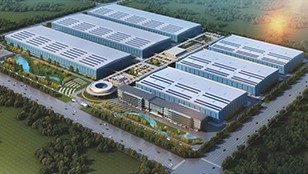
Rabat – BTR New Material Group, a key player in the global electric vehicle battery components sector, announced this week a game-changing investment of $500 million to establish an avant-garde cathode manufacturing plant in Morocco.
This strategic venture, boasting an annual production capacity of 50,000 tons of cathodes, signals a crucial leap forward in meeting the soaring global demand for lithium-ion batteries.
A subsidiary of China Baoan Group and a trusted supplier for Tesla, BTR New Material Group is set to lead the investment and construction efforts. Operational responsibilities will be managed by a Moroccan entity established by Bnuo International Holding, another subsidiary of BTR.
This move aligns with a broader trend observed among Chinese battery manufacturers, responding dynamically to fierce domestic competition by expanding strategically overseas.
Morocco: A Magnet for Chinese Battery Giants
Morocco, emerging as a hub for electric vehicle battery production, experiences heightened interest from Chinese industrial giants.
The North African nation recently signed a protocol of agreement with Guchen Hi-Tech, a Sino-European conglomerate in electric mobility, with investments estimated at a substantial 65 billion Moroccan dirhams (approximately $6.4 billion).
Read also: Morocco Among Top African Destinations for Chinese Investment
Beyond BTR, other industry leaders such as CNGR Advanced Material Company and Guangzhou Tinci Materials Technology have committed substantial funds to projects in Morocco.
CNGR, in collaboration with Al Mada investment fund, prepares to construct an extensive industrial complex in Jorf Lasfar, with an estimated cost of around 20 billion dirhams.
Simultaneously, Guangzhou Tinci Materials Technology, a major producer of electrolytes for lithium batteries, recently announced a $2.8 billion investment in its Moroccan plant, targeting both the local market and the broader European electric vehicle market.
Gotion High-Tech, a heavyweight from China, makes strides in building a factory in Bouknadel, Rabat-Salé-Kénitra region, with an annual production capacity of approximately 100 gigawatt-hours of electric vehicle batteries by 2030.
A collaboration with Swiss-Swedish multinational ABB underscores their commitment to advancing gigafactory technologies.
Similarly, the Chinese conglomerate Geely discloses a 2023 investment of $2 billion in constructing a car production plant in Tanger. These investments undoubtedly contribute positively to the Moroccan economy.
Morocco and China Strengthen Bonds via Belt and Road Initiative
This trend falls within a broader global framework. In early 2020, Nasser Bourita, the Moroccan Minister of Foreign Affairs, Cooperation, and Moroccans Residing Abroad, alongside Ning Jie Zhe, the Vice President of the Commission for Development and Reform of the People’s Republic of China, signed an agreement aimed at significantly enhancing the partnership between the two countries.
This collaboration falls under the Belt and Road Initiative, launched by Chinese President Xi Jinping in 2013 to foster cooperation opportunities between China and the 140 participating countries.
“Following this agreement, Beijing will encourage major Chinese companies to invest in Morocco across various sectors, including the automotive industry, aviation, agriculture, high technology, e-commerce, and other domains,” the Moroccan Ministry of Foreign Affairs explained in a statement.
As China seeks to penetrate new sectors in Morocco in the coming period, the minister highlighted a twenty fold increase in the tourism sector, attributing it to the royal decision exempting Chinese citizens from visa requirements in June 2016.
Morocco, having joined the Belt and Road Initiative in November 2017, became the first country in the Maghreb and one of the earliest in Africa to embrace this initiative.