


 Join on WhatsApp
 Join on Telegram
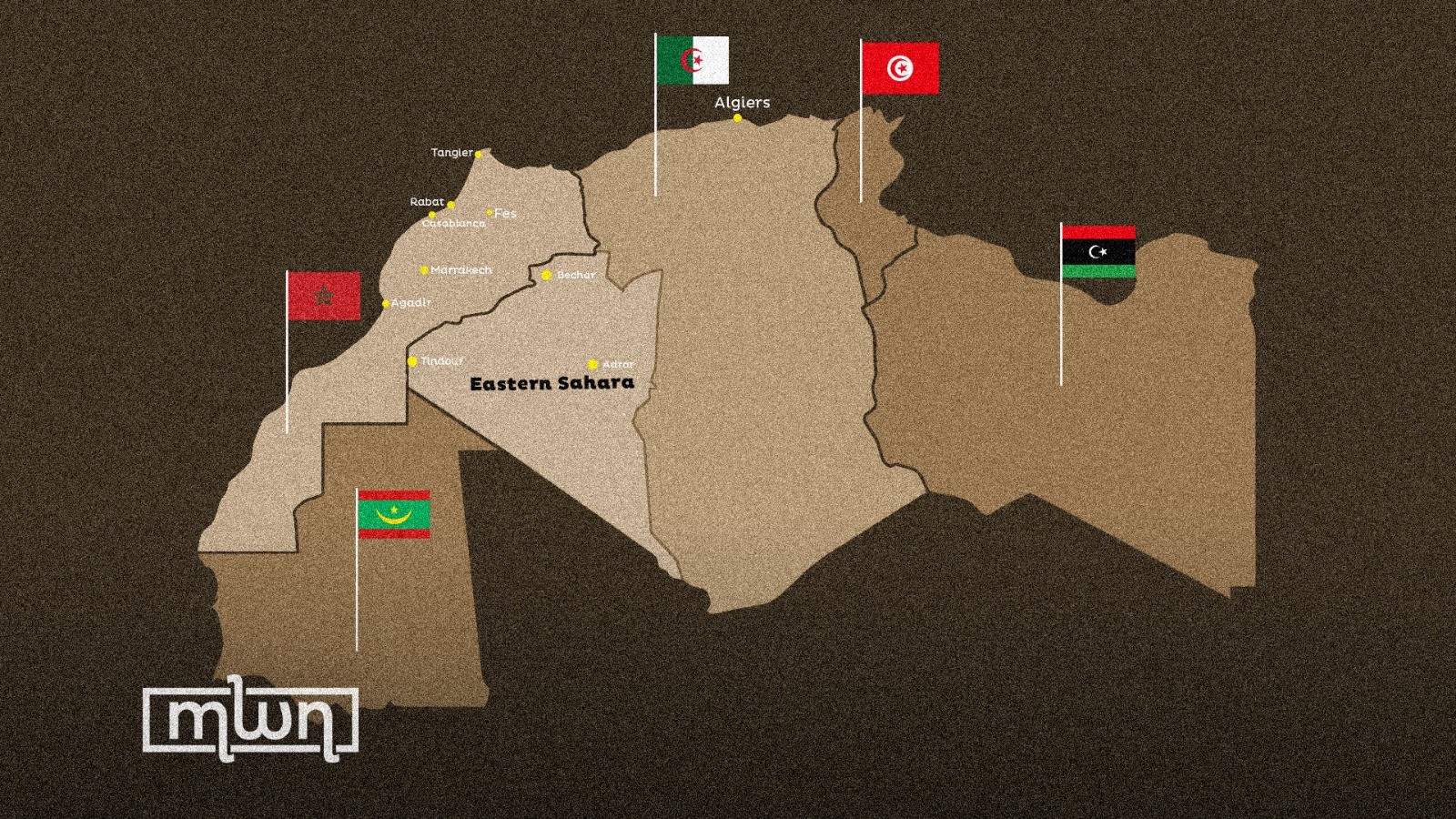
Doha – Bahija Simou, the director of Morocco’s Royal Archives, has brought the long-running border dispute between Morocco and Algeria back to the forefront after asserting on that Morocco has documents proving its sovereignty over the so-called “Eastern Sahara” region, which includes the mineral-rich areas of Tindouf, Adrar and Bechar in southwestern Algeria.
Simou’s statements, made on March 7 during a conference organized in Rabat by the Ribat Al Fath Association and broadcast live by the National Broadcasting Company (SNRT), coincided with a recent thawing of relations between Morocco and France. As a result, some observers have attributed strategic significance to the timing of her remarks.
Morocco has long maintained that France “carved out” the Eastern Sahara from Moroccan territory and incorporated it into Algeria during the colonial era. By raising this issue now, observers have suggested, Morocco may be attempting to pressure France, whose relations with Algeria have deteriorated, into explicitly recognizing Moroccan sovereignty over Western Sahara.
The good old days of Algerian-Moroccan brotherhood
According to Simou, Morocco has consistently defended its eastern borders, which it held from the 17th century until the arrival of French colonialism in 1912. She revealed that in 1956 and 1957, following Morocco’s independence, France sought to negotiate with Morocco to resolve the Eastern Sahara border issue. French Ambassador to Rabat at the time, Alexandre Parodi, insisted on meeting with the Moroccan government and proposed a solution to the problem, including the Tindouf region.
France had intended to return Tindouf to Morocco, but the late King Mohammed V rejected the proposal, believing it would betray Algerian fighters, Simou explained. Instead, he preferred to wait for Algeria’s independence to resolve the border issue with his “Algerian brothers.” Simou commented that this stance reflected Morocco’s historical commitment to noble principles of neighborliness, Islamic brotherhood, and brotherly ties between Moroccan and Algerian tribes.
Sources suggest that France had offered to allow Morocco to regain control over the disputed areas in exchange for establishing a Franco-Moroccan company to exploit newly discovered mineral resources in the Sahara and halting support for the Algerian independence war. But King Mohammed V declined the French offer, insisting that Morocco preferred to resolve the border issue with Algerian authorities after their independence from France.
In 1961, King Hassan II signed an agreement with Ferhat Abbas, head of the Provisional Government of the Algerian Republic, acknowledging the existence of a border problem and the need for negotiations immediately after Algerian independence.
Following skirmishes along the border in 1963, however, the “Sand War” erupted between the two countries in October due to the same border disputes. The brief conflict ended through mediation by the Arab League and the Organization of African Unity, but the border issue remained unresolved despite a 1972 treaty between Morocco and Algeria.
The Western Sahara dispute further exacerbated tensions, particularly after Morocco launched the “Green March” in 1975 to liberate the territory from Spanish colonialism. The dispute reached a climax in 1994 when a hotel in Marrakech was bombed. With Algerian militants suspected of involvement in the fatal bombing, Morocco imposed visa requirements on Algerians. Algeria responded by closing land borders with Morocco.
History supports Morocco’s claims to the Sahara
Simou also asserted that Morocco’s royal archives provide irrefutable evidence of Moroccan historical sovereignty over the Western Saharan region. She highlighted the unwavering allegiance of the Sahrawi tribes to the Alaouite sultans and kings, delivering a historical overview of the key stages and documents that attest to Moroccan sovereignty over these regions in southern Morocco.
There were three main points of focus in Simou’s speech to her enthusiastic and attentive audience: Morocco’s sovereignty over the Saharan provinces, the Moroccan Sahara during the Alaouite dynasty era, and how colonialism planned the fragmentation of Morocco’s territorial integrity.
She emphasized the permanent presence of the Sahara in Morocco’s governance system and its crucial role in shaping the country’s history, noting that most of the dynasties that ruled Morocco originated from the South or the Saharan oases.
Simou underscored the economic significance of the Moroccan Sahara in controlling gold routes and major commercial centers, such as Sijilmassa and Aghmat, and the security enjoyed by trade caravans traversing the Saharan provinces under Moroccan sovereignty.
She also highlighted the Sahara’s prominence during the Alaouite dynasty since the 17th century, stressing that there are documents confirming the existence of allegiance (Beia) between Sahrawi tribes and the Alaouite sultans and kings.
Speaking on “The Moroccan Sahara in the colonial system,” Simou noted that the Royal Archives demonstrate how the Western Sahara region attracted colonial ambitions, sparked rivalry among traders, and drew travelers, explorers, and missionaries to serve political and economic aims.
However, she assured that the Moroccan Makhzen and Sahrawi tribes responded firmly to these attempts. Simou reviewed the agreements made during the French colonization of Algeria to undermine Morocco’s unity and the efforts made by the Alaouite sultans and kings to safeguard Moroccan territorial integrity.
Growing international support for Morocco’s Sahara stance
She concluded by emphasizing that under the leadership of King Mohammed VI, Morocco continues to strengthen its sovereignty over the southern provinces, bolstered by growing international support for the Moroccanness of the Sahara.
This is not the first time that Simou has raised the Eastern Sahara issue to indirectly dismiss the Algerian regime’s Morocco-bashing campaign while making a historical case for Morocco’s claims to the Sahara.
She previously discussed the topic at the Moroccan Press Agency headquarters last year. This was in the wake of yet another Algeria-Morocco controversy that peaked when the French-language Moroccan magazine “Maroc Hebdo” published in March 2023 a map that included large areas of southwestern Algeria as part of Morocco.
The magazine argued that the Eastern Sahara, not Western Sahara, was the real crux of the Morocco-Algeria dispute, accusing Algeria of using the Western Sahara issue to divert attention from the Eastern Sahara.
Algeria swiftly condemned the publication, with the Algerian Press Service asserting that the “Moroccan Makhzen” had instructed its media to publish propaganda in support of Morocco’s expansionist ambitions.
Ibrahim Boughali, chairman of the Algerian People’s National Assembly, not only responded by affirming the Algerian army’s readiness to defend the country’s borders, but he notably rejected Simou’s statements and accused Rabat of attempting to “disrupt” Algeria.
Tensions between the two neighbors escalated in August 2021 when Algeria severed diplomatic ties with Morocco, citing “hostile acts” without providing any concrete evidence of Moroccan hostility. Rabat described the decision as “completely unjustified,” citing Morocco’s repeated attempts in recent years to reconcile with Algeria despite lingering political divergences.
Algeria halted gas flow through pipelines to Spain that crossed northern Morocco and later banned Moroccan aircraft from its airspace. The dispute intensified with media clashes and a war of words, leading Algerian President Abdelmadjid Tebboune to declare that the rift had reached a “point of no return.”
As the border dispute resurfaces, it remains to be seen how the international community, particularly France, will respond to Morocco’s claims over the Eastern Sahara. The conflict continues to strain relations between the two North African nations, with far-reaching implications for regional stability and economic cooperation.




