


 Join on WhatsApp
 Join on Telegram
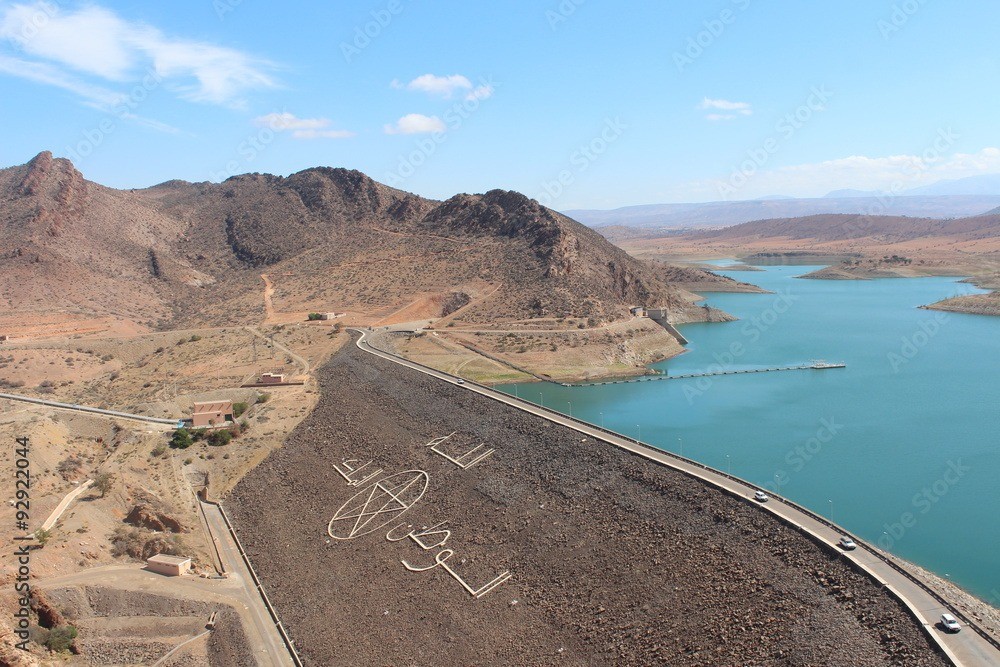
Doha – Morocco is grappling with a severe drought that has left one of its major reservoirs, Al Massira Dam, with just 3% of its average water level compared to nine years ago, according to a BBC News analysis of satellite images. The reservoir, located halfway between Casablanca and Marrakech, serves as a vital water source for major cities and is crucial for farm irrigation in the region.
The BBC’s analysis of satellite images taken in March over successive years from 2018 to 2024 reveals a dramatic transformation in the landscape surrounding the reservoir. Areas that were once green have turned parched and beige, indicating the severity of the drought.
Prof Brian Thomas, a hydrogeologist who has analyzed satellite images for NASA, noted that the images “clearly depict a rapid change in the reservoir’s surface area” and that the appearance of the water had changed, suggesting shifts in land use and the flow of the river feeding the reservoir.
Morocco has been experiencing six consecutive years of drought, exacerbated by climate change, which has led to record temperatures and increased evaporation. This has threatened water supplies across the country and has had a significant impact on agriculture and the economy. According to World Bank data from 2020, agriculture accounts for nearly 90% of water consumption in Morocco, and farmers have been hit hard by the drought.
Abdelmajid El Wardi, a farmer who cultivates cotton and wheat and rears sheep and goats on his land near Rabat, told the BBC: “The most difficult drought we have experienced in history is this year. For me, the current agricultural year is lost.” He reported that his ewes had stillbirths due to the lack of water and food available during the drought, and even nearby wells fed by groundwater had little left in them.
Read also: Ministry: Morocco’s Dam Filling Rates Show Mixed Progress
The drought’s impact extends beyond agriculture, affecting the country’s famous hammams, or public steam rooms and saunas. Authorities have ordered hammams in key cities to close for three days a week to save water. The government has also launched a national campaign to encourage water conservation among the population.
In January this year, King Mohammed VI chaired a meeting to address the water situation in the country. Water Minister Nizar Baraka reported an alarming 70% drop in rainfall between September 2023 and mid-January compared to the average. The king urged ministers to redouble their efforts to ensure a supply of drinking water to all regions, according to a royal palace statement.
To mitigate the water crisis, Morocco is investing in seawater desalination plants. However, these facilities require high amounts of energy and can release concentrated salt water and toxic chemicals back into the sea and ocean, which can be harmful to the environment.
Prof Abdelfattah Benkaddour from Marrakech’s Cadi Ayyad University explained that all water resources flowing into the Oum Er-Rbia River, on which Al Massira reservoir lies, are “shrinking” and many springs that feed the river have disappeared. Additionally, the higher areas in the Middle Atlas mountains have not seen the usual snowfall, which typically melts and supplies the river, according to environmental analyst Prof Abba El Hassan.
The situation has been further aggravated by increased evaporation due to rising temperatures. In August 2023, Morocco recorded its highest-ever temperature of 50.4°C. Dr William Fletcher, a geographer at the UK’s Manchester University, warned that the fresh water systems in Morocco are “crossing thresholds” that records have never seen before.
His research indicates that Morocco is highly sensitive to climate change, and long-term projections suggest that the country will have to continue adapting to more frequent droughts throughout this century.


