

Read on app Read on app
✕
Prayer Times
  • Morocco
  • Lifestyle
  • Western Sahara
  • Login
  • Register
Morocco World News
  • Home
  • Culture
  • Politics
  • Society
  • Economy
  • Opinion
  • Education
  • Sustainability
  • Tech
  • Sport
  • GITEX 2026
No Result
View All Result
Morocco World News
  • Home
  • Culture
  • Politics
  • Society
  • Economy
  • Opinion
  • Education
  • Sustainability
  • Tech
  • Sport
  • GITEX 2026
No Result
View All Result
Morocco World News

Home > Society > History > Study: Ancient Moroccan Hunter-Gatherers Relied Heavily on Plants

Study: Ancient Moroccan Hunter-Gatherers Relied Heavily on Plants

In a groundbreaking study that challenges long-held beliefs about the dietary habits of pre-agricultural societies, an international team of scientists has uncovered compelling evidence that ancient hunter-gatherers in Morocco consumed a significant amount of plants alongside meat.

Adil FaouzibyAdil Faouzi
May, 01, 2024
0 0
A A
Study: Ancient Moroccan Hunter-Gatherers Relied Heavily on Plants

Study: Ancient Moroccan Hunter-Gatherers Relied Heavily on Plants

Follow the latest news from Morocco World News

Join on WhatsApp Join on Telegram

Doha – In a groundbreaking study that challenges long-held beliefs about the dietary habits of pre-agricultural societies, an international team of scientists has uncovered compelling evidence that ancient hunter-gatherers in Morocco consumed a significant amount of plants alongside meat.

The findings, published by researchers from the Max Planck Institute for Evolutionary Anthropology, Géoscience et Environnement Toulouse, and the Institut National des Sciences de l’Archéologie et du Patrimoine, shed new light on the complex dietary practices of human groups living 15,000 years ago.

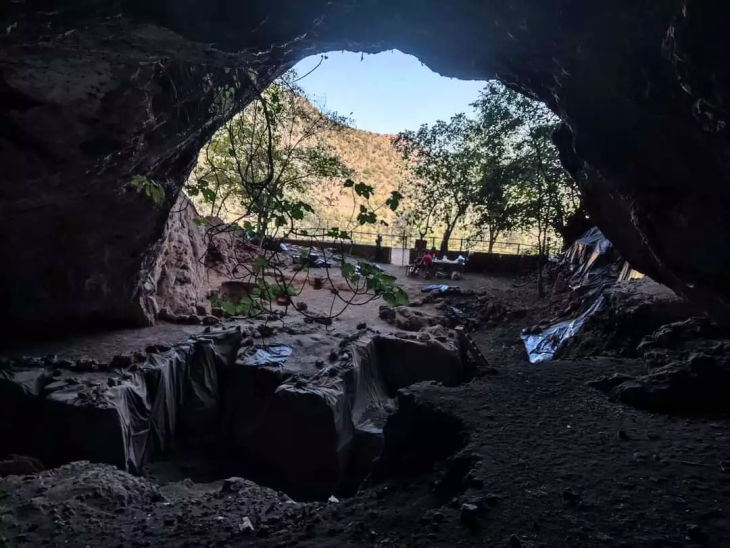
The study focused on the Iberomaurusian culture, whose remains were discovered in the cave of Taforalt, Morocco.

Using a comprehensive multi-isotopic approach, including innovative techniques such as zinc and strontium isotope analysis in dental enamel, the researchers were able to reconstruct the diet of these ancient individuals with unprecedented accuracy.

Contrary to the prevailing notion that meat played a dominant role in the diet of hunter-gatherers before the advent of agriculture, the study’s findings clearly demonstrate that the Iberomaurusian people had a strong preference for plants.

The isotopic evidence suggests that a significant proportion of their diet consisted of Mediterranean plant species, such as acorns, pine nuts, and wild pulses, which were also found among the archaeobotanical remains at the site.

Read also: 90,000-Year-Old Human Footprints Unearthed on Morocco’s Northwestern Coast

Zineb Moubtahij, the lead author of the study, emphasized the significance of these findings, stating: “Our findings not only provide insights into the dietary practices of pre-agricultural human groups but also highlight the complexity of human subsistence strategies in different regions. Understanding these patterns is crucial to unraveling the broader story of human evolution.”

The study also revealed that plant foods were introduced into the diets of infants, possibly serving as weaning products. This discovery suggests that pre-agricultural communities may have adopted earlier weaning practices compared to what was previously thought for hunter-gatherer societies.

The use of zinc isotopes preserved in enamel to determine the diet of ancient populations in Africa is a pioneering approach in the field. As North Africa plays a crucial role in the study of human evolution and modern human dispersal, this new tool will enable researchers to further explore human dietary patterns and adaptability in different environments across the region.

The findings raise intriguing questions about the lack of agricultural development in North Africa at the beginning of the Holocene, despite the apparent reliance on plant foods by pre-agricultural societies.

As the research team continues to investigate additional Paleolithic sites in the region, they hope to gain a deeper understanding of ancient dietary practices and their implications for human evolution.

Tags: DiscoveryhistoryMorocco
TweetShareShareSendShareScan

Recent News

New York City Mayor Zoran Mamdani has predicted that Morocco will defeat France in the 2026 FIFA World Cup final, backing the Atlas Lions to become world champions for the first time in their history.

New York Mayor Predicts Morocco to Beat France in World Cup 2026 Final

June 6, 2026
Azzedine Ounahi's future at Girona has been thrown into doubt after reports revealed that the Spanish club is planning significant cost-cutting measures following its relegation from La Liga. According to reports close to the club, Girona will see its budget reduced from €75 million to around €37 million next season after dropping to Spain's second division. The financial setback is expected to force the club to make difficult decisions regarding its squad.

Girona’s Financial Crisis Could Force Ounahi Exit This Summer

June 6, 2026
Hakim Ziyech is reportedly open to returning to Ajax Amsterdam this summer. The Moroccan international could leave Wydad AC as speculation grows over a reunion with his former club

Hakim Ziyech Eyes Ajax Return After Deciding to Leave Wydad

June 6, 2026
Morocco at World Cup 2026: Fixtures, Squad List, Rising Stars Morocco is back to the biggest football tournament in the world, after 2022 Qatar World Cup historical achievement Under the leadership of Mohamed Ouahbi, the Atlas Lions are preparing for a new chapter in the World Cup journey. Drawn in Group C alongside Brazil, Scotland and Haiti, Morocco will begin their campaign on June 13 in New York with one of the toughest tests imaginable against the five-time world champion, Brazil. Yet confidence, and possibility to achieve great results remains high within the squad, fuelled by a blend of experienced leaders and exciting young talents.

Morocco at World Cup 2026: Fixtures, Squad List, Rising Stars

June 6, 2026
Morocco captain Achraf Hakimi has been recognized as one of the most valuable defenders at the 2026 FIFA World Cup, underlining his status as one of the tournament’s biggest stars.

Achraf Hakimi Among Most Valuable Defenders at World Cup 2026

June 6, 2026

USEFUL LINKS

  • About
  • Privacy Policy
  • Contact
  • Careers
  • Terms Of Use
  • Cookies Policy

TOPICS

  • Mawazine 2025
  • Environment
  • Politics
  • Lifestyle
  • Sports
  • Western Sahara

REGIONS

  • International
  • Maghreb
  • Middle East
  • Africa

Download our App


Download the Morocco World News app on Google Play for Android

Download the Morocco World News app on the Apple App Store for iPhone and iPad

Copyright 2026 Morocco World News. All rights reserved. Morocco World News is not responsible for the content of external sites.
Read about our approach to external linking.

Welcome Back!

Login to your account below

Forgotten Password? Sign Up

Create New Account!

Fill the forms bellow to register

*By registering into our website, you agree to the Terms & Conditions and Privacy Policy.
All fields are required. Log In

Retrieve your password

Please enter your username or email address to reset your password.

Log In
  • Login
  • Sign Up
No Result
View All Result
  • Home
  • Culture
  • Politics
  • Society
  • Economy
  • Opinion
  • Education
  • Sustainability
  • Tech
  • Sport
  • GITEX 2026

Useful Links

  • Prayer Times

Useful Links:

  • Prayer Times

All Right Reserved © 2025 Morocco World News .

Contact us
Are you sure want to unlock this post?
Unlock left : 0
Are you sure want to cancel subscription?
