 Join on WhatsApp
 Join on Telegram
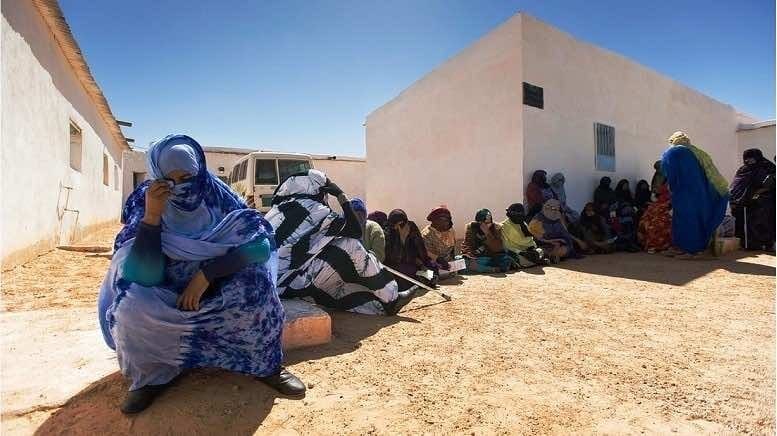
The situation of Sahrawis held in Algeria-controlled and Polisario-run Tindouf camps remains a concern for many, with human rights NGOs intensifying calls for more actions to pressure Algeria to protect Sahrawis rights.
Several NGOs reiterated their appeal on Thursday in Geneva as part of the general debate on the annual report of the UN High Commissioner for Human Rights at the 57th regular session of the Human Rights Council (HRC).
The African Network for Governance and Human Rights Development and the International Committee for the Respect and Application of the African Charter on Human and People’s Rights were among the NGOs that renewed concerns about the dire situation facing Sahrawis in Tindouf.
“We call on the international community to pressure Algeria to fully uphold its international commitments as the host country to ensure the protection of the populations held in the Tindouf camps,” both NGOs said.
They notably denounced forced disappearances in the camps, noting that the Polisario Front has historically used this approach and other abuses to silence and intimidate local dissidents.
Several reports have in recent years and months attempted to draw attention to the outrageous conditions facing many families in the Tindouf camps, noting these families’ daily struggle to vent their deep-rooted frustration with the unexplained and distressing disappearances of their relatives.
In July 2019, a group of Sahrawis staged a protest to condemn the disappearance of Ahmed El Khalil Ould Braih, a leading Polisario member who went missing more than 10 years ago.
Read also: Samir Bennis’s Quest to ‘Set the Record Straight’ on Western Sahara
Braih was arrested and kidnapped by Algerian forces and Polisario in 2009, just a few weeks after the Polisario Front had appointed him to monitor human rights in the Tindouf camps.
The timing and the manner of his forced disappearance quickly raised further questions over human rights violations in the camps.
Beyond such disappearance cases, many reports have highlighted the dire conditions Sahrawis face in the Polisario-ruled camps, including malnutrition, diseases, and restricted movement.
Although the Algerian regime hosts these distressed Sahrawis on its territory, it does not allow them to leave the Tindouf camps or move freely across Algeria.
Over the years, many independent reports and studies have attributed the dire conditions facing Sahrawis to the embezzlement by the Polisario leadership of the international humanitarian aid intended for distressed families.
The embezzlement and misallocation scandal has been a persistent issue over the past two decades, with human rights NGOs urging the international community to pressureAlgeria to intervene in the case.
Yet Algeria’s refusal to allow an independent, UN-led census in the camps to determine the exact number of Sahrawi refugees has exacerbateds the situation over the past years.
In 2015, the European Anti-Fraud office (OLAF) published a scathing report documenting Algerian authorities’ complicit silence in the face ofPolisario leaders’ involvement in embezzlement scandals.
The report, which covers the 2003-2007 period, shows that the separatist group’s leadership has long been directly involved in selling humanitarian aid meant for distressed refugees in the Mauritanian and sub-Saharan markets to buy weapons.
Other similar reports have also highlighted the embezzlement of medical supplies and medicines intended for Sahrawi refugees, stirring a health crisis in the Polisario-run camps.