 Join on WhatsApp
 Join on Telegram
Rabat – The United States has reinforced its backing of Morocco’s Autonomy Plan For Western Sahara, calling it a “serious, credible, and realistic” approach to resolving the long-standing territorial dispute.
This affirmation came during a high-level meeting on Tuesday between US Secretary of State Antony Blinken and Moroccan Foreign Minister Nasser Bourita in Washington, D.C.
In a press statement following the talks, the US State Department reiterated its position on Morocco’s 2007 Autonomy Plan, describing it as a practical solution to a conflict that has spanned decades.
“The United States continues to view Morocco’s Autonomy Proposal as serious, credible, and realistic,” the statement read. The meeting also reaffirmed US support for the United Nations-led political process aimed at reaching a lasting resolution.
Both Blinken and Bourita expressed their endorsement of the efforts by Staffan de Mistura, the UN Secretary-General’s Personal Envoy for Western Sahara, to move the negotiations forward.
This diplomatic engagement exemplifies the strategic partnership between the US and Morocco, which spans not only regional stability but also humanitarian, economic, and security collaboration.
During the talks, Blinken praised Morocco’s critical role in promoting peace across the Middle East, especially through its humanitarian contributions to Gaza and stabilization efforts in the West Bank.
He also acknowledged Morocco’s leadership in mediating conflicts, particularly in Libya, and addressing instability in the Sahel region.
A constant US policy across administrations
Washington’s endorsement of Morocco’s autonomy initiative is not new. The US position on Western Sahara has remained consistent across different administrations, with bipartisan support for the autonomy plan.
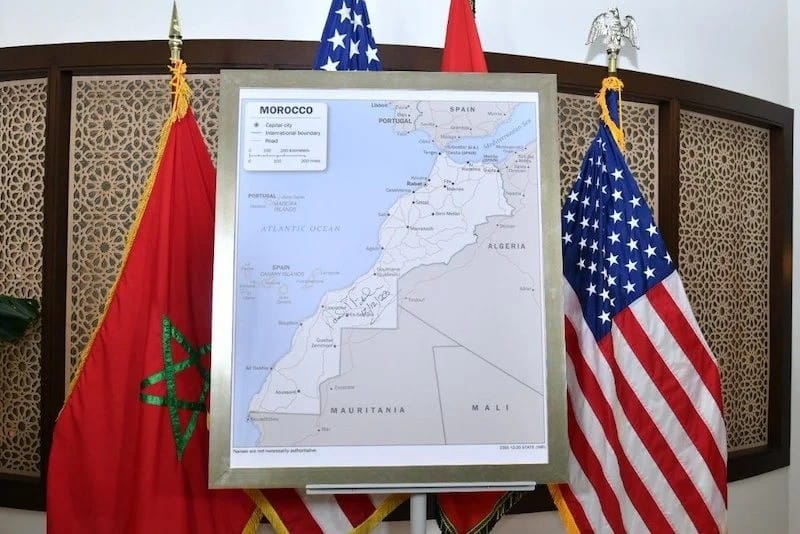
This approach was solidified in 2020 when then-President Donald Trump formally recognized Morocco’s sovereignty over Western Sahara, a move that set a diplomatic precedent.
Although this decision stirred controversy, particularly among some European nations and regional actors like Algeria, the US’s commitment to a political solution grounded in the autonomy plan at the forefront.
The Biden administration has maintained this trajectory, repeatedly signaling its support for Morocco’s efforts.
The autonomy initiative is seen by Washington as the most viable path toward satisfying the aspirations of the people in Western Sahara, while also safeguarding Morocco’s territorial integrity.
The US position aligns with the broader international consensus that seeks a political — rather than military — resolution to the conflict.
Regional and international support
Morocco’s autonomy proposal has garnered increasing support from key international players. Several European nations, including Spain, Germany, and the Netherlands, have publicly backed the initiative.
France, in a letter from President Emmanuel Macron, has affirmed that Western Sahara’s future should be under Moroccan sovereignty, reflecting a broader European trend toward supporting the autonomy plan.
These endorsements strengthen Morocco’s diplomatic hand, as it faces opposition from Algeria and the Polisario Front, the latter of which continues to push for an independent Western Sahara.
Many Arab and African states have also thrown their weight behind Morocco’s plan, highlighting the regional dimension of this dispute.
The growing international support for the Moroccan autonomy proposal further isolates Algeria, which has been a vocal opponent of Morocco’s claims and has long backed the Polisario movement.
A broader strategic relationship
The US-Morocco partnership is deeply rooted in shared security and economic interests. As one of America’s oldest allies, Morocco has played a pivotal role in regional stability, particularly through its contributions to counterterrorism initiatives in the Sahel and beyond.
Since 2005, Morocco has been an integral part of the Trans-Sahara Counterterrorism Partnership, aimed at combating violent extremism in the region.
Furthermore, Morocco has been a key player in the Global Counterterrorism Forum and co-chairs the Africa Focus Group of the anti-ISIS Global Coalition.
In addition to its counterterrorism efforts, Morocco has made significant contributions to UN peacekeeping operations.
With over 1,700 personnel deployed across conflict zones in Africa, including the Central African Republic and South Sudan, Morocco has solidified its reputation as a regional peacebuilder.
The US has also supported Morocco’s demining efforts in Western Sahara, contributing nearly $2 million in the North African country’s conventional weapon destruction programs since 1993.