 Join on WhatsApp
 Join on Telegram
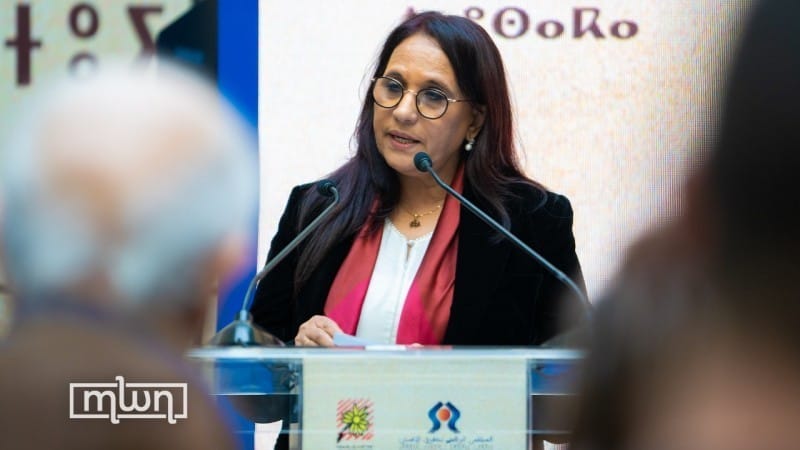
Rabat – Amina Bouayach, President of the Moroccan National Human Rights Council (CNDH) has emphasized the importance of cooperation between governments, civil society, and international mechanisms to ensure the effective implementation of human rights.
Bouyach made her remarks in her capacity as the vice president of the Global Alliance of National Human Rights Institutions (GANHRI) at the 10th Gilon Human Rights Dialogue, taking place in Marrakech from October 16-17.
Speaking on behalf of GANHRI and human rights institutions (NHRIs), Bouayach extended thanks for the invitation to take part in the event, stressing that the platform serves as an opportunity to share experiences and reflections on universal standards at the national level.
“For NHRIs, transforming these universal standards into concrete realities at the local level means defending human rights and preventing violations of fundamental rights,” Bouayach said, noting that this also involves raising major concerns of institutional and non-institutional actors in a context where human rights principles are facing new challenges.
The CNDH president further emphasized the importance of promoting human rights and strengthening their protection by creating sustainable legislative and institutional frameworks. Among these frameworks include opening safe spaces for defending activists to actively promote these rights.
For Bouayach, there should be cooperation and collaboration between various actors, including public authorities, NHRIs, civil society, international mechanisms, as well as the private sector to address challenges related to human rights.
She also stressed the importance of the role NHRIs take in monitoring, promoting, and protecting human rights at the national level in addition to their increasing participation in UN mechanisms. Bouayach further argued that these institutions can work more effectively when they enjoy genuine independence.
These institutions, she continued, “ensure coherence between the protection and promotion of human rights through an integrated strategy adapted to various contexts, including during times of crisis, regional conflicts, or post-conflict reconstruction.”
She added that NHRIs also contribute to creating synergies to protect the fundamental rights of vulnerable groups, further emphasizing their responsibility to strengthen the system in the face of attacks that question the relevance of human rights.