


 Join on WhatsApp
 Join on Telegram
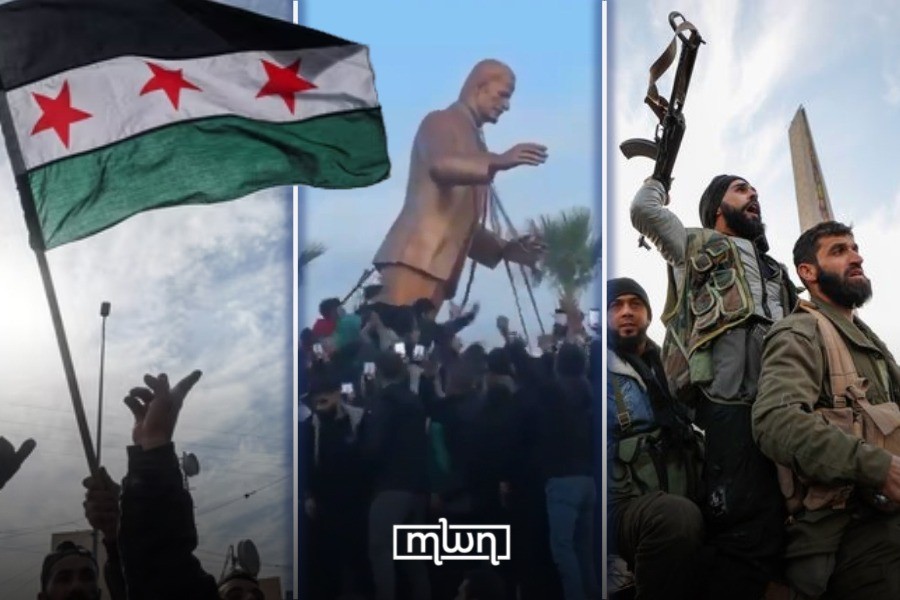
Fès—The unexpected departure of Syrian dictator Bashar al-Assad on Sunday marks a pivotal moment in the trajectory of Syria’s devastating thirteen-year civil war. As rebel groups gained control of Damascus, this seismic power shift signals profound implications not only for Syria but for the broader Middle East and the international community.
The collapse of Assad’s regime has elicited widespread celebrations across Syria, embodying a collective sense of liberation from a brutal dictatorship that inflicted immeasurable suffering—killing, torturing, dispossessing, and displacing millions. However, the challenges that lie ahead in stabilizing and rebuilding Syria are as formidable as the victory itself.
Implications for Global and Regional Actors
The fall of Assad has triggered reverberations in the geopolitical landscape. Russia and Iran, whose intervention once saved Assad in 2014–2015, now find their influence in Syria and the region significantly diminished. Stretched thin by ongoing conflicts, including the war in Ukraine, these powers could no longer prop up Assad’s faltering regime. This strategic defeat weakens their foothold in the Middle East, underscoring a critical shift in regional dynamics.
For Gulf states, Assad’s ouster elicits a mixed response. While Qatar may embrace the opportunity to fund the emerging government, Saudi Arabia and the UAE remain wary of Islamist governance and cautious about financial aid without clear returns. Their approach is likely to hinge on the nature of Syria’s post-Assad leadership. Israel, meanwhile, finds itself in a similarly ambivalent position, grappling with uncertainty over who might replace Assad. Nonetheless, Israel’s recent weakening of Hezbollah, a crucial Assad ally, may afford it leverage to engage Syria’s new leaders in pursuit of northern border security.
Turkey emerges as a notable exception, with its strategic approach to Syria yielding significant dividends. By opposing Assad while maintaining negotiations with his allies, hosting millions of Syrian refugees, and supporting the opposition, Ankara has positioned itself as a key player in Syria’s reconstruction. Turkey’s political and military engagement now grants it considerable influence over the stabilization process, alongside goodwill from many Syrians.
The Role of the United States and International Community
The United States faces a critical juncture in defining its role in post-Assad Syria. Immediate action by the Biden administration is essential to prevent a descent into chaos. Priorities should include surging funding to rebuild infrastructure, providing healthcare, and facilitating the return of refugees and displaced persons. However, as the United States moves to engage, it must also navigate the complexities posed by Hayat Tahrir al-Sham (HTS), the rebel group that spearheaded the offensive in Damascus. Although HTS is listed as a terrorist organization by the United States, its prominent role in the transition necessitates its inclusion in initial talks. This presents risks, as HTS’s promises of respecting minority rights could mirror the unfulfilled assurances made by the Taliban during their rise to power.
For the Syrian opposition to secure meaningful advocacy from the United States, they must act swiftly to present a pragmatic and unified vision for a transitional government, democratic elections, and sustainable governance. This clarity is especially crucial given President-elect Donald Trump’s stated disinterest in deepening U.S. involvement in Syria. The international community must also exercise caution in deploying foreign aid. Donor-driven post-conflict reconstruction often falters due to fragmented plans, political rivalries, and uncoordinated projects. Effective governance in Syria will depend on tying aid to clear milestones and fostering cooperation among donors to avoid these pitfalls.
Pathways to Stabilization
Stabilizing Syria will require a concerted diplomatic effort involving key regional and global stakeholders, including Turkey, the Gulf countries, and Jordan. Promoting dialogue between adversarial states could reduce tensions, foster cooperative security arrangements, and prevent Syria from becoming a proxy battleground for competing interests.
With Turkey’s enhanced leverage and Qatar’s potential willingness to invest, there is an opportunity to shape a balanced approach to rebuilding Syria. However, ensuring long-term stability will demand careful negotiation, vigilant monitoring of HTS’s governance, and sustained international commitment to inclusive and transparent state-building efforts.
In conclusion, Assad’s departure represents both a moment of hope and a daunting challenge. While the Syrian people have achieved a hard-fought victory, the path to reconstruction, reconciliation, and lasting peace will require deliberate, coordinated action from domestic actors and the international community alike.
Read Also: A New Middle Eastern Order, a Claim for Stability or a Path Towards a New Geopolitical Chaos


