


 Join on WhatsApp
  Join on Telegram
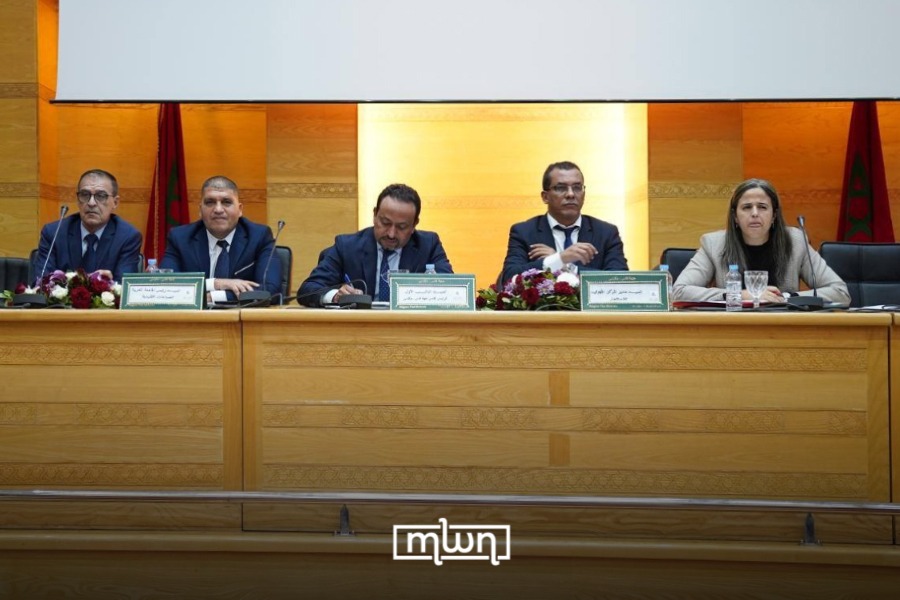
 Mohammedia – The Fez–Meknes region is moving ahead with a renewed vision for its leather industry after local officials, investors, and industry leaders gathered on November 21 to lay the groundwork for a new roadmap aimed at turning the sector into a stronger engine for jobs and industrial growth.
The meeting, hosted by the Regional Council of Fez–Meknes in partnership with the Moroccan Leather Federation, recognized the historic legacy of leather craftsmanship in Morocco and solidified the government’s push to modernize and industrialize the sector.
The session brought together representatives from the Regional Investment Center, the Moroccan Investment and Export Development Agency, training institutions, and private operators.
Younes El Rafiq, the first vice president of the regional council in charge of investment, led the discussions, which emphasized the region’s ambition to reposition leather production within modern, competitive value chains.
In his remarks, Mohamed Sabri, director general of the Regional Investment Center, noted that the region is witnessing a remarkable upswing in private investment.
Approved projects reached MAD 16.7 billion ($1.837 billion) with more than 16,400 jobs expected, reflecting a 91% increase compared to 2024.
Sabri pointed to several strategic industrial zones now under development, including the Ain Cheggag Industrial Park, industrial acceleration areas in Ras El Ma, Meknes, and Ain Cheggag, as well as newly planned zones in Ain Beida, Ouislane, and Ain Aïcha.
Read Also: Fez-Meknes Forum Puts Responsible Conduct at the Core of Growth
Six additional industrial areas, covering 132 hectares across multiple provinces, are also set to reinforce the region’s growing industrial footprint.
According to Sabri, these investments are designed to turn Fez–Meknes into a national industrial hub capable of hosting integrated leather production ecosystems with a goal to boost Morocco’s export capacity.
The upcoming launch of the Nador West Med port is expected to further strengthen the region’s logistics backbone and offer new gateways for international trade.
During the meeting, officials outlined priority actions for the leather roadmap, including initiatives to expand industrial land availability, streamline administrative procedures, support small and medium enterprises, enhance value chain competitiveness, and promote innovation and export readiness.
The roadmap also focuses on helping companies integrate into more modern production systems and improve access to domestic and global markets.
The Regional Investment Center highlighted recent progress at the Ain Cheggag zone, where 103 industrial plots have already been marketed, and 34 delivered under final contracts.
Businesses were encouraged to benefit from a new support program offering incentives of up to 30 percent of investment value, accessible through the digital platform cri-invest.ma.
The center is also deploying a regional caravan to assist entrepreneurs directly across the provinces.
Fez–Meknes is now positioning its centuries-old leather heritage as a catalyst for a new phase of industrial expansion, blending tradition with modernity and aiming to secure a stronger economic future for the region.


