Join on WhatsApp
 Join on Telegram
By Ouassima Boujrad
Fez – The Moroccan traditional leather slipper is one of the most important components of traditional Moroccan dress.
It is made with typical Moroccan soft and pliable leather, and can be decorated with beautiful colors and embroidery.
The manufacture of Moroccan slippers, also called “babouche,” is a continuous process. It begins with the collection and sorting of the raw animal skins (goat skin, cow skin, and camel skin), and then cleaning, drying and dying until it reaches the right level of softness to be more useful for what is called “l’Balgha.”
Fez is one of the largest centers for slipper traders and craftsmen. In Fez, a variety of Moroccan slippers are made. The crafting of an exemplary Balgha depends on the quality of the raw materials being used and the tools being utilized in the process.
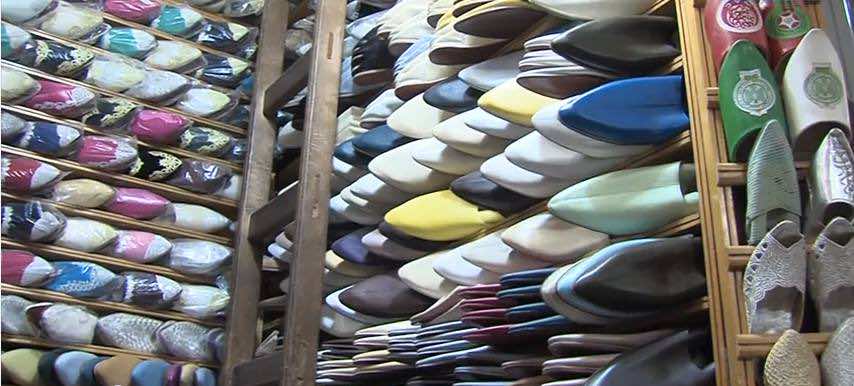
“There are two different kinds of l’Balgha: the traditional Moroccan slippers that pass through the traditional tanneries during the crafting process, and the modern Moroccan slippers which are produced by machines,” said one of the traders in Fez in a video published by Maghreb Arab Press (MAP). The traditional method of hand crafting an artisanal product still sells the most, and is the most popular because it fits the purchasers’ needs.
A variety of cultures and civilizations have visited or passed through Morocco over the centuries, and they have all left a special impact on traditional Moroccan dress. They all seemingly played a role in the establishment of the elegant Moroccan Fassi slippers, which are one of the most recognizable components of the Moroccan cultural and traditional apparel.
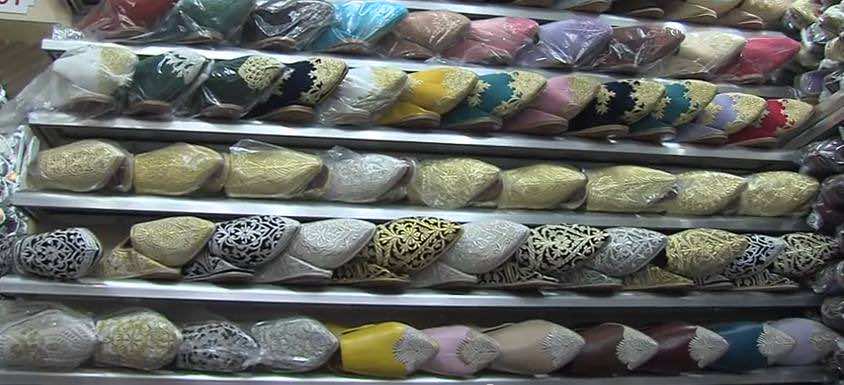
The sale of the Moroccan traditional leather slippers is evenly spread out amongst all the Moroccan cities, such as Marrakesh and Meknes, but Fez remains the leader with its big area dedicated to selling slippers called in Moroccan Darija “Souk Essabat,” the shoe market, located in one of the biggest and oldest traditional shopping centers in the country, “Kayseriat al’Kifah.” The latter is located at the heart of old Medina between the Moulay Idriss mausoleum and the grand Mosque of Qarawiyyin.
Traditional Moroccan slippers are worn during religious celebrations in Moroccan culture; they indeed represent the Moroccan identity.