 Join on WhatsApp
 Join on Telegram
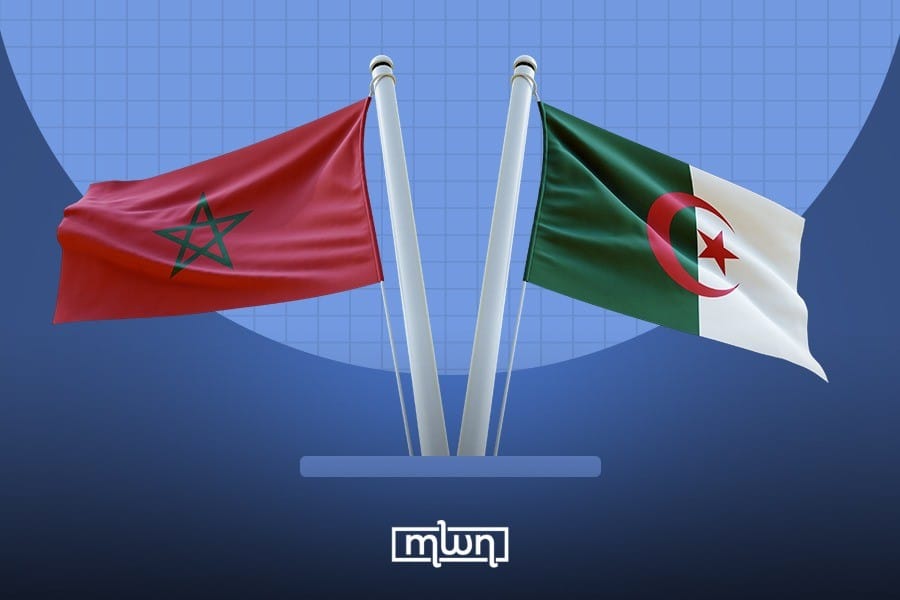
Developments in the Western Sahara dispute over the past week have once again confirmed Algeria’s obsession with undermining Morocco’s territorial integrity. Even as the UN Security Council almost unanimously rejected its latest attempt to salvage the tacitly buried option of a referendum on self-determination in the Sahara, Algiers’ response shows its determination to cling to the aspirations of its separatist protégé, the Polisario, in southern Morocco.
And with the much-expected resignation of Staffan de Mistura, the UN Secretary General Personal, drawing near and his not so original “partition plan” going to the drain, the lingering question is whether there is a silver lining looming on the horizon.
As far as Morocco is concerned, there is: its diplomacy has in recent years repeatedly scored high in terms of international recognition of the relevance of its autonomy initiative. It has succeeded painstakingly in shedding light on which party is to be blamed for stalling the solution to settle this artificial and half a century old conflict.
When we delve into Morocco-Algeria relations during the last six decades or so, we are struck by the schizophrenic perception that has long prevailed in Algiers. If we take, as chronological milestones, their joint struggle against the French colonizer, leading up to the independence of Morocco in 1956 and Algeria’s in 1962, their border skirmishes in 1963 and their partly exposed military clashes between 1975 and 1991, a case could be made about the relevance of Von Clauzewitz’s trinity model (passion, chance, reason), presented in his seminal book “On War,” to fathom the current raging dynamics between these two historically close-knitted countries.
For a distant observer, passion (a refined word for jealousy) maybe the key factor to help understanding how an African country such as Morocco, located at the doorstep of Europe, colonized by the two largest European powers of the 16-17 centuries, Spain and Portugal, and later by another major European power in the 20th century, France, is denied its territorial integrity.
Denied by whom? By a neighboring African country, Algeria which itself was subjected to 132 years of France colonization. To add to this puzzling situation for most observers, Morocco had extended a helping hand to Algeria to gain its independence from France.
The emotional drive of “camaraderie at arms” between the Moroccan Liberation Army and the National Liberation Front of Algeria (ALN) during yesteryears independence struggle, made it possible for the latter to set bases on the Moroccan territory and for money and weapons to be channeled from newly independent Morocco to the Algerian resistance. However, this feeling soon receded putting both in a whirlwind of mistrust over the years.
The same observer will be more confused to learn that Morocco’s former occupying powers, France and Spain, recognized as recently as last year and this year, the country’s sovereignty on its southern provinces while its African and Arab neighbor, Algeria encaged itself in an antagonistic and unconceivable position to this day.
To illustrate the unwarranted nature of this hostility, a surprising Algerian narrative accuses Morocco of having negotiated its independence separately with France leaving as a quid pro quo, the Algerian Liberation Front to its fate. This accusation cannot be more absurd if we consider the rejection by Sultan Mohamed V of General De Gaulle’s offer to retrocede parts of Moroccan territory in exchange of Morocco’s refraining from all forms of assistance to the ALN.
Algeria’s Orwellian political discourse
Such a good-hearted position, from a king who was a true believer in African and Arab unity, was not reciprocated by the Algerian leaders who, after Algeria’s independence in 1962, asserted the principle of the intangibility of borders inherited from the colonization era. Furthermore, Algeria denied the spirit and the letter of the agreement concluded between King Hassan II and the Algerian leader Ferhat Abbas in 1961 to negotiate border issues between the two countries after Algeria’s independence.
With the unfounded resentment of being forsaken by Morocco still in the air, one year after Algeria recovered its sovereignty, violence erupted in 1963 at the border between the two countries when an Algerian military unit penetrated two Moroccan outposts near Ouarzazate and ordered their occupants (auxiliary police) to evacuate them.
When they refused, 15 among them were shot dead. What is shocking is the fact that this incident happened three days after a meeting between Algeria’s then Minister of Foreign Affairs Abdelaziz Bouteflika and King Hassan II’s emissary Noureddine Guedira to prepare for a summit between the Moroccan monarch and Algerian President Ahmed Ben Bella.
As a reaction, Morocco had no choice but to defend its borders by launching a defensive military action which resulted in the Algerian army’s defeat despite the military assistance it obtained from both Egypt and Cuba. Again, the Algerian propaganda machine was quick to dub Morocco’s reaction an “act of treason,” invoking the lack of military readiness of the “nascent Algerian army.”
Algeria’s psyche is built on a victimization feeling fed by an Orwellian political discourse marinated in a ludicrous blame-game against Morocco to the point of sheer irrationality. The Algerian indictment list against Morocco is mind-boggling to say the least. In the summer of 2021, Algeria took its Morocco-bashing to a whole new level after it accused the North African kingdom, without proof or supporting evidence, of arson when fire broke out in some Algerian forests.
The Algerian regime also blamed Morocco for holding water resources resulting in drought and loss of biodiversity in Algeria. Morocco has also been charged with infiltrating a spy ring inside its eastern neighbor’s territory. And ever since the resumption of bilateral relations between Morocco and Israel, Algeria’s government and leading media have accused the North African kingdom of being guilty of bringing the Israeli army closer to its borders with Algeria.
The same Algerian victim’s discourse claims that five million martyrs gave their lives for Algerian independence (they were 1.5 million a few years ago). With all due respect to those lives and to their surviving relatives, these gruesome statistics should not be used as a political argument. But if we consider the fact that Morocco is a 12-century-old nation and fought against the European powers mentioned earlier, then the number of Moroccan martyrs might outnumber Algerians’ by far if we are to surrender to this victim mentality train of thought.
The cost of enmity
To go back to Clausewitz’s trinity model, what he considers “chance” has the potential of triggering inadvertent confrontation among nations. Indeed, Clausewitz was criticized by some realists for including “chance” as a component of his model. These critics contend that only the pursuit of self-interest and gain maximization are the rational linchpins of states’ behavior. However, what could be inferred from Clausewitz’s line of reasoning is that what he called “chance” is a reference to the fact that unintentional acts might have the potential of incurring unanticipated consequences leading to armed conflicts.
The issue, methodologically speaking, is how we can ascertain, as observers of international relations, if a state’s wrongful act is intentional or not. The line drawn by international law in this regard is unclear by recognizing states responsibility both by commission and omission.
What ensued, in the case of the Algeria military incursion into the Moroccan territory, leaves no shred of doubt about Algeria’s deliberate hostile stance as it offered no apologies and King Hassan II emissaries to meet President Ben Bella to discuss this incident were not even received by the latter.
Is there any likelihood of such “incidents” to re-occur? Maybe. The crux of the matter is that after Algeria’s decision to cut its diplomatic ties with Morocco, the official communication channels to manage any contingency of this kind, especially if it is time sensitive, are, for the time being, inexistent.
As far as the social cost of Algerian enmity against Morocco is concerned, after engaging into a proxy war of attrition against Morocco and spending billions of dollars in backing Polisario both militarily and diplomatically, while Moroccan diplomacy is scoring many successes, Algerian authorities are on the hot seat. Many Algerians start to feel that they were “taken for a ride” by their leaders in a covert “war of choice” against Morocco, to use the terminology of Richard Haas.
In the Trinity model’s last component “reason,” Clausewitz posits that leaders resort to rational calculations to achieve strategic objectives. From the points made earlier regarding Algerian leaders’ cognitive behavior, the risk of impulsive actions against Morocco is alarming.
According to the website Maghreb Intelligence, the Algerian Chief of staff ordered early this month military deployment along the borders with Morocco. Besides, the power struggle inside the Algerian military establishment is a key indicator that things might “get out of hand” sooner or later.
The Moroccan Sahara issue, instigated by Algeria and Libya during the heyday of the cold war and East-west confrontation, with enormous geopolitical implications for the US and Europe, is heading towards closure. It has been costly to the Algerian regime both economically and diplomatically as Polisario has been nurtured, in vitro, at the expense of the Algerian taxpayer for so many years.
The social peace, in this resource-endowed country, yet with a sizable number of its population living in substandard conditions, is uncertain. It is only attributable to the fact that Algerians still reminisce about the exactions perpetrated by the jihadists and the military during the bloody civil war and they are not ready for a remake. How long this feeling can still hold is a matter of anybody’s guess and for the future to tell.