


 Join on WhatsApp
 Join on Telegram
TRIPOLI – Syria’s regime says it will need at least a year to dismantle its chemical weapons arsenal, but if Libya’s experience is anything to go by, this is a hopelessly optimistic forecast.
Damascus has provided the Hague-based Organisation for the Prohibition of Chemical Weapons (OPCW) with a full inventory of its chemical arsenal, in order to avert US-led military strikes in line with a US-Russian deal.
The plan calls for Syria’s arsenal to be destroyed by mid-2014 amid hopes that it could pave the way for peace talks to end the 30-month Syrian conflict which has killed more than 110,000 people and forced two million more to flee abroad.
Syrian President Bashar Al-Assad said last week “it needs a year, or maybe a little bit more” and $1 billion for Syria to surrender its chemical weapons.
But judging by the Libyan experience, that “little bit more” could stretch to years.
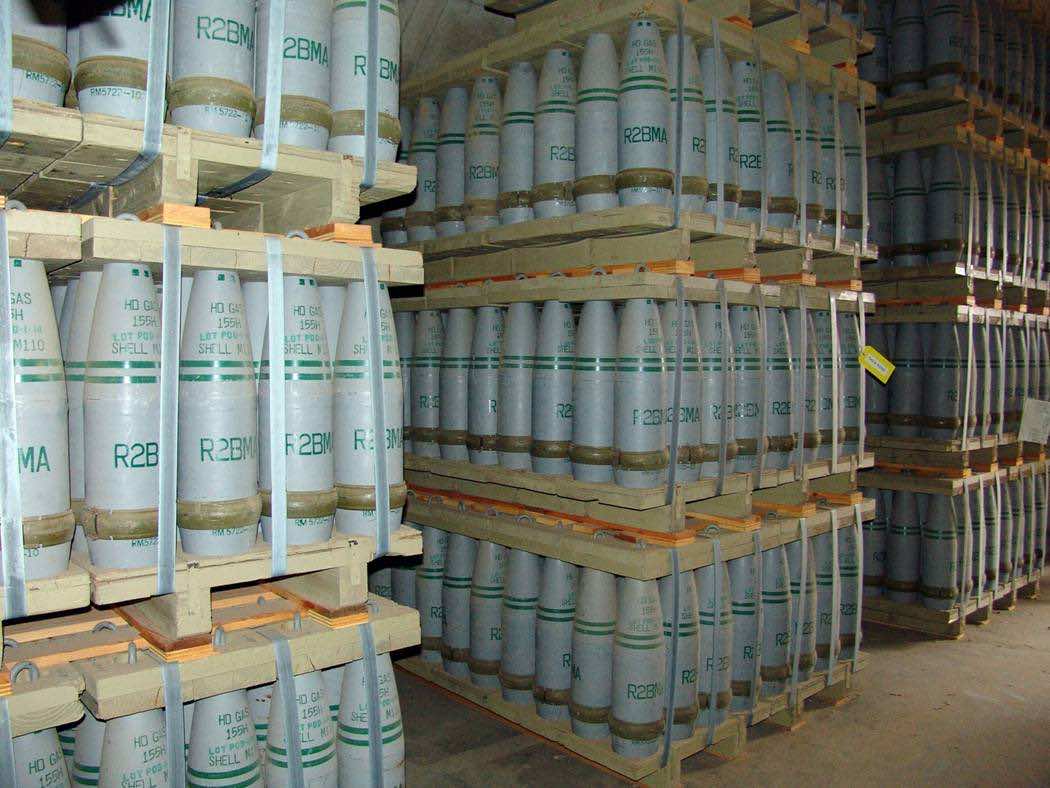
Nine years after Tripoli signed on to the Chemical Weapons Convention, the new authorities are still trying to destroy the remainder of the stockpile they inherited from slain dictator Moamer Kadhafi.
The process began early in 2004 when Kadhafi, keen to shake off Libya’s “pariah state” image, signed the Convention and joined the OPCW.
Libya had 13 tonnes of mustard gas when it signed the treaty, but the former regime claimed at the time to have destroyed the munitions needed to deliver the deadly substance.
In the years following the signing, Kadhafi’s regime destroyed around 54 percent of its mustard gas stocks and about 40 percent of the chemicals used to manufacture the substance, besides 3,500 bombs intended to deliver deadly chemicals.
The process, supervised by OPCW experts, was interrupted by the 2011 uprising against Kadhafi in which he was ultimately toppled and slain by Western-backed rebels.
The experts’ work resumed in 2012.
“The process of elimination is being conducted step-by-step, with the latest stage of the destruction of chemicals taking place between December, 2012 and May, 2013,” said Colonel Ali Chikhi, spokesman for the Libyan army staff.
To date, he told AFP, “Libya has destroyed 95 percent of its mustard gas stocks and is on course to eliminate the remainder by 2016 at the latest”.
The largest stockpile of the gas is inside a warehouse in the city of Al-Raogha, around 700 kilometres (435 miles) south of the capital Tripoli.
“Chemical substances stored in warehouses are strictly monitored and subject to draconian controls by Libya and the international community,” said Chikhi.
Libyan Foreign Minister Mohamed Abdelaziz, meanwhile, told AFP that agreement had been reached with the United States earlier this month for technical help in destroying the remainder of Libya’s chemical weapons.
Abdelaziz added that a team of US experts was expected in the country in the next few days.
Washington, the minister added, will meet 80 percent of the costs for the operation while Germany will pick up the shortfall. Latest technologies will be used to prevent the environment being impacted in any way.
Abdelaziz stressed that the project envisages destroying only “mustard gas and chemical products considered toxic and dangerous”. For the moment, Libya’s stocks of concentrated uranium, or yellowcake, will not be touched.
At the end of 2011, in the aftermath of the revolution that toppled Kadhafi, a large stock of yellowcake was discovered at an arms depot in the city of Sabha, in southern Libya.
“Libya is trying to determine if the concentrated uranium can be used for peaceful nuclear energy purposes or sold to countries which use the product for peaceful purposes,” said the minister.
The stockpile has since been secured in collaboration with International Atomic Energy Agency inspectors.
But the Centre for Strategic Studies in Tripoli has asked the Libyan authorities to ensure the concentrated uranium is used for the benefit of Libyans, in “industrial and agricultural development and in the production of clean energy”.
Damascus has provided the Hague-based Organisation for the Prohibition of Chemical Weapons (OPCW) with a full inventory of its chemical arsenal, in order to avert US-led military strikes in line with a US-Russian deal.
The plan calls for Syria’s arsenal to be destroyed by mid-2014 amid hopes that it could pave the way for peace talks to end the 30-month Syrian conflict which has killed more than 110,000 people and forced two million more to flee abroad.
Syrian President Bashar Al-Assad said last week “it needs a year, or maybe a little bit more” and $1 billion for Syria to surrender its chemical weapons.
But judging by the Libyan experience, that “little bit more” could stretch to years.
Nine years after Tripoli signed on to the Chemical Weapons Convention, the new authorities are still trying to destroy the remainder of the stockpile they inherited from slain dictator Moamer Kadhafi.
The process began early in 2004 when Kadhafi, keen to shake off Libya’s “pariah state” image, signed the Convention and joined the OPCW.
Libya had 13 tonnes of mustard gas when it signed the treaty, but the former regime claimed at the time to have destroyed the munitions needed to deliver the deadly substance.
In the years following the signing, Kadhafi’s regime destroyed around 54 percent of its mustard gas stocks and about 40 percent of the chemicals used to manufacture the substance, besides 3,500 bombs intended to deliver deadly chemicals.
The process, supervised by OPCW experts, was interrupted by the 2011 uprising against Kadhafi in which he was ultimately toppled and slain by Western-backed rebels.
The experts’ work resumed in 2012.
“The process of elimination is being conducted step-by-step, with the latest stage of the destruction of chemicals taking place between December, 2012 and May, 2013,” said Colonel Ali Chikhi, spokesman for the Libyan army staff.
To date, he told AFP, “Libya has destroyed 95 percent of its mustard gas stocks and is on course to eliminate the remainder by 2016 at the latest”.
The largest stockpile of the gas is inside a warehouse in the city of Al-Raogha, around 700 kilometres (435 miles) south of the capital Tripoli.
“Chemical substances stored in warehouses are strictly monitored and subject to draconian controls by Libya and the international community,” said Chikhi.
Libyan Foreign Minister Mohamed Abdelaziz, meanwhile, told AFP that agreement had been reached with the United States earlier this month for technical help in destroying the remainder of Libya’s chemical weapons.
Abdelaziz added that a team of US experts was expected in the country in the next few days.
Washington, the minister added, will meet 80 percent of the costs for the operation while Germany will pick up the shortfall. Latest technologies will be used to prevent the environment being impacted in any way.
Abdelaziz stressed that the project envisages destroying only “mustard gas and chemical products considered toxic and dangerous”. For the moment, Libya’s stocks of concentrated uranium, or yellowcake, will not be touched.
At the end of 2011, in the aftermath of the revolution that toppled Kadhafi, a large stock of yellowcake was discovered at an arms depot in the city of Sabha, in southern Libya.
“Libya is trying to determine if the concentrated uranium can be used for peaceful nuclear energy purposes or sold to countries which use the product for peaceful purposes,” said the minister.
The stockpile has since been secured in collaboration with International Atomic Energy Agency inspectors.
But the Centre for Strategic Studies in Tripoli has asked the Libyan authorities to ensure the concentrated uranium is used for the benefit of Libyans, in “industrial and agricultural development and in the production of clean energy”.
– See more at: http://www.thephuketnews.com/9-years-on-libya-still-not-free-of-chemical-weapons-42044.php#sthash.agd48N1a.dpuf




