 Join on WhatsApp
 Join on Telegram
Doha – After unions reported an 80% success rate for their two-day nationwide strike, the Moroccan government released today sharply contrasting official figures.
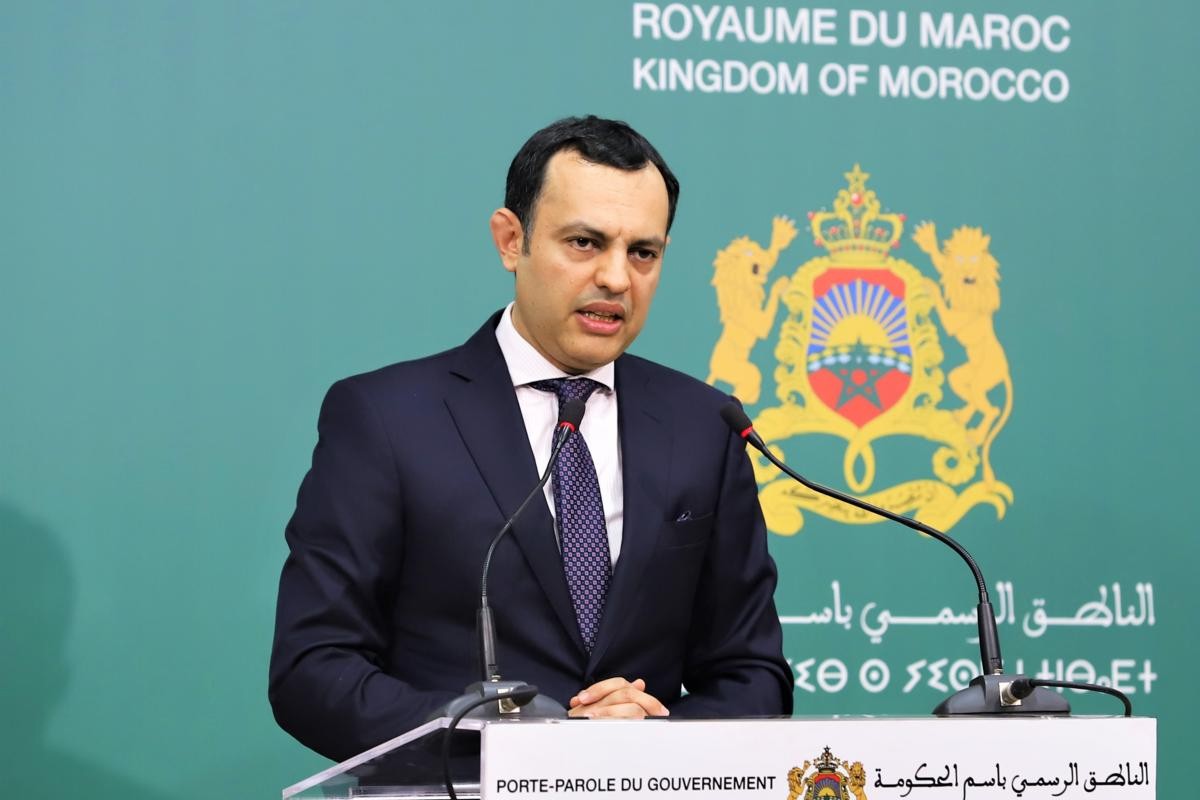
Minister of Economic Inclusion, Small Business, Employment and Skills, Younes Sekkouri, announced that the strike’s participation rate reached only 32% in the public sector and 1.4% in the private sector.
According to the government’s detailed breakdown, the education sector saw the highest participation at 35.5%, followed by healthcare at 33.3%, justice sector at 30.5%, territorial communities at 26.4%, and public administrations at 25.9%.
These figures paint a picture that couldn’t be more at odds with union reports. The Moroccan Labor Union (UMT) touted an 84.9% participation rate, while other unions, including the Democratic Confederation of Labor (CDT), Democratic Labor Organization (ODT), Democratic Labor Federation (FSD), and National Labor Union in Morocco (UNTM), reported over 80% participation.
The unions reported complete work stoppages in schools, universities, institutes, and vocational training centers.
They also noted significant disruptions in hospitals, private clinics, medical offices, insurance offices, and banks, with some regions reportedly reaching 100% participation.
The strike affected various industrial sectors, including automotive, electricity, oil and gas, mining, phosphates, steel, and construction.
The strike was organized in protest against the new strike law (Organic Law 97.15) and what the unions describe as an erosion of purchasing power and blocked social dialogue.
The Chamber of Representatives definitively approved the law on Wednesday, with 84 votes in favor and 20 against, though only 104 out of 395 deputies were present.
Read also: Spanish, Tunisian Unions Back Morocco’s Ongoing General Strike
Minister Sekkouri defended the government’s position, stating that “the strike, as an inalienable right, is enshrined in our constitution.”
He emphasized that the new law resulted from nearly two years of discussions and was designed to protect strike rights.
The minister noted that most amendments proposed by social partners were incorporated into the legislation.
UMT Secretary General Miloudi Moukharik maintained a firm stance against the law, declaring it “illegitimate” and vowing to reject its implementation “whatever the price.”
The CDT similarly questioned the future of social dialogue under these circumstances.
Prime Minister Aziz Akhannouch, speaking before the vote, attempted to ease tensions. “Our relationship with unions goes well beyond the strike law,” he declared. “We fully respect trade unions and their strikes… When we cannot go further, we say so with complete transparency.”
The government says the new law includes several concessions to union demands, including allowing strikes for indirect worker interests, permitting representative unions (not just the most representative ones) to call national or sectoral strikes, and reducing pre-strike negotiation periods.
The law now also explicitly recognizes solidarity strikes and political strikes, with a notice period reduced to five days.