


 Join on WhatsApp
  Join on Telegram
 Doha – A recent study published in the December 2024 issue of the International Journal of Amazigh Studies, a publication of the “Arab Democratic Center,” has called for the integration of Amazigh cultural heritage into Moroccan educational curricula.
Titled “The celebration aspects in Amazigh culture: between the cultural richness and education challenges in Morocco,” the study was authored by Mohamed Msihid, a doctoral researcher at Sidi Mohamed Ben Abdellah University in Fez.
According to Msihid, the Amazigh people have inhabited North Africa, or what was known as the Tamazgha region bordering the Mediterranean Sea to the north and east, and adjacent to the Sahara to the south, since ancient times.
Tamazgha extended from Mauritania and the Atlantic Ocean in the west to the borders of Egypt and northern Sudan in the east, and from the Mediterranean coast in the north to Niger, Mali, and Burkina Faso in the south.
The study points out that after a period of isolation and introversion in North Africa, the local Amazigh culture flourished tremendously thanks to its interaction and contact with various civilizations that settled on the shores of the Mediterranean Basin, such as the southern African, Phoenician, Carthaginian, Pharaonic, Greek, Latin, and Arab-Islamic civilizations.
The study points out the wealth of Amazigh cultural heritage, which includes a variety of rituals, customs, and practices. Msihid argues that “this rich heritage deserves to be preserved and valued as a material and immaterial legacy passed down through generations.”
He states that it is now the responsibility of the education system to ensure that “students safeguard their identity and preserve the collective memory of Moroccan people, embodied in their cultural rituals and practices.”
According to the study, the Amazigh people have long practiced seasonal rituals that remind them of past events and have left an impact on their souls. “By reviving these celebrations, they seek to preserve their memory, pass them on through generations, and maintain their symbolism without distortion,” Msihid writes.
Rituals of resilience
The study discusses several Amazigh celebratory rituals and their significance.
The paper starts with Id Yennayer, which, according to Amazigh legend, commemorates an old woman with a herd of goats who defied the harsh winter weather on January 13. Angered by her defiance, January borrowed two days from February to punish her, freezing both the old woman and her goats.
To honor this brave old woman, Amazigh people celebrate Id Yennayer on January 13, marking the beginning of the agricultural year and celebrating the fertility of the land and the abundance of autumn harvests.
Boughanim, meanwhile, meaning “reed flute player” in Amazigh, refers to male artists who entertain people with flute playing, short songs, acrobatics, dances, jokes, and animal imitations. This art form is practiced exclusively in the Central and Middle Atlas regions.
Another ritual is Taghnja, also known as Tislite n Unzar, which is a rain-seeking ritual involving a decorated wooden ladle carried by women and children who chant and collect alms.
One of the celebratory scenes involves a tribal woman choosing a girl to represent the “bride of rain” (Tislite n Unzar) and handing her a ladle (aghnja). Throughout the stages of the procession, the bride recites prayers and chants, seeking the sky’s sympathy and rainfall.
The Bachikh ceremony, a modification of the Bacchus celebration, takes place in the Maghreb on various occasions. In the Western Rif, it consists of musical and theatrical performances by village youth, who visit shrines and mausoleums to pay respects and seek blessings.
Integrating heritage
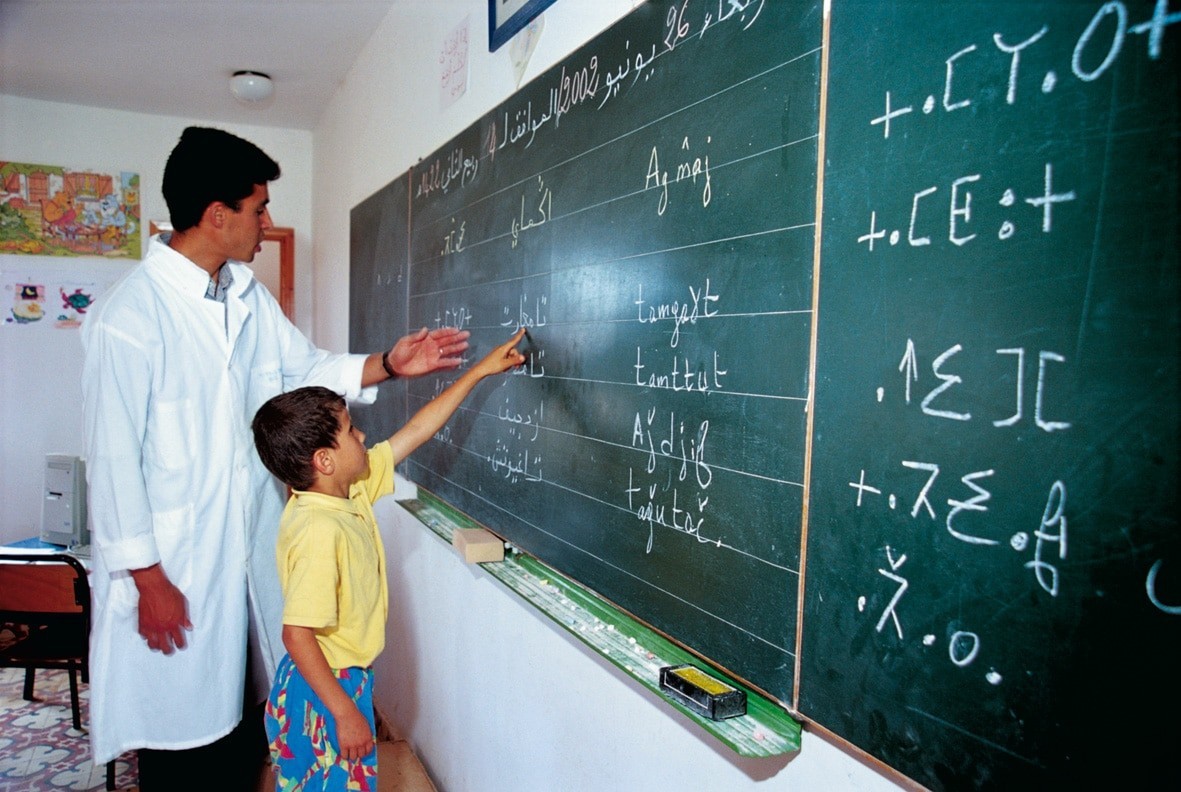
Msihid states the urgency of developing and reviewing teaching methods to link educational content with the local and regional environment. He suggests incorporating Amazigh cultural elements into various subjects such as languages, humanities, and arts across different educational levels.
The study proposes several didactic recommendations to capitalize on this cultural wealth and make it accessible to learners. These include diversifying teaching aids to develop students’ skills in dealing with texts, illustrations, artifacts, and photographs that showcase Amazigh cultural richness.
Msihid stresses the ethical and scientific necessity to adhere to historical facts and avoid distorting or excluding any of its components when including historical events in educational curricula. He calls for the adoption of the concept of “Tamgharbit” (Moroccanness) in presenting historical events.
The study concludes by emphasizing the crucial need to preserve and valorize the Amazigh culture with its rich and authentic specificities, particularly in light of the challenges faced today.
“We are in dire need of opening a major knowledge debate and a pluralistic national discussion on identity and belonging, especially in times when we face many attacks targeting our territorial unity, cultural security, and identity affiliation,” Msihid writes.


