 Join on WhatsApp
 Join on Telegram
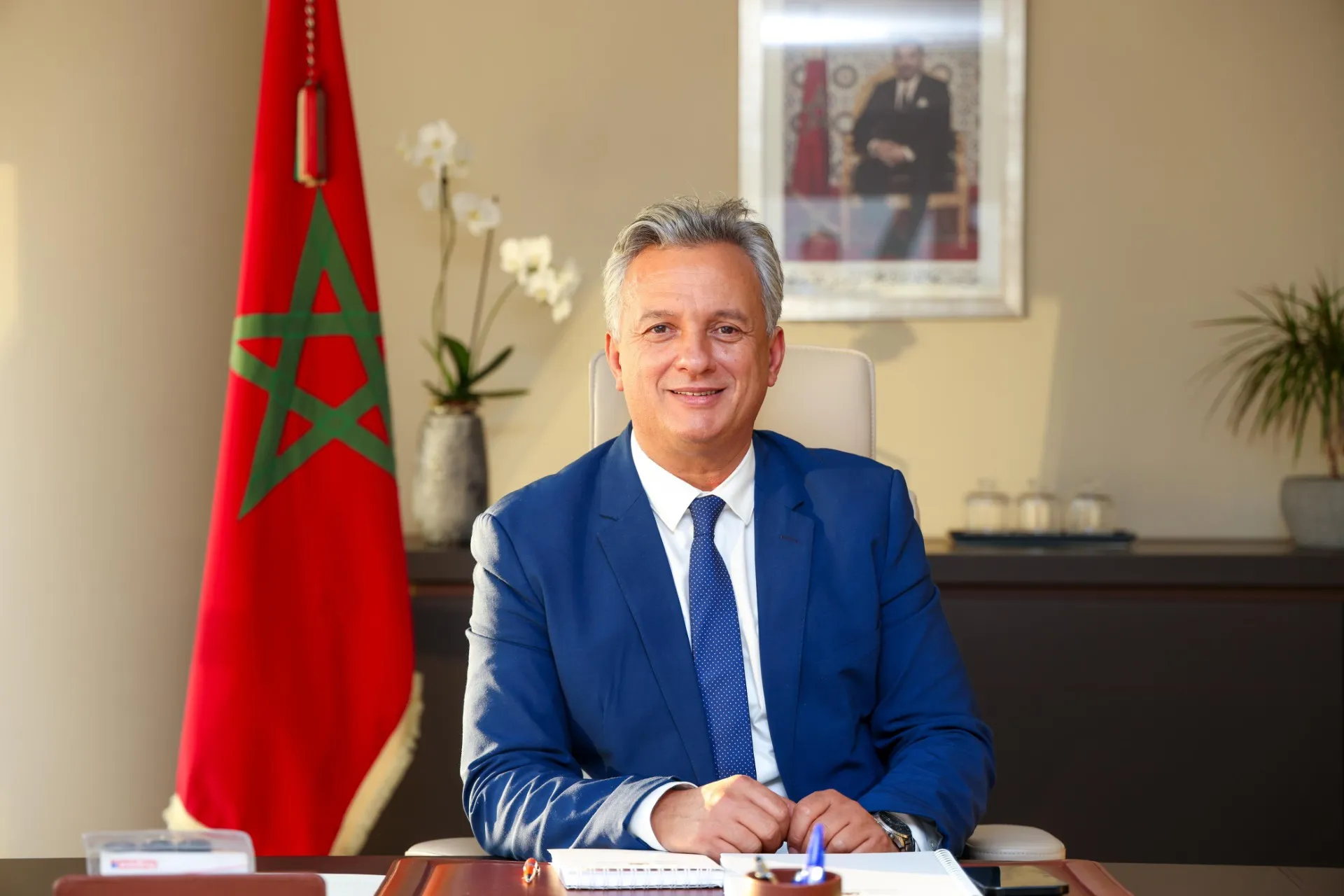
Doha – Morocco is increasingly becoming an attractive investment destination as it strengthens economic and cultural ties to neighboring countries. In an interview with Spanish news outlet El Economista, Karim Zidane, Morocco’s Minister of Investment, outlined the country’s investment strategy and opportunities.
“Morocco has become a reference destination for investment in both Africa and the Mediterranean region, thanks to a combination of structural factors and strategic reforms driven under the vision of His Majesty King Mohammed VI,” said Zidane during the “Morocco & Spain – Investing Together For a Sustainable & Shared Future” event in Madrid.
The forum, organized by the Morocco-Spain Economic Council (CEMAES) in collaboration with Morocco’s Ministry of Investment and the Moroccan Agency for Investment and Export Development (AMDIE), aimed to promote joint investment between the two countries.
The minister pointed to Morocco’s political and macroeconomic stability, strategic geographic location, and modern infrastructure network as key strengths. This includes world-class ports like Tanger Med, high-speed rail networks, and integrated industrial zones.
“Beyond Africa, our continent of belonging, the quality of our infrastructure now rivals that of several European countries, and even surpasses them in some segments,” he noted.
Priority investment sectors
Priority sectors for investment include the automotive industry, aeronautics, electronics, agribusiness, pharmaceutical and textile industries, and offshoring.
Emerging strategic sectors such as renewable energies — particularly green hydrogen — digitalization, information technologies, and circular economy are also gaining importance.
The automotive industry has experienced spectacular growth over the past decade, becoming the country’s leading export sector. Morocco currently has a complete ecosystem that includes two manufacturers (Renault and Stellantis) and more than 250 major international manufacturers.
Regarding renewable energy, Zidane stated that “more than 40% of our energy mix comes from renewable sources, and we have already built major solar and wind projects in our country, such as the Noor project in Ouarzazate.” Morocco presents major opportunities for investment across energy infrastructure, production, transport, and export.
The country has implemented structural reforms to improve its investment climate, with the cornerstone being the new Investment Charter adopted in late 2022. This charter establishes a modern, transparent, and equitable regulatory framework for domestic and international investors.
“Morocco offers incentives that can reach up to 30% of the total investment amount,” Zidane explained. These include direct investment subsidies granted based on each project’s characteristics, geographical location, and sector of activity.
The country also provides “tax exemptions for the first years for new companies or those established in specific zones.”
World Cup and Industry 4.0 driving growth
Zidane also talked about how major international sporting events are accelerating Morocco’s development. “These sectors are experiencing accelerated momentum today, driven by the prospect of major international sporting events that Morocco is preparing to host,” he said.
He added that these include the 2025 African Cup of Nations and, above all, the 2030 World Cup “which we will have the pleasure of organizing jointly with Spain and Portugal.”
The minister also addressed the challenges Morocco faces in attracting more foreign investment, including the need for continued development of high-value-added sectors and integration of new technologies in value chains.
“The challenge of education and technical training continues to be relevant, especially in emerging sectors such as renewable energies or Industry 4.0,” Zidane noted. “To attract more foreign investment, it is essential to continue promoting a highly qualified workforce prepared for the sectors of the future.”
He added that the joint World Cup bid with Spain and Portugal “embodies this spirit and reflects our mutual trust in the ability to build high-level projects together.”
Strategic advantage with US and EU trade
In the current global climate with changing US trade policies, Morocco finds itself in a unique position. “The relations between Morocco and the United States are based on historical bonds of trust, reinforced by long-term economic and strategic commitments,” Zidane said.
Morocco is the only African country with a free trade agreement with the United States, in effect since 2006, guaranteeing preferential access to the American market for a wide range of goods and services.
“Only nine countries in the world have free trade agreements with both the United States and the European Union, offering a dual gateway to two of the largest global markets,” the minister added.
Zidane noted that Morocco was fortunate not to appear on the “Liberation Day” tariff table introduced by the Trump administration. He sees this as an opportunity for European and Spanish companies to relocate to Morocco to continue exporting to the United States.
“In this new international context, characterized by the search for resilience and diversification, Morocco offers a clear, solid, and future-oriented value proposition,” the minister asserted.
He envisions opportunities for trilateral Morocco-Europe-United States co-investment based on complementary advantages and converging strategic interests.
In the context of nearshoring, Morocco’s proximity to Europe — particularly Spain at just 14 km away — combined with its stability, infrastructure quality, trade openness, and competitive operating costs position it as a natural partner for value chain relocation.
“We propose a model of strategic relocation, based on sustainability, agility, and reinforced regional integration,” Zidane explained. “Morocco doesn’t just bring production centers closer to major markets: it offers a strategic relocation model.”
“The diplomatic relations between Spain and Morocco are going through an exceptional moment, and we have a ‘window of opportunity’ that we must seize so that economic relations between our countries continue to grow,” Zidane concluded.
While Spain has been Morocco’s leading trading partner for more than a decade, he believes the potential for investment is even greater.
Read also: Morocco Spotlights Investment Opportunities at ‘Morocco Now’ Conference in Madrid