
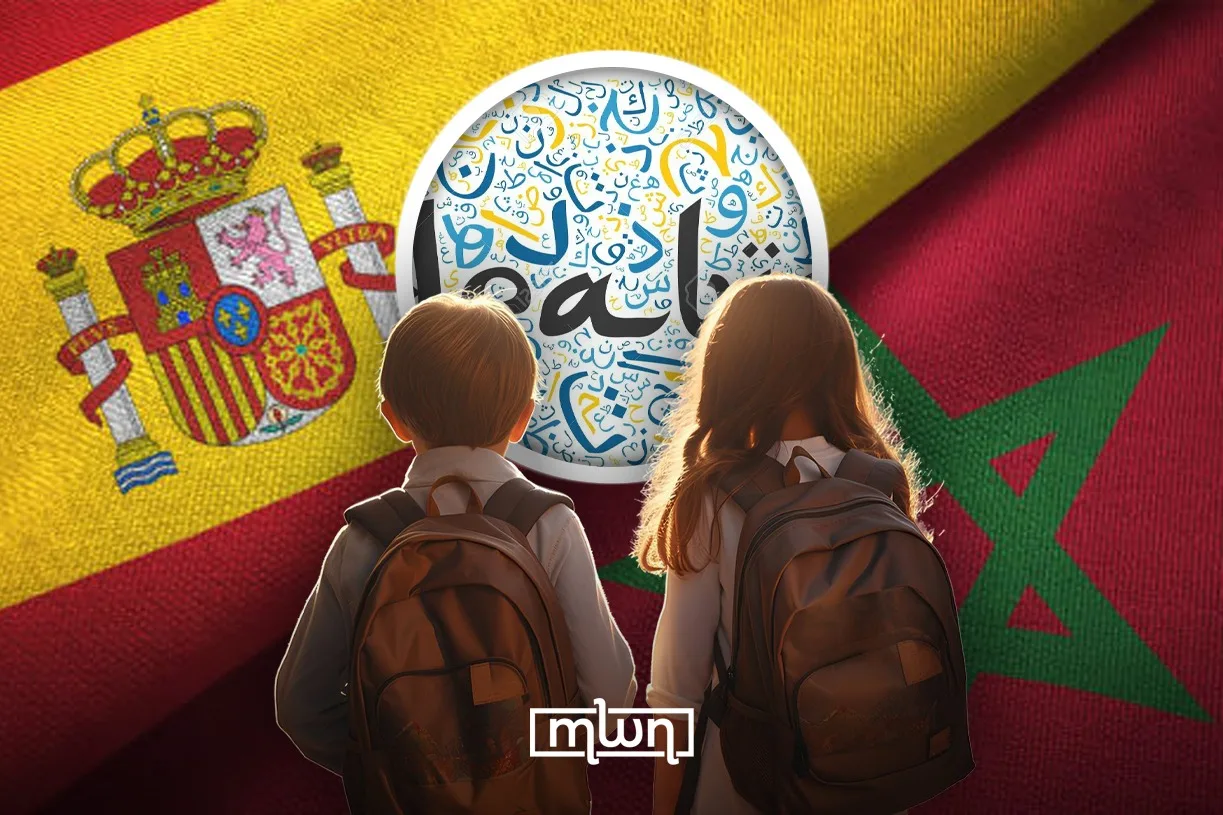
Rabat — The Community of Madrid will reportedly end its participation in the Arabic Language and Moroccan Culture Teaching Program starting in the 2025/26 school year.
Spanish news sources reported that the regional government cited a lack of guarantees for proper functioning as the main reason for the decision.
The Ministry of Education, Science, and Universities announced the measure on Thursday, affecting more than 1,400 students across 70 Madrid schools.
Authorities have reportedly detected “serious malfunctions” in recent years that make continuing the program impossible.
This decision breaks a bilateral agreement Spain and Morocco signed in 1985, potentially ending nearly four decades of cooperation in cultural education.
Madrid officials point to several problems with the program’s management. The ministry says it lacks transparency and proper institutional control over teacher selection and content development.
The program operates under the Spanish Ministry of Education in collaboration with the Moroccan Embassy. Morocco directly selects and sends Moroccan officials to teach in Spanish schools, which Madrid authorities find problematic.
“We don’t have visibility or participation in the teacher selection process,” Spanish news outlet El Faro de Ceuta reported the Madrid Ministry of Education as saying, adding that officials also question whether Morocco properly evaluates teachers’ pedagogical training, Spanish language skills, or teaching programs.
The regional government says it cannot verify if teachers receive adequate pedagogical and didactic training or if authorities check their Spanish proficiency before assigning them to schools.
Program structure and participation
Madrid offers the program only as an extracurricular activity outside compulsory school hours. The 2024/25 academic year saw 1,434 Madrid students participate in the program.
Other regions show higher participation rates. Catalonia leads with 2,151 students, followed by Andalusia with 1,810 participants. The program currently operates in twelve autonomous communities across Spain.
The initiative targets children from Moroccan families living in Spain. It aims to preserve their cultural heritage, promote bilingualism, and support sociocultural integration.
Most schools nationwide choose to offer the program outside regular school hours, though the bilateral agreement allows integration into compulsory curricula.
Political background and opposition
Madrid officials insist that political pressure did not influence their decision, despite repeated calls from the Vox party, known for its hostility to Morocco, to eliminate the program. In April, Vox submitted a non-legislative motion to the Madrid Assembly demanding the program’s removal.
Más Madrid and PSOE rejected the proposal, while the Popular Party (PP) abstained from voting. The PP avoided supporting complete elimination but expressed concerns about “structural deficiencies” in the program.
The PP demanded greater regional oversight and suggested that Madrid administration teachers should handle instruction instead of Moroccan officials.
The party even proposed an amendment warning that Madrid would withdraw if authorities did not correct identified problems.