 Join on WhatsApp
 Join on Telegram
Marrakech – Panama has unequivocally declared Morocco’s sovereignty over its southern provinces in the Western Sahara, marking a principled U-turn in the Latin American country’s position on the artificially prolonged dispute.
This breakthrough follows Panama’s decision to sever diplomatic relations with the self-proclaimed “Sahrawi Arab Democratic Republic” (SADR), a paper entity manipulated by the Polisario Front and propped up by Algeria’s military regime.
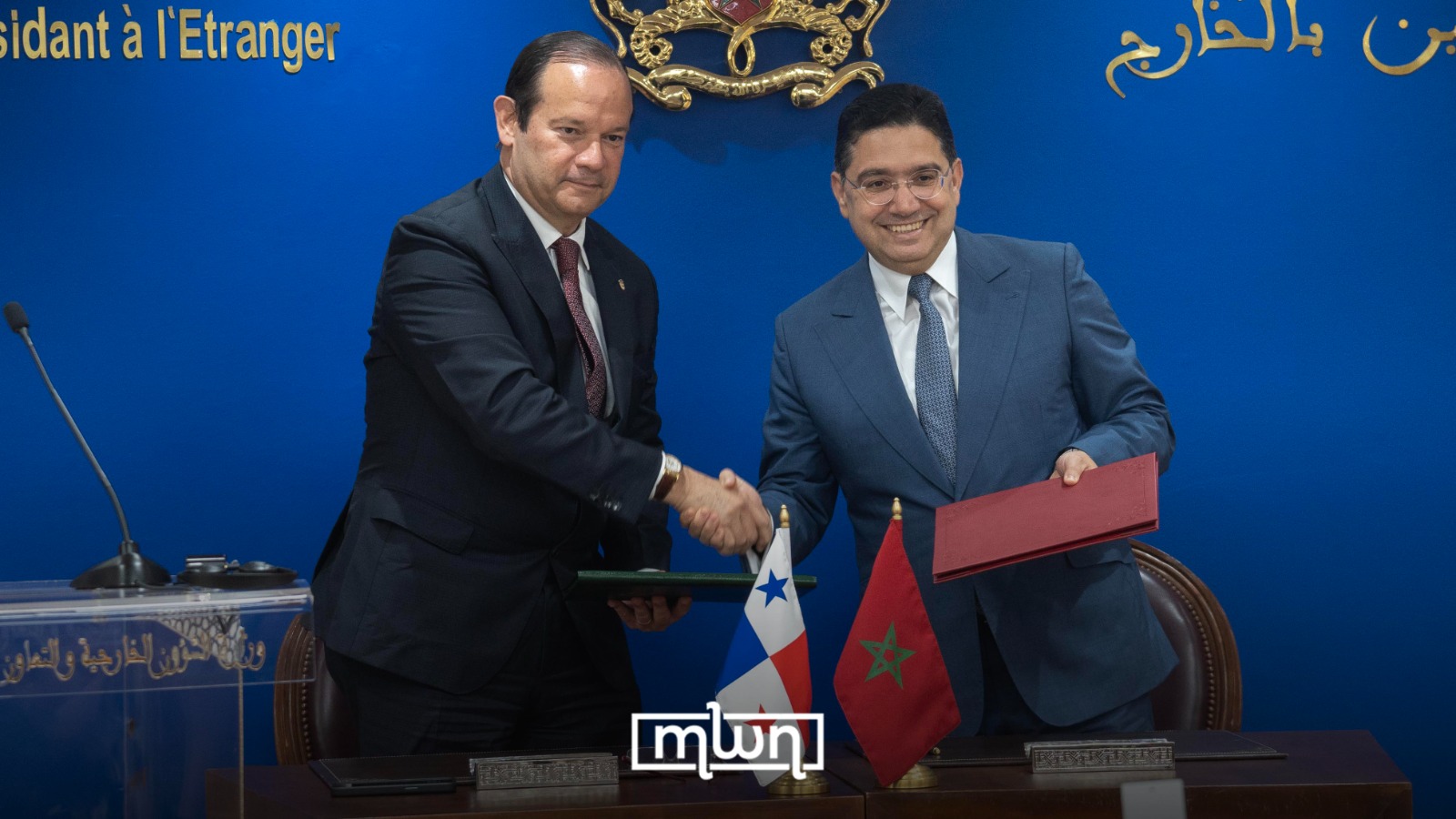
Panamanian Foreign Minister Javier Eduardo Martinez-Acha Vasquez delivered a powerful televised statement commemorating the 26th anniversary of King Mohammed VI’s accession to the throne.
“The Republic of Panama has reiterated its support for the autonomy proposal for the provinces of the Moroccan Sahara,” he asserted. The Moroccan plan is “considered by the international community as the only credible, realistic and applicable option to resolve this dispute.”
Evolution of Panama’s position
The shift in Panama’s stance has followed a clear progression over recent months.
On November 21, 2024, Panama’s Foreign Ministry slammed the door on diplomatic relations with the self-styled “SADR,” stressing the decision aligned with the country’s commitment to constructive foreign policy and support for UN-led resolution efforts.
Following this announcement, King Mohammed VI sent a message to Panamanian President Jose Raul Mulino Quintero, expressing gratitude for the “wise decision” regarding “Morocco’s primary national cause.” The monarch declared that “this highly significant decision strengthens Morocco’s legitimate rights” and “aligns with international legality.”
On November 27, 2024, during a video conference with Moroccan Foreign Minister Nasser Bourita, Martinez-Acha Vasquez “reiterated the sovereign decision of the Government of Panama to suspend diplomatic relations” with the self-proclaimed “SADR.”
In a high-level meeting, the two foreign ministers vowed to revitalize bilateral cooperation, citing a joint commitment to South-South partnership. The discussions led to an agreement to strengthen legal ties and resume political consultations between their foreign ministries.
Panama’s diplomatic realignment accelerated with the appointment of Isbeth L. Queil Murcia as Ambassador to Morocco in January, cementing bilateral ties.
The seasoned diplomat, who previously served as Director General of Foreign Policy and Deputy Representative to the United Nations for Panama, presented her credentials to Bourita in Rabat.
The evolution culminated on June 16, when the Joint Declaration from Martinez-Acha Vasquez’s working visit to Rabat proclaimed: “the Republic of Panama reaffirms its support for the Moroccan autonomy plan… considering it as the most serious, credible and realistic basis for progress towards a lasting agreement on the territorial dispute over the Sahara.”
Beyond the Sahara dispute, both countries pledged to promote the exchange of expertise across multiple sectors, particularly green development, energy transition, agriculture, food security, fisheries, and tourism.
During this visit, the Panamanian foreign minister also delivered a written message to King Mohammed VI from President Mulino, reflecting “the will of the Heads of State of both countries to strengthen the positive momentum in Morocco-Panama relations and to elevate them to broader horizons of cooperation.”
Strategic importance
Panama’s position wields exceptional influence as the country currently serves as a non-permanent member of the UN Security Council (2025-2026).
According to Morocco’s state news agency, “Panama’s voice will actively contribute to finding a definitive solution to the regional dispute over the Moroccan Sahara, within the framework set by the latest UN Security Council resolution.”
This decision obliterates what little remained of the Polisario Front’s credibility, delivering a knockout blow that shatters its fabricated narrative and leaves it exposed, discredited, and gasping for relevance on the international stage.
It marks the political suffocation of the separatist militia – cornered, diplomatically isolated, morally bankrupt, and strategically defeated. Stripped of legitimacy and abandoned by the international community, the Polisario Front now finds itself in freefall, its delusions of statehood crushed, and its descent into total geopolitical irrelevance accelerating.
One by one, its pillars of support are collapsing, as the move dismantles its narrative brick by brick, erasing what little standing it had left on the global stage. Panama was historically the first Latin American country to recognize the self-proclaimed SADR in 1980 and hosted its first claimed embassy in the region.
Panama now aligns with over 100 countries backing Morocco’s Autonomy Plan as the sole viable political solution to end this artificially prolonged dispute, including 20 European Union member states.
Tellingly, 70% of UN Security Council member states now demand resolution of this dispute within the framework of Moroccan sovereignty and based on the Autonomy Plan presented by Rabat in 2007.
This seismic shift in Panama’s position mirrors the surging international momentum behind Morocco’s territorial integrity and the collapsing relevance of the cold war-era separatist agenda championed by Algeria’s military regime, which continues to funnel logistical, financial, and military support to the Polisario Front despite mounting domestic crises.