

Read on app Read on app
✕
Prayer Times
  • Morocco
  • Lifestyle
  • Western Sahara
  • Login
Morocco World News
  • Home
  • Culture
  • Politics
  • Society
  • Economy
  • Opinion
  • Education
  • Sustainability
  • Tech
  • Sport
  • GITEX 2026
No Result
View All Result
Morocco World News
  • Home
  • Culture
  • Politics
  • Society
  • Economy
  • Opinion
  • Education
  • Sustainability
  • Tech
  • Sport
  • GITEX 2026
No Result
View All Result
Morocco World News

Home > Education > On Being Sane in Insane Places: Inside Rosenhan’s Groundbreaking Experiment

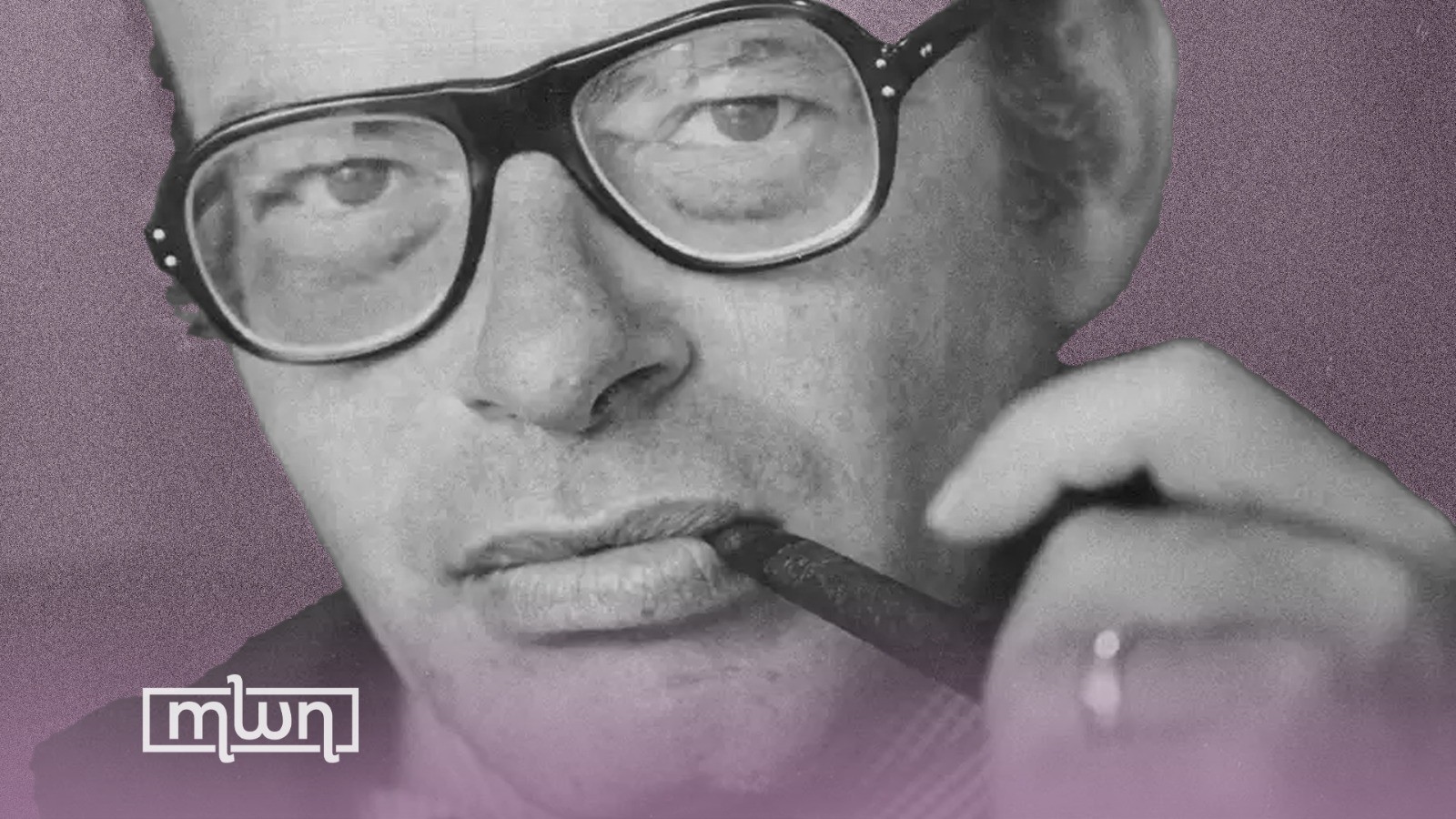
On Being Sane in Insane Places: Inside Rosenhan’s Groundbreaking Experiment

In 1972, Rosenhan, a psychologist at Stanford University, with a penchant for shaking up the status quo, embarked on a daring experiment to assess the effectiveness of psychiatric medicine in treating mental illnesses.

Majda BouzaroitabyMajda Bouzaroita
Jan, 27, 2024
0 0
A A
On Being Sane in Insane Places: Inside Rosenhan’s Groundbreaking Experiment

On Being Sane in Insane Places: Inside Rosenhan's Groundbreaking Experiment

Follow the latest news from Morocco World News

Join on WhatsApp Join on Telegram

Rabat – In 1972, Rosenhan, a psychologist at Stanford University, with a penchant for shaking up the status quo, embarked on a daring experiment to assess the effectiveness of psychiatric medicine in treating mental illnesses.


Rosenhan and his seven friends, all doctors, a diverse crew of completely mentally healthy individuals, were armed with nothing but a fake symptom and a sense of adventure.


They entered the halls of psychiatric wards, eager to decode the enigmas of psychiatric diagnosis and expose the flaws in the system.


Their objective was to infiltrate the system, seamlessly blending in, and see just how “sane” they can appear.


Their strategy was simple yet audacious. Each member of the group presented themselves at multiple hospitals in five states throughout the United States, claiming to hear voices that echoed a hollow “thud” or whispered “empty.” 


Normality’s porous borders


Once admitted, they shed their façade, behaving as they normally would, awaiting discharge under the guise of being “cured.”


From schizophrenia to bipolar disorder, the experts couldn’t see the forest for the trees, diagnosing them left and right with all manner of mental maladies. 


Yet, despite their best efforts to blend in with the institutional backdrop, none were detected as imposters.


Even when they informed the doctors that they felt “fine” after supposedly receiving treatment and medication, specialists maintained that they needed more therapy,


The boundaries between sanity and insanity were not as sharp as society believed when this harsh truth became apparent.


After all, who’s to say what’s “normal” anyway?


In an interview with the BBC, Rosenhan revealed his astonishment, stating that he believed he would be allowed to leave the hospital anytime he wanted. Being “normal,” he said, he didn’t expect to be in the hospital for two months.


Rosenhan’s findings profoundly challenged the tenets of diagnostic procedures, sending shockwaves across the psychiatric industry.


The study highlighted the possible repercussions of mislabeling individuals based just on cursory observations and revealed the vulnerability of subjective evaluations in mental health assessments.


It was a wake-up call for a field whose foundation was the idea of distinguishing between sanity and insanity.


Beyond its academic significance, “Being Sane in Insane Places” serves as a thought-provoking commentary on the human experience. 


The sensitive nature of our perceptions is shown by Rosenhan’s research, which shows how easy it is to make judgments and categorize people without seeing the complicated interplay of the human psyche.


Tags: mental healthPsychological TraumaPsychologyrosenhanStanford University
TweetShareShareSendShareScan

Recent News

Mexico face South Africa tonight at the historic Estadio Azteca in Mexico City in the opening match of the 2026 FIFA World Cup.

Mexico vs South Africa: How & When to Watch The 2026 World Cup Opener

June 11, 2026
Morocco Expands National Appliance Manufacturing with $10 Million MANAR Project

Morocco Expands National Appliance Manufacturing with $10 Million MANAR Project

June 11, 2026
World Cup 2026; Slovenia’s Slavko Vincic to Referee Morocco vs Brazil Match

World Cup 2026: Slovenia’s Slavko Vincic to Referee Morocco vs Brazil Match

June 11, 2026
Moroccan Minister of Transport and Logistics Abdessamad Kayouh and Portuguese Minister of Infrastructure and Housing Miguel Pinto Luz.

Morocco, Portugal Sign New Driver’s License Recognition Agreement

June 11, 2026
Aguerd Ruled Out of Morocco’s 2026 World Cup Squad, Marwane Saadane Called Up

Aguerd Ruled Out of Morocco’s 2026 World Cup Squad, Marwane Saadane Called Up

June 11, 2026

USEFUL LINKS

  • About
  • Privacy Policy
  • Contact
  • Careers
  • Terms Of Use
  • Cookies Policy

TOPICS

  • Mawazine 2025
  • Environment
  • Politics
  • Lifestyle
  • Sports
  • Western Sahara

REGIONS

  • International
  • Maghreb
  • Middle East
  • Africa

Download our App


Download the Morocco World News app on Google Play for Android

Download the Morocco World News app on the Apple App Store for iPhone and iPad

Copyright 2026 Morocco World News. All rights reserved. Morocco World News is not responsible for the content of external sites.
Read about our approach to external linking.

Welcome Back!

Login to your account below

Forgotten Password?

Retrieve your password

Please enter your username or email address to reset your password.

Log In
  • Login
No Result
View All Result
  • Home
  • Culture
  • Politics
  • Society
  • Economy
  • Opinion
  • Education
  • Sustainability
  • Tech
  • Sport
  • GITEX 2026

Useful Links

  • Prayer Times

Useful Links:

  • Prayer Times

All Right Reserved © 2025 Morocco World News .

Contact us
Are you sure want to unlock this post?
Unlock left : 0
Are you sure want to cancel subscription?