


 Join on WhatsApp
 Join on Telegram
Marrakech – Two residents of Moroccan origin in Ceuta have officially registered a new political party named “Justice and Development,” a move that has stirred deep unease across political circles due to its resemblance to the names of Islamist political movements in Morocco and Turkiye.
Abdelasis Mohamed Ahmed and Abdeselam Abdelkader Mohamed formally established the party before a notary on Wednesday. The founders have chosen to remain without public photographs for now.
The party aims to “change the politics of localist parties” currently represented in Ceuta. They criticize the performance of existing local parties as “disastrous for Ceuta’s citizens,” specifically targeting MDyC and Ceuta Ya!, which hold assembly representation.
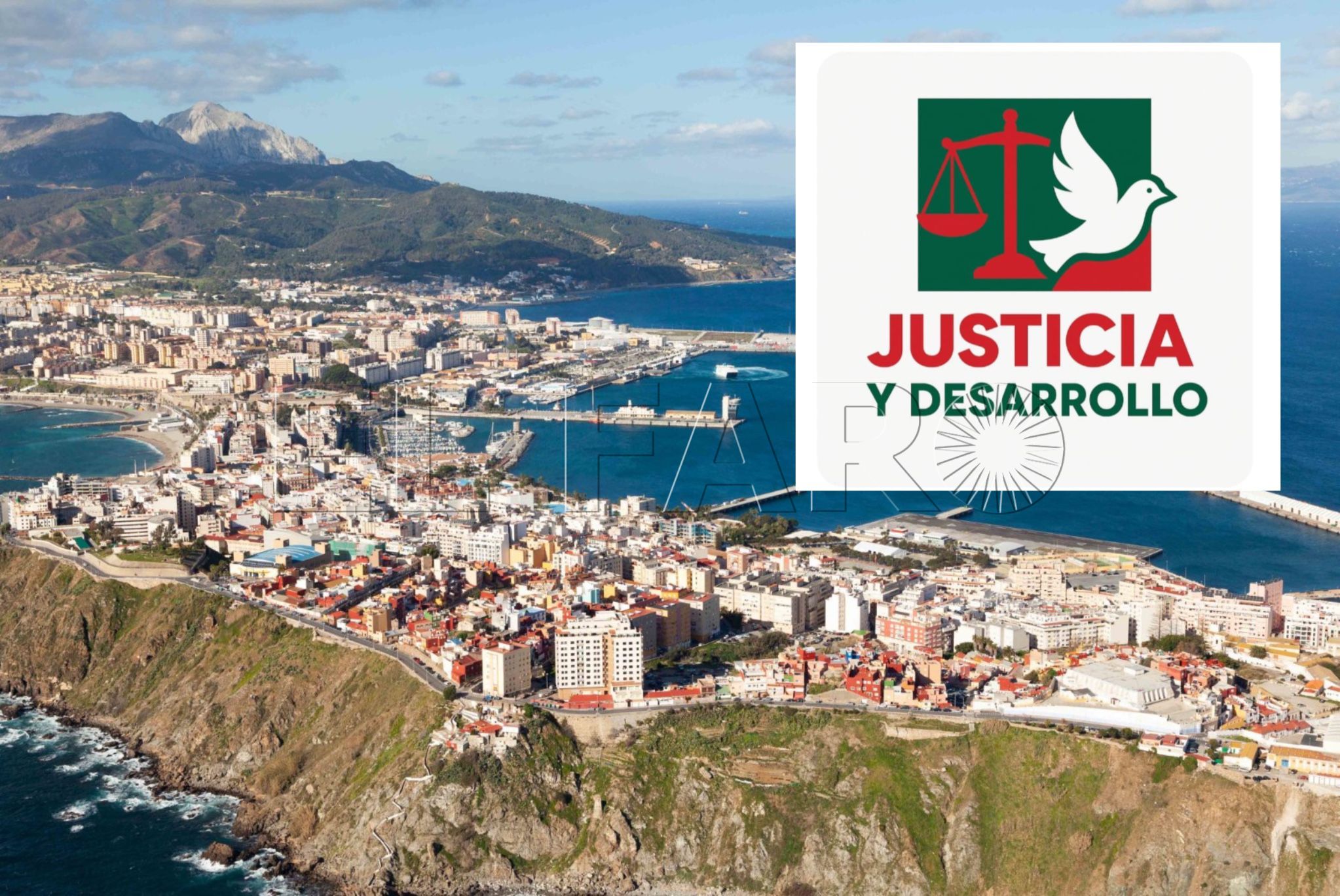
The party’s symbol features a dove of peace and scales of justice, rendered in red and green – colors possibly chosen in reference to Morocco, though no official explanation has been provided.
The founders state that despite the name, this is “a Spanish political party that complies with all constitutional rights.”
The choice of name has drawn attacks from VOX’s vice president for political action and MEP Jorge Buxadé, whose reaction aligns with the party’s longstanding practice of weaponizing Morocco-related narratives for electoral gain.
Buxadé accused the party’s founders – without evidence – of being obscure figures attempting to displace existing pro-Moroccan political forces in the enclave, reinforcing VOX’s habitual framing of Moroccan-linked actors as inherently suspect and politically subversive.
The MEP claimed that “Justice and Development” shares its name with Morocco’s Islamist party, founded in 1998, which governed Morocco from 2011 to 2021. The VOX representative also asserted the name matches Turkish President Erdogan’s Islamist party, established in 2001.
The anti-immigration politician went on to label Morocco’s Justice and Development Party (PJD) as a form of “institutional Islamism,” alleging its alignment with the country’s monarchy and state apparatus. He further claimed that Turkiye’s model had systematically undermined secularism, portraying it as a vehicle for the normalization and expansion of political Islam.
Buxadé demanded Spanish Armed Forces, security bodies, and intelligence services maintain “active and constant surveillance” of the new formation. The far-right leader portrayed it as a potential instrument of Islamist ideological penetration threatening national sovereignty.
The VOX politician also lashed out at both PSOE and PP governments for allegedly abandoning strategic enclaves like Ceuta, Melilla, and the Canary Islands to “massive immigration and pressure from neighboring countries.”
Nationalist and far-right parties in Spain have long portrayed Morocco as an existential threat to Ceuta, routinely invoking alarmist narratives that frame Rabat’s diplomacy, migration dynamics, and even civic political activity as part of a supposed strategy to reclaim the enclave.
In this discourse, Morocco is frequently depicted as preparing a “new Green March” – not through tanks or troops, but via demographics, economic pressure, and political influence – an argument repeatedly mobilized to stoke fear, securitize coexistence, and transform routine cross-border realities into symbols of territorial siege.
Despite Buxadé’s accusations, the party’s founders insist that their movement operates strictly within Spain’s constitutional and legal framework. Even at this early stage, Ceuta’s political scene is showing signs of agitation, with speculation and informal maneuvering intensifying as the party readies a phased public rollout.
The timing – coinciding with the customary release of political surveys – has further fueled questions about the party’s electoral ambitions and its potential to reshape Ceuta’s established political balance.


