
Rabat – As climate pressure, energy transition, and new technologies reshape industrial policy around the world, Morocco is betting more heavily on sustainable mobility as both an economic opportunity and a long-term development strategy.
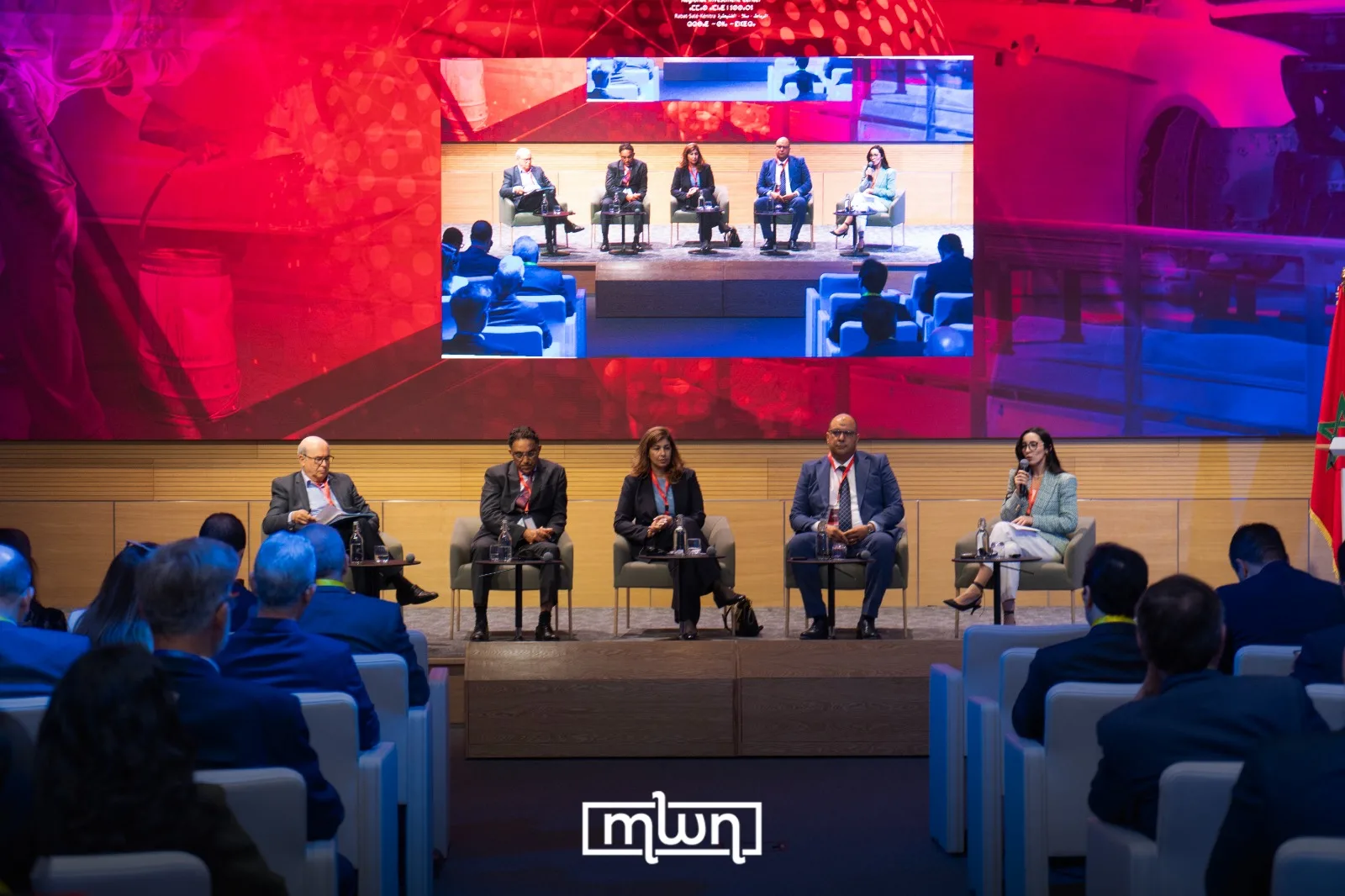
That message was at the center of “RSK Connect: Territorial Dynamics and Investment Opportunities in Sustainable Mobility,” a conference held Monday at the Policy Center for the New South (PCNS) in partnership with the Regional Investment Center of Rabat-Sale-Kenitra (CRI-RSK).
The event brought together public officials, industrial leaders, investors, experts, and academics to discuss how the Rabat-Sale-Kenitra region can strengthen its place in Morocco’s industrial future. The program focused on competitiveness, innovation, the shift toward electric mobility, and the region’s ability to attract new investment.
Why Rabat-Sale-Kenitra matters
The Rabat-Sale-Kenitra region is already one of Morocco’s most important industrial areas. Positioned near the capital and connected by major infrastructure, it plays a central role in the country’s logistics, manufacturing, and institutional ecosystem. Organizers presented the region as a space with strong potential not only for production, but also for deeper integration into global industrial value chains.
Ayda Fathi, Director of the Automotive Industry at Morocco’s Ministry of Industry and Trade, said the country’s automotive sector has become one of its strongest economic engines, thanks to long-term industrial policy and state-backed investment.
Speaking to Morocco World News (MWN) on the sidelines of the event, Fathi said Morocco is now “the leader continental and regional in the automotive industry” and described the country as Africa’s top vehicle producer. She said the sector is Morocco’s leading export industry and the country’s largest source of industrial jobs and value added.
Fathi credited the progress to the “vision” of King Mohammed VI, saying a series of industrial strategies have helped turn the sector into a national success story. She also pointed to Morocco’s political stability, economic stability, large-scale infrastructure spending, logistics networks, training efforts, and attention to young people and human capital as key reasons the industry has advanced.
The next phase, Fathi says, is to build on that success by moving further into electric mobility and more sustainable forms of transport. She said the challenge now is to consolidate Morocco’s gains and strengthen its position internationally.
The regional investment center sees the event as part of a broader effort to attract investment to Rabat-Sale-Kenitra and make the region more visible to industrial players.
Mohcine Benjelloun, director of CRI-RSK, said the conference is the first in what he hopes will become an annual platform dedicated to promoting investment in the region. He said the goal is to support new projects and raise the profile of Rabat-Sale-Kenitra as a business destination.
In his remarks to MWN, Benjelloun said the opening edition focused on transportation, automotive industry, and sustainable mobility because these sectors are central to the region’s growth. He added that Rabat-Sale-Kénitra is now the second region in Morocco in terms of economic activity and already holds a strong position in industry.
The conference’s first panel examined competitiveness as a driver of sovereignty in Morocco’s automotive industry. Among the speakers was Mounir Kharbouch, chief executive officer of the Stellantis Kenitra plant, who stressed that Morocco’s strength does not come only from lower costs, but from broader industrial performance.
Kharbouch said the Kenitra plant has benefited from what he described as the commitment and “fighting spirit” of local teams who helped prove the site could compete with other industrial hubs. He said competitiveness today should be understood in a wider sense, including quality, training, flexibility, and speed of adaptation.
Human capital at the center
For Kharbouch, one of Morocco’s biggest advantages is its ability to stay agile in a fast-changing industrial environment. He said the plant has managed to keep production moving even during difficult conditions, including recent bad weather, because local teams found practical solutions quickly. In his view, that kind of flexibility is one of Morocco’s strongest industrial assets.
But he said that preserving that advantage depends, above all, on people. He argued that the sector needs workers who are well-trained, well-educated, disciplined, and able to fit into the value chain over the long term. He said this mindset cannot be built overnight and must be developed over time through a strong industrial culture.
Kharbouch also linked the discussion to industrial sovereignty. He said Morocco has made important progress in local content and the localization of auto parts, but the next challenge is deeper: building local industrial processes rather than relying on imported know-how or equipment.
He said true sovereignty means becoming able to design and build industrial processes in Moroccan factories with full autonomy. The country must go beyond simply assembling parts and start investing earlier in the engineering and process-design stages of production, he noted.
He added that engineering costs often account for a significant share of a product’s final price, which makes early-stage industrial know-how even more important. Since profit margins in the automotive sector are limited, he said, real productivity gains must come from smarter processes, better engineering, and stronger local capabilities rather than only from end-of-line efficiency.
Kharbouch said Moroccan companies have already started moving in that direction, including by producing automated guided vehicles in-house at a lower cost than imported alternatives. Still, he said, cost savings are only part of the story. The bigger goal is to build local expertise and develop new industrial skills that allow Morocco to produce independently and respond faster to market needs.
He warned that local integration must be protected and expanded, especially as competition from new industrial players intensifies. For him, the future of the sector depends on securing those gains over the long term.
Monday’s conference reflected a wider national ambition to link industrial policy with territorial development and to make sustainable mobility a pillar of future growth.