
Benguerir – The applause had barely settled from the opening ceremony when the third edition of the Smart Green City Benguerir-Africa Forum pivoted from pleasantries to provocation.
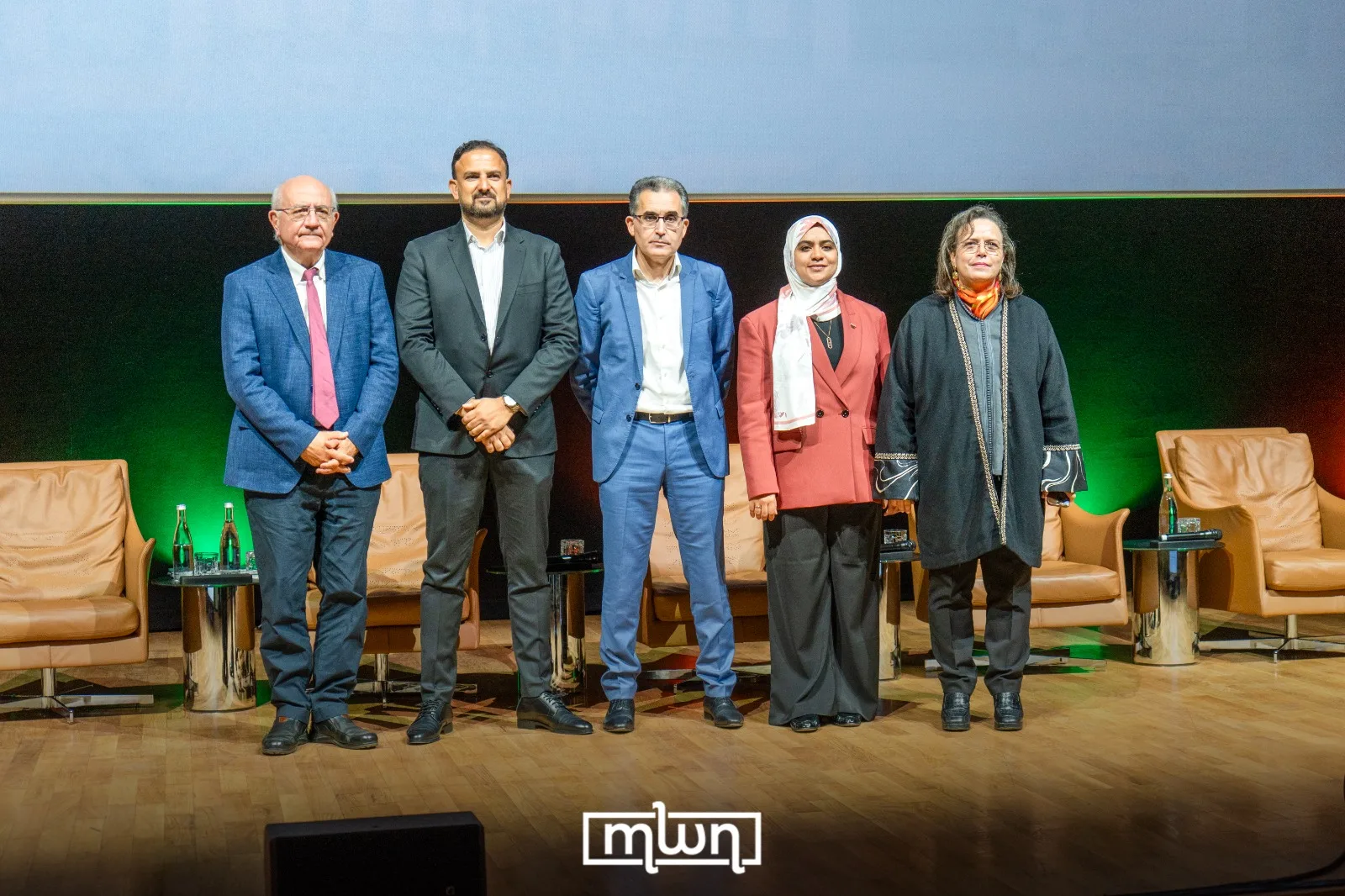
Convened at Mohammed VI Polytechnic University (UM6P) on Tuesday and moderated by Conference Chair Aawatif Hayar, the inaugural keynote session assembled four voices spanning techno-anthropology, semiconductor engineering, industrial systems integration, and live digital-twin deployment – all orbiting a single, disquieting proposition: that the entire smart city edifice rests on a foundation most countries neither own nor control.
No speaker prosecuted that case more surgically than Said Hamdioui, Chair Professor and Head of the Computer Engineering Laboratory at Delft University of Technology, co-founder and CEO of Cognitive-IC, and a scientist consistently ranked among the world’s top two percent most-cited researchers by Stanford University and Elsevier.
Hamdioui dispensed with diplomatic hedging from his opening breath. “There are no smart cities,” he declared, “if you don’t have silicon at home, if you don’t control your chips.” The assertion – delivered to a hall brimming with urban planners, diplomats, and tech executives – reframed the day’s conversation in starkly material terms.
Software models and algorithmic elegance, he contended, amount to ornamentation atop hardware that someone else manufactures, prices, and can withdraw.
The numbers he marshaled were arresting. Training GPT-3, a text-only model, required roughly 10,000 GPUs costing between $30,000 and $70,000 apiece and consumed energy equivalent to what a city of 60,000 inhabitants draws in 24 hours. GPT-4 pushed training costs to $100 million.
The carbon arithmetic proved equally sobering: the training run for GPT-3 alone generated CO₂ emissions comparable to 1,300 cars operating nonstop for two weeks. Scale that to the full constellation of global data centers – consuming an estimated 240 to 340 terawatt-hours annually – and set it against Morocco’s total national electricity consumption of 20 to 40 terawatt-hours per year, and the disproportion becomes visceral.
Hamdioui then turned the blade toward sovereignty. Cloud-dependent architectures, he warned, surrender data custody by design. Latency between distant data centers and local embedded systems can produce catastrophic delays in real-time applications. And hardware purchased from foreign suppliers carries risks most policymakers prefer not to contemplate.
“I always say the only unconditional relationship is between parents and their children. Only that. The rest is all conditional,” he explained. “You may be my friend today, but if interests shift in a different direction, you may become my enemy. Or at least, I may no longer serve you as I used to. So we have to be very, very careful.”
“I can put something in my chip and sell it to you and control it remotely. I can turn it off and on remotely,” he told the audience. “Is that an illusion? No, it’s a reality. I know what I’m talking about.”
Yet the Delft professor refused to let the diagnosis curdle into fatalism. His own laboratory has produced AI chip architectures – designed partly by Moroccan-born researcher Asmae El Arrassi, a graduate of ENSA Morocco – that demonstrate 100- to 1,000-fold improvements in energy efficiency over commercial GPU and TPU solutions. He held up the physical chips before the audience: tangible proof that the engineering is achievable.
Malaysia, he noted, derives 25% of its GDP – roughly $100 billion – from semiconductors, with domestic companies now designing AI chips for national use. Morocco, he argued, possesses the intellectual capital to chart a comparable trajectory, provided semiconductor strategy is treated not as industrial policy but as a pillar of national security.
His parting formulation distilled the session’s animating tension into a single line: “AI is no longer just a software application; it is the millimeter of silicon that defines infrastructure, geopolitics, and national strategy.”
The human architect precedes the machine
Artur Serra Hurtado, techno-anthropologist and former deputy director of Spain’s i2Cat Foundation, approached the podium from the opposite flank – not silicon wafers but the civilizational currents that determine who designs technology and who merely consumes it.
His keynote traced a biographical arc from ethnographic fieldwork inside Carnegie Mellon University’s computer science departments through the creation of Barcelona’s 22@ innovation district to the establishment of the City Lab of Cornellà, the first European citizen laboratory for social and digital innovation.
Serra Hurtado drew a distinction he called existential for countries outside the traditional innovation core. “Europe is a digitalized continent, but it is not yet a digital continent,” he observed. “One thing is to digitalize a society. Another thing is to build a digital society.” Without cultivating the capacity to design – not merely deploy – technology, nations risk a new species of colonialism, perpetually dependent on black boxes engineered elsewhere.
His intellectual anchor was Herbert Simon, the Nobel laureate and Carnegie Mellon polymath whose book The Sciences of the Artificial reframed computer science as a discipline of invention rather than discovery. “Computer scientists think about possibilities – what things can be, not what things are,” Serra Hurtado reflected, tracing a lineage from Simon through Alan Turing to the collaborative ethos he helped embed in Catalonia’s innovation ecosystem. The formula, as he articulated it, is “human, machine, human” – never the reverse.
The Catalan anthropologist closed with an appeal directed squarely at the African university leaders in attendance: the imperative to train generations in the mindset that they can create, not merely adopt. “You can change things. You have the power,” he told the room. “This is the genesis I learned in the United States.”
The operational architecture of intelligent urbanism
Hossam El Shoukry, Honeywell’s Regional Smart Cities Engineering Head, brought two decades of mega-project delivery across the Middle East to bear on a pragmatic question: what does the technology stack of a functioning smart city actually look like? His presentation walked the audience through a four-layer architecture – from field-level sensing devices through IoT platforms and big-data ingestion to application-layer dashboards and digital twins.
El Shoukry grounded abstraction in measurable outcomes: Barcelona’s smart lighting systems cutting energy consumption by 30%, Singapore’s real-time transit data reducing commute times by 15%, and smart water management systems saving 25 to 80 liters per person per day.
He cautioned, however, that technology without organizational transformation is “a supply and distribution project, not a transformation project.” He recounted how his teams embedded with civil defense operators for two weeks simply to understand existing workflows before deploying new systems.
El Shoukry previewed Honeywell’s collaboration with UM6P – a smart campus platform integrating energy optimization, predictive maintenance, and AI-driven diagnostics across the university’s expanding Benguerir infrastructure.
A building that learns: Bouriad’s live digital-twin demo
Sara Bouriad, Lead of Multi-Techniques Services at UM6P, closed the session not with slides but with a live demonstration. The Benguerir campus’s Riad Center – retrofitted with over 5,000 control points and linked to a real-time 3D digital twin built with Akila, Dell, and NVIDIA – appeared on screen in granular detail.
HVAC units reported soufflage temperatures in real time, energy flows were traced from photovoltaic panels to individual floors, and an AI optimizer adjusted set points based on occupancy, exterior conditions, and equipment performance. The pilot has already delivered a 17% reduction in energy consumption – 150,000 kilowatt-hours preserved and MAD 180,000 ($18,000) saved in early 2026 alone.
The Riad Center demo, however, represents only one node in a far more ambitious undertaking. UM6P and Akila are deploying what amounts to the first campus-scale digital twin built on NVIDIA’s Blueprint for smart city AI, spanning 50 buildings across a 55-hectare site that hosts more than 7,000 students.
The platform fuses simulation, real-time video intelligence powered by NVIDIA Metropolis and Cosmos Reason, and semantic data structuring within a continuously updated NVIDIA Omniverse environment – enabling campus operators to query the twin in natural language and receive contextualized, AI-generated insights on everything from occupancy trends to energy deviations. The ambition is to transform the entire Benguerir campus into a living laboratory whose innovations can be replicated at the scale of African cities.
The demonstration served as a fitting coda: the silicon Hamdioui championed, the human capacity Serra Hurtado invoked, and the systems architecture El Shoukry detailed, all converging in a single building that watches, learns, and adapts – on Moroccan soil.
Read also: UM6P’s Smart Green City Forum Charts a New Course for AI-Driven Urbanism in Africa