
 Join on WhatsApp
 Join on Telegram
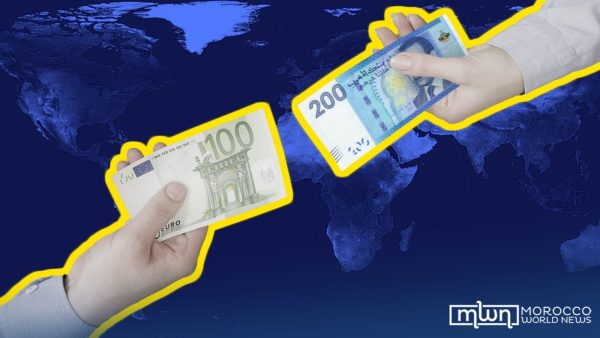
Rabat – Morocco’s financial system has become more inclusive and accessible in recent years, but challenges persist, particularly regarding money transfers from Moroccans living abroad, according to Abderrahim Bouazza, Director General of Bank Al-Maghrib, Morocco’s central bank.
Speaking Thursday in Rabat during an event marking the International Day of Family Remittances, Bouazza said stricter regulations imposed on Moroccan banks’ subsidiaries operating within the European Union have become one of the main challenges facing the country’s remittance system.
He stressed that Moroccan authorities are closely monitoring the issue and are in contact with their European counterparts.
Bouazza recalled the progress Morocco has made in expanding financial inclusion. In addition to traditional banks, the country’s financial ecosystem now includes payment and money transfer institutions, microfinance organizations, crowdfunding platforms, and a mature public loan guarantee system.
Despite this progress, he noted that gaps still exist between rural and urban areas, men and women, and young people and older adults. Morocco’s National Financial Inclusion Strategy, which the Ministry of Economy and Finance and Bank Al-Maghrib jointly oversee, aims to reduce these disparities.
Morocco has introduced a series of institutional, regulatory, and banking reforms over the past decades to improve access to financial services for remittance recipients and strengthen the contribution of Moroccans living abroad to the country’s economic development, Bouazza added.
He added that Bank Al-Maghrib has worked with various stakeholders to improve the efficiency and transparency of money transfer services, expand digital access to financial services, and reduce transfer costs. One key measure was ending exclusivity agreements international operators previously imposed on local partners.
Read also: Morocco’s Diaspora Remittances Reach Over $12.23 Billion in November 2025
However, Bouazza said remittances are still rarely directed toward entrepreneurship or productive investment, especially in rural areas.
Citing data from Morocco’s High Commission for Planning (HCP), he said that 87% of remittances are used for everyday household consumption. He attributed the limited investment of these funds to administrative complexity, business environment challenges, and a lack of incentives.
Bouazza noted that Morocco is implementing several reforms designed to boost private investment, create jobs, and reduce social and regional inequalities. These efforts include the Investment Charter, support measures for very small businesses, and the expansion of social protection programs.
He said these initiatives create more favorable conditions for channeling remittances from Moroccans abroad into productive investments, particularly in rural communities.
“These reforms are not isolated projects,” Bouazza said. “They are part of a unified vision aimed at building a more inclusive, resilient economy capable of creating opportunities.”
Remittances play a major role in Morocco’s economy. The country regularly ranks among the largest recipients of remittance flows in Africa, with transfers from Moroccans living abroad serving as a key source of foreign currency and support for thousands of households across the country.
In addition, Morocco ranks among the top recipients of remittances in the Middle East and North Africa region, with inflows reaching a record $11.8 billion in 2023, according to the World Bank.
The International Day of Family Remittances is observed every year on June 16. It was established by the United Nations General Assembly to recognize the important contribution migrant workers and diaspora communities make to sustainable development worldwide.