


Paradigms help understand political, economic, social, and cultural phenomena. They are good tools that academics and students use to make complex facts look simple. However, if paradigms aim apparently to be scientific, unbiased, and clearly objective, they sometimes make the phenomenon blurry, if not deliberately misleading. In other words, they can be ideologically or lucratively motivated, depending on who might be the sponsors.
Over the last fifty years, paradigms applied to the study of the international system and foreign policy have been a source of interesting debates. Scholars have been challenging each other on the ground that might be relevant at first sight but not at all in the end. This has ignited both the decision-makers and students’ interests in times of stiff trouble.
Yet, the common denominator of many paradigms is that they have been conceived in the West, mainly in American and British universities and think tanks. Fair enough, because these institutions have the required means dedicated to research as well as capital resources that meet the job description.
Context matters
Nonetheless, what strikes neutral observers is that there is a clear-cut distinction between paradigms designed to understand phenomena in advanced countries and those dealing with developing countries. Specifically speaking, the distinction is obvious when it comes to Arab and Islamic states and less so with respect to developed countries. This has been observed over the last thirty years, coinciding with gradual shifts in the international system, the incoherence that resulted from the collapse of the Soviet Union, and the erosion of state actors power in the subsystems labeled as politically critical or potentially dangerous for international stability.
The last paradigm highlighted recently is “the Swing States” in the global south. Yet before debating the accuracy of this paradigm, let us remind some interesting ones that have been applied to developing countries over the last fifty years.
Paradigms such as “the Dependency Theory” have impacted research and policy planning circles in a few developing countries such as Egypt, Iraq, Syria, and Algeria. They have been politically and ideologically used to oppose what has been called Arab progressive regimes versus conservative and feudal regimes, mainly monarchical. The “Conflict Triangle Paradigm” has also highlighted structural violence as a source of endemic conflicts and an obstacle to peace, despite the fact that it addresses violence worldwide.
These paradigms have given room to leaders lacking seeds of legitimacy to make their cases and impose their views with respect to the East and West’s struggle for hegemony in the international systems. Despite the fact that both arrayed regimes were facing dire situations at home, they made their diplomatic choices to fit both the dependency theory and the structural violence theory.
The Cold War orphans searching for new umbrellas
Yet both paradigms lost some of their credentials as the international system entered a new phase of complex dependence and transnational international relations.. In the heat of the Cold War, the emergence of regional security complexes, as a challenging response to the hegemonic influence of a few major actors, imposed new ways of using or shaping new paradigms. It has become obvious that key answers to international crises and regional instability have to be dealt with on the secondary terrain of confrontation: the issue-areas in developing countries.
One of the interesting paradigms looked at was “the pivotal states” in regional subsystems championed in the mid-1990s. A few developing states have been selected in order to support the claim that security and stability issues in regional subsystems could be perfectly handled if the power to monitor them was given to such selected state actors. In Africa, Nigeria, South Africa, Egypt, and Algeria were designated as potential candidates. India, Indonesia, and Brazil have been chosen, respectively, in Asia and Latin America.
The paradigm shift coincided with the end of the Cold War and the collapse of the Soviet Union. This paradigm was championed in the same line as the “Coming Anarchy” paradigm or the “Creative Chaos” paradigm, which was fully praised at its inception. The “New Generation of Arab Leaders’ Paradigm,” aimed at shaping the new geopolitics in the Middle East, was also highlighted. The aim was to sort out ways and means of resolving the Arab and Israeli conflict, which would give full security to Israel and convince its Arab neighbors to accept its existence.
Looking carefully at all these paradigms, it comes quite blindingly obvious that “the Global South,” as a unity of analysis or as an independent variable, is used without its main actors being associated with the elaboration of these paradigms. And if, by chance, some scholars from developing countries are involved in the research, they are those who basically work and live in Western countries. This is good enough to sustain the argument and make amends if something wrong happens. This does not rule out that the scholars concerned have good credentials, which helped them be selected in the first place.
However, what might still remain suspicious is the fact that paradigms are shaped by the same mindsets: they all imply that what happens in the global south must stay there, while the Western democracies have the sacrosanct duty to observe the new emerging middle powers. This observation leads us to question the new paradigm called “the Swing States” in the international system.
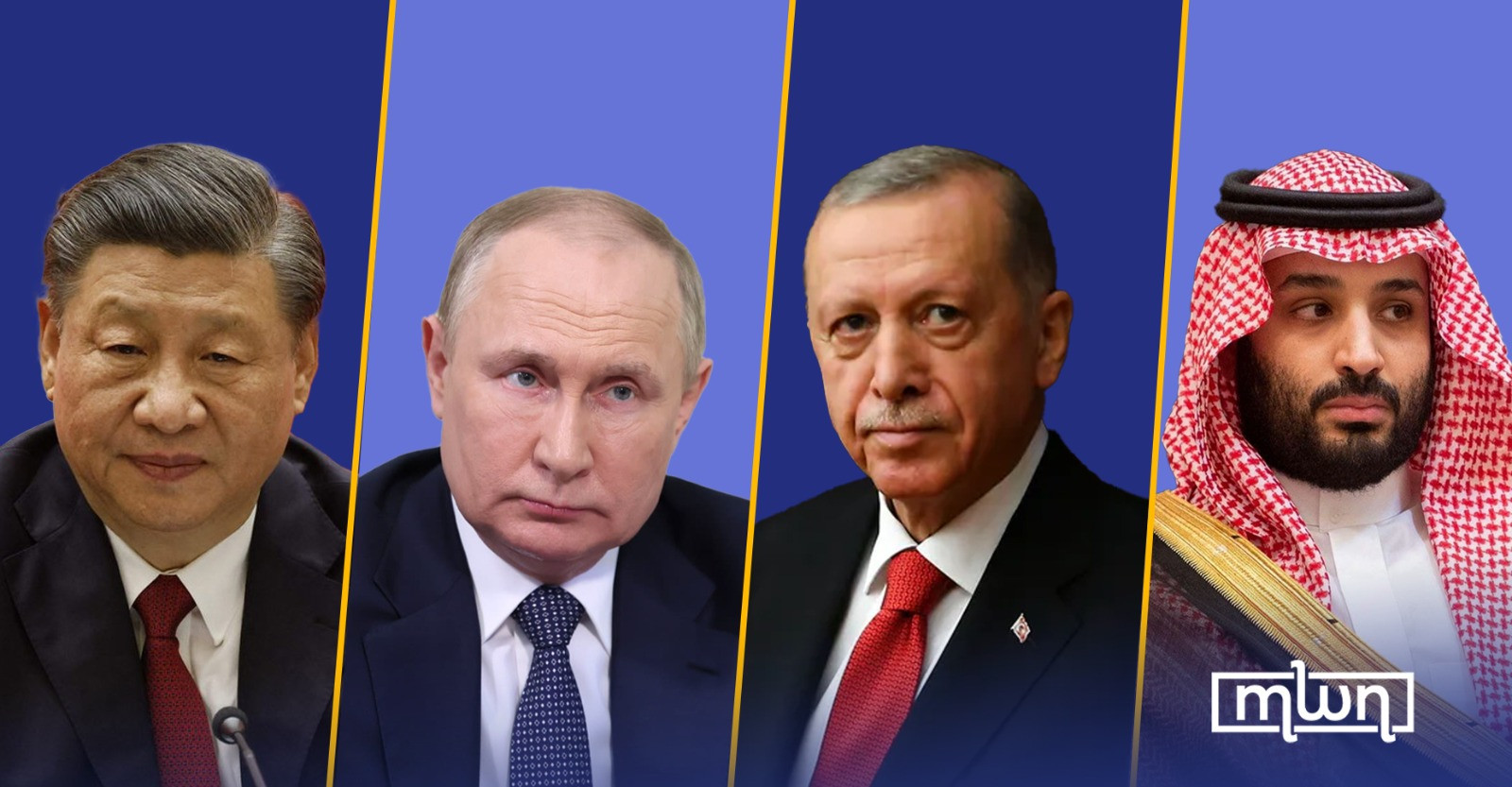
The paradigm of “Swing States” has been used in many articles since it was included in a study by Jared Cohen, commissioned by Goldman Sachs and published on May 15, 2023, as well as by Cliff Kupchan, President of Eurasia Group, on June 8, 2023. Yet both authors have used it from different perspectives. Jared highlighted the paradigm’s economic dimension, while Kupchan emphasized its multi-faced impact on the geopolitical global chessboard.
For instance, Cohen argues that these countries have “a competitive advantage in a critical aspect of global supply chains; they are suited for nearshoring, offshoring, and friendshoring; they enjoy the benefits of growing economies; they have leaders with global visions; and they have a disproportionate amount of capital and willingness to deploy it around the world.”
Regardless of the accuracy of Swing States’ paradigm, it has raised serious questions about the void witnessed recently in theoretical analysis that approached the transitional phase in the international system. It tries to empower a few state actors who find themselves involved in a new struggle for power either regionally or internationally.
Read also: Democracy: One Coin, Multiple Faces, the West, and the Rest
Not all these actors are willing to play a role, such as being part of a new international division of labor that would exclude some major European state actors. They are reluctant to take sides in a troubled relationship between the United States and Russia or twist towards China, no matter what. By the same token, it is well known that, for the time being, China has no clear intention to engage seriously in strategic parity with the United States.
One of the other factors that makes the Swing States’ paradigm less convincing from a theoretical standpoint is that it shares substantial similarities with the “Pivotal States” paradigm. For one thing, it singularizes four actors out of the ones selected in the latter: Brazil, Indonesia, and South Africa. Furthermore, if in Cohen’s study the focus is on the economic and financial dimensions, it is conceived more broadly in Kupchan’s rationale. The two other countries added to the Swing States’ paradigm are Turkey and Saudi Arabia.
The criteria both paradigms base their arguments on are misleading in the sense that power in the strategic international system cannot be measured by only economic or military determinants. The state actors selected and labeled as “Middle Emerging Powers” are so far able to play the role of security monitors in their inner strategic area. They might have their say on specific issues that they are involved in, but they cannot go beyond a set of rules already put on trucks. In so doing, they cannot be but second-hand security or intermittent peace brokers in their respective troubled zones of influence.
It goes without saying that both Swing States and Pivotal States’ paradigms are included in a category of states that are requested to play complex roles in an international fragmented system while their compasses target different directions. Some of these actors are members of the BRICS, which is another facet of the strategic coin that they cannot play easily or at will. Indeed, it is amazing how the BRICs are seen as new-fashioned organizations, to the point that 28 countries have recently expressed their willingness to join them. Many of these countries or actors could be described as “Cold War orphans,””and “Forgotten Best Seconds.”
However, while the BRICS prioritize the economic dimension, even though the security dimension is implied anyway in their perceptions, the Swing States’ promoters miss the hierarchical dimension of the game, which can jeopardize relations between them at the strategic global level.
If the aim of the BRICS is to promote a new economic division of labor in the international system and compete with, if not defeat, the United States, the Swing States cannot be seen as a new presentation of a new non-aligned movement or a serious contender for relative hegemonic primacy in the balance of power between the United States and China.
It would be a big mistake to think that Russia’s role in the strategic struggle for hegemony in the international system is over. By the same token, it would be a wrong assessment to give China a leading role in the new shifts the international system is undergoing. It is too early to assume that actors included in the Swing States’ paradigm would embark on such an adventure that would weaken them before they actually start directing their own compass.
Unilateral Dependence and Asymmetrical Relationships
What would be our reading of the above-mentioned paradigms? First, they all deal with developing countries as objects and rarely as subjects of the international system. They perceive them as case studies — no more, no less.
Secondly, even though they hypothetically give developing countries some leverage, they frame them as passive actors in issue-areas that draw international actors’ interest. Furthermore, they classify them as perfect candidates for the fight between major state actors in secondary theaters of confrontation.
Thirdly, they assume that developing countries do not have their own agendas and might behave accordingly.
Fourthly, they perceive developing countries’ responses to multiple challenges in the international system as unproductive reactions (or poor retaliation) and never as a means to make their own case.
Fifthly, they neglect the internal dimension and the cultural and historical determinants that shape developing countries’ behavior in different geopolitical games. These are very important variables that help understand their political and diplomatic behavior.
Sixth, the new Swing States’ paradigm underestimates the resilient fight of some Western European countries, such as the United Kingdom and Germany. The latter, even though they are losing ground to new emerging actors, have not given up their role and power, neither in Europe nor in their zones of influence worldwide.
Seventh, the Swing States are perceived as a new incarnation of the Non-Aligned Movement, and at the same time, they are believed to have no option but to choose between the United States and China.
Eighth, the Swing States’ paradigm does not give much attention to the endemic conflicts that the selected countries are facing with lasting border issues and growing hegemonic temptations in regions to which they belong. India is trapped in the Kashmir conflict, opposing New Delhi to both Islamabad and Beijing.
South Africa is faced with unprecedented ethnic problems and social ostracism, not to mention its loss of hegemonic influence in its geopolitical neighborhood and in Africa at large.
Turkey experiences the dilemma of being both an Oriental and Western country. It is lost in some sort of Gulliver’s Troubles while it does not rule out that it could reinvent its Golden Age to challenge both the West and the East.
Saudi Arabia has not yet resolved its existential dilemma in its fight against Iran, as well as its inability to shape a new regional security complex to challenge both Tehran and Ankara.
Ninth, if it is true that the Swing States are free of ideological affinity, they are obviously not free of their political culture, which goes back in history and gives them hope to evolve according to their beliefs and perceptions of the world.
Tenth, the Swing States’ paradigm makes no mention of Israel or Iran as potential candidates. The same variables put forward to sustain the paradigm are found in these two influential regional actors, unless they are believed to be more than middle-power actors.
Eleventh, there is some sort of theoretical incoherence in the “Swing States” paradigm when authors compare these new geopolitical states with the BRICS’ states. The latter are perceived as a counterweight to Western dominance, while the former is perceived as “a single swing,” leading ineluctably to choosing between the United States and China.
Twelfth, the Swing States’ paradigm confirms the way developing countries are dealt with and reminds of Martin Kramer’s warning about Oriental studies in the universities and think tanks in the United States of America twenty years ago.
Morocco’s strategic vision
But what of Morocco? Would it be accurate to include it in the Swing States’ paradigm, as some like Noureddine Sefiani have suggested ? It seems that it is not the right timing or context. Those among journalists and Moroccan analysts who jumped to such a conclusion have missed the rationale behind the move.
If both Cohen and Kupchan share the view that the Six Swing States have leaders who have visions, Morocco also has its own vision. This vision goes back to the early 1970s, when Morocco realized that Non-Alignment choice did not exclude “independent engagement” when its national interest was at stake.
It proved it in dealing with its neighbors in North Africa and Europe. It did the same with respect to endemic issues in the Middle East. The way Morocco handled the endemic conflict between Saudi Arabia, the United Arab Emirates, Bahrain, Egypt, and Qatar in 2013 and 2017, refraining from using the GCC organization to advance its own agenda as well as the way it is handling its relations with the European Union and certain traditional partners are good illustrations of such a vision.
Over the last twenty years or so, Morocco’s strategic vision has been to address complex internal issues while conducting a smart foreign policy to regain its influence in regions it had been forced to retreat from. Morocco has come a long way now, but it keeps its mind clear: no competition based on the classical balance of power, but rather a competition with an inclusive dimension and participatory dividends.
That is something that only a few of its former allies understand. They have always thought that cooperating with them meant accepting asymmetry, unilateral dependence, and mimetic, if not canned, diplomatic behavior. In the past, when the “New Generation of Arab Leaders’ Paradigm” was promoted, it did not lure Morocco’s leadership or stop the country’s political elite from pursuing their first goal, which was to promote a new political culture based on true self and not on false self.
Progress has been made. In this respect, it is worth debunking the idea that tangible renewable assets are permanent sources of power in developing countries. I refer to phosphate, which some claim to be a weapon that Morocco might use to gain more influence in the international system in the future. It has been proven in the past that strategic resources could be sources of endemic trouble leading to foreign involvement, including military intervention.
In this respect, there is no need for Morocco to claim to be a “Swing State,” under whatever pretext or incentive put forward. It would be a big mistake to be driven away by the sirens of diversion (or deception, to use a military concept), which would distract Morocco from steadily working for what is best for its own interests.
This includes diversifying its partners and staying away from new theoretical configurations such as the Multi-Alignment New System in progress. It would be equally safe to refrain from operating a sudden switch toward a swinging configuration of states that theoretically would underpin its claim to increase its bargaining power on a regional or international strategic chessboard.




