
Marrakech – Morocco has urged the UN refugee agency to place long-term solutions at the center of its spending for the Tindouf camps, arguing that decades of humanitarian funding have entrenched what Rabat describes as a costly “maintenance regime” rather than helping resolve the situation or bringing it closer to an end.
Morocco’s Permanent Representative to the UN Office in Geneva, Omar Zniber, made the appeal on Wednesday during a meeting of the Standing Committee of the UN High Commissioner for Refugees (UNHCR).
Zniber argued that growing humanitarian needs and increasingly constrained budgets should push the agency beyond what he characterized as a costly system of maintaining the status quo.
“Since 2021, nearly $90 million has been mobilized by UNHCR in the Tindouf camps in Algeria,” the Moroccan diplomat noted, contending that nutritional conditions and economic self-reliance had nevertheless deteriorated while access to employment remained severely restricted.
For Zniber, the figures point not to a sustainable protection model but to a prolonged system of dependency, one in which, as he put it, “spending has risen while hope has declined.”
Tindouf has become a quasi-state under Polisario control and Algerian protection, where Sahrawis are trapped, dissent is repressed, abuses have been alleged, and humanitarian aid has faced accusations of diversion, entrenching dependency instead of offering people a future.
Recent UN assessments independently document serious deterioration in living conditions. The UN’s 2026-2027 Sahrawi Refugee Response Plan uses a planning figure of approximately 173,600 people across five camps near Tindouf.
The UN report found that 64% of surveyed households were moderately or severely food insecure, while 77% of the population depended on external assistance to meet basic food needs. Funding shortages led to a 30% reduction in food rations between November 2023 and February 2025.
Preliminary nutrition findings cited in the same plan put global acute malnutrition among children aged six to 59 months at around 14%, with stunting at 31%. Anemia affected more than 65% of women and children under five. A 2025 report by the UN Secretary-General similarly recorded acute malnutrition rising from 10.7% in 2022 to 13.6% in 2025.
From humanitarian assistance to permanent solutions
Zniber urged UNHCR to devote greater attention to what refugee policy formally calls “durable solutions”: voluntary repatriation in safety and dignity, integration in the host country, or resettlement in a third country.
Those are the three traditional routes recognized by UNHCR for bringing refugee status and long-term dependence on humanitarian assistance to an end.
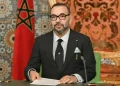
Morocco maintains that all three should be made available on an individual and voluntary basis. Zniber linked the first option to King Mohammed VI’s appeal for people living in the Tindouf camps to return to Morocco.
In his October 31, 2025 address, the King called on people in the camps to “reunite with their families” and participate in managing local affairs under Morocco’s Autonomy Plan. He also affirmed that returnees would enjoy the same rights as other Moroccan citizens.
The humanitarian debate now unfolds against a markedly different diplomatic backdrop following the adoption of UN Security Council Resolution 2797 in October 2025.
Resolution 2797 marked a significant diplomatic gain for Morocco, extending MINURSO’s mandate until October 31, 2026 while placing the Moroccan Autonomy Plan at the center of the UN-led negotiating framework.
Rather than treating Rabat’s proposal as merely one option among many, the Security Council called for negotiations on the basis of the autonomy initiative, reinforcing the growing international view that a realistic and workable settlement must emerge from that framework.
The vote further exposed Algeria’s increasingly difficult diplomatic position. Eleven Security Council members backed the resolution, three abstained, and Algeria chose not to participate in the vote. Algiers and the separatist Polisario Front subsequently sought to minimize the text’s significance, insisting that it neither recognizes Moroccan sovereignty over Western Sahara nor formally excludes other outcomes.
Yet those objections do little to alter the political direction established by the Council: Morocco’s autonomy proposal now occupies a substantially more prominent place in the UN process, while the decades-old approach championed by Algeria and the Polisario faces an increasingly unfavorable diplomatic landscape.
Funding pressure deepens
The dispute over long-term solutions is becoming more urgent as humanitarian agencies struggle to sustain basic assistance.
The UN Secretary-General reported that by the end of July 2025, only about $36.16 million of nearly $104 million requested under the 2024-2025 Sahrawi Refugee Response Plan had been received. UNHCR’s own 2025 assessment later recorded delays and reductions in health, nutrition, hygiene, shelter and livelihood programs because of funding constraints.
The population figure itself also remains part of the broader debate. The current UN response plan explains that its 173,600-person planning estimate derives from a 2018 inter-agency study rather than an individual census, while UNHCR has historically referred to the 90,000 most vulnerable refugees for some assistance planning purposes.
Zniber urged UNHCR to begin examining all three durable solutions with the states concerned and willing international partners before the agency’s next Executive Committee session.
For Morocco, the question is no longer simply how much money donors pour into Tindouf, but whether that funding is helping end one of the world’s longest-running humanitarian and political limbos or merely financing its indefinite perpetuation.
Zniber explained that this concern is increasingly shared by major donor states, including some of UNHCR’s largest contributors, which he said are now “ready to finance what resolves rather than what endures.”
In Rabat’s view, that distinction goes to the heart of the problem: humanitarian assistance cannot become a permanent substitute for a political and human solution, nor should international funding be used to sustain a status quo that has kept generations in the camps without a durable exit.
The argument also places mounting pressure on Algeria, as the host country, to move beyond managing permanence in Tindouf and engage seriously with solutions that would allow individuals to leave prolonged dependency behind.
“The objective of halving protracted situations by 2035 is first and foremost a budgetary objective,” Zniber concluded, arguing that the direction of every dollar would determine whether international funding continues managing the crisis or begins contributing to its resolution.
Read also: Necropolitics in the Desert: Tindouf Camps and the Suspension of Life