


Major events are usually discussed through stadiums, transport, tourism and global visibility. Yet the security test begins long before the opening ceremony. As Abu Dhabi hosts the 15th United Nations Congress on Crime Prevention and Criminal Justice, Morocco has a timely reason to pay attention to the Congress’s emphasis on prevention, cooperation, and responsible technology.
Running from 26 September to 1 October, the six-day UN gathering brings around 5,000 participants from more than 97 countries. Its themes include resilient societies, better use of data and evidence, international cooperation and responsible technology.
As Morocco prepares for the 2030 World Cup alongside Spain and Portugal, these are not distant justice-policy questions for the North African kingdom. They are operational questions about how a city anticipates risk while remaining open and welcoming.
A mega-event concentrates normal urban systems. Transport becomes denser, digital payments increase, temporary workers and contractors multiply, visitors depend on unfamiliar services and public attention creates opportunities for fraud, theft, cybercrime and organised exploitation. The objective cannot be to turn the host city into a fortress. It is to make the city better at noticing when normal activity is becoming abnormal.
This is where adopting the control-room mindset can be useful, essential even. A control room does not succeed because it watches everything. It succeeds because it knows which signals matter, how to verify them and who has authority to act. For a major event, that means connecting transport, venue security, emergency services, cyber teams, hotels, telecoms and law enforcement through predefined escalation pathways.
Combining smart security and human-centred hospitality
Artificial intelligence can help identify anomalies across these systems, but the technology must be kept in its proper role. A risk pattern is not proof. A flagged transaction is not guilt. A behavioural anomaly is not permission for intrusive action. Human review and legal thresholds must remain visible, especially when millions of ordinary visitors are moving through the same systems.
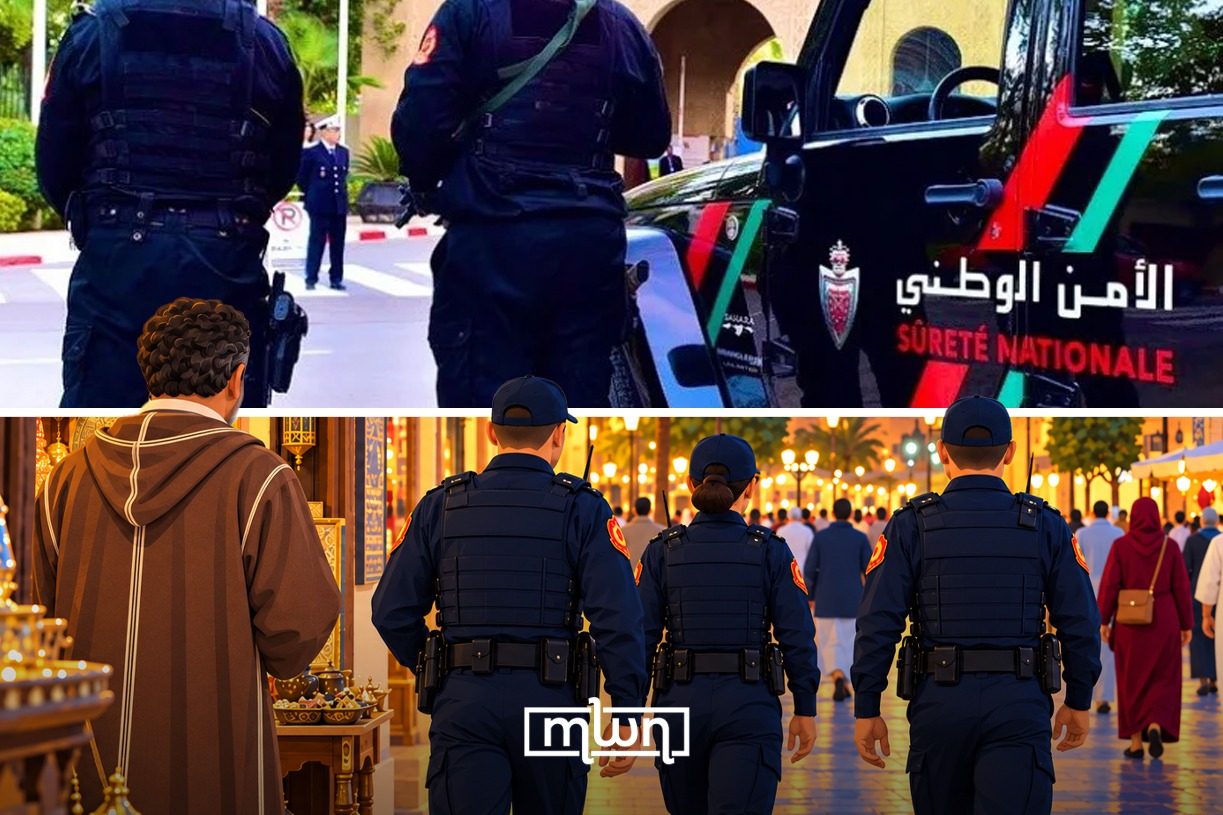
Morocco’s challenge is therefore not to choose between smart security and human-centred hospitality. The stronger model combines them. Technology should reduce the time needed to understand a situation while institutional design protects proportionality and accountability.
The international dimension is equally important. The 2030 World Cup will be a three-country event. Threat information may emerge in one country and require action in another. A fraud network may target visitors across borders. A cyber incident may affect a shared supplier. Coordination arrangements must therefore be tested before the tournament, not improvised during it.
Scenario exercises should ask uncomfortable questions. What happens when two agencies interpret the same alert differently? Who owns a threat that begins online and becomes physical? How quickly can verified information move between Morocco, Spain and Portugal? What is the fallback when a digital platform is unavailable? Which decisions require a human override even when automated systems are confident?
These questions are evidence of preparedness, not weakness. Resilient systems are built by exposing uncertainty before real pressure arrives.
The Abu Dhabi Congress can provide a useful international framework, but Morocco’s opportunity is to translate that framework into a local operating doctrine by 2030: early warning, shared situational awareness, disciplined escalation, cross-border coordination and clear authority boundaries for technology.
A successful World Cup security model will not be measured by how visible security becomes. It will be measured by how much risk is managed without disrupting the experience that Morocco wants visitors to remember.
Prevention works best when the public barely notices it. And that is exactly why the architecture behind it must be designed with extraordinary care.


