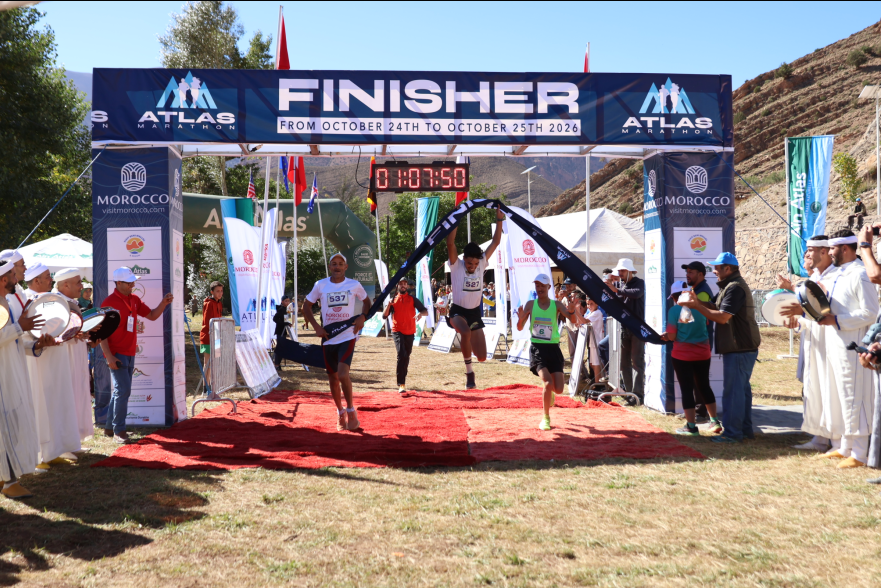
Fez — The mountains around Ait Bougmez became a testing ground for endurance this weekend as the fourth “Atlas Marathon” brought runners into the heart of the Central High Atlas.
The 2026 edition took place from October 23 to 25 around the M’Goun UNESCO Geopark, with competitive distances ranging from 10 kilometers to the full 42-kilometer marathon.
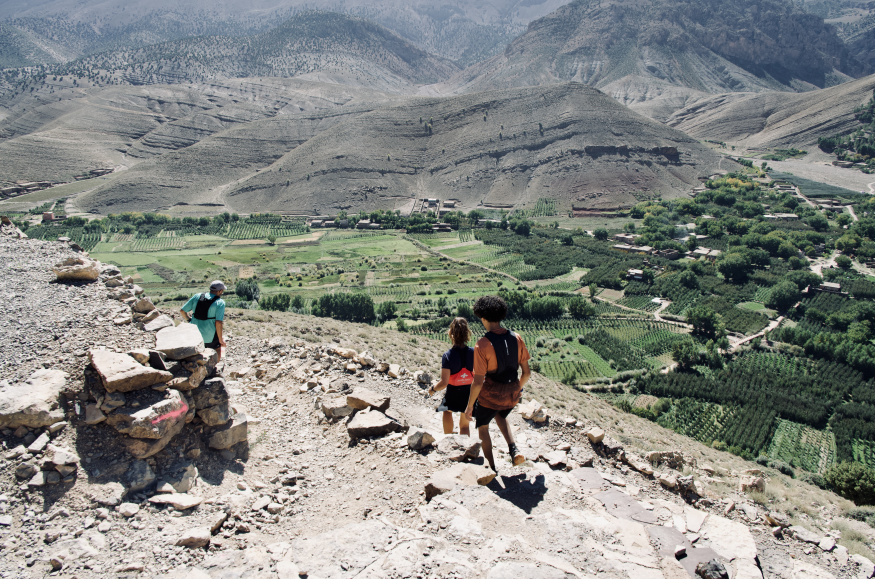
The event combines trail running with an effort to promote Ait Bougmez, often called Morocco’s “Happy Valley,” as a destination for mountain tourism and outdoor sports.
Forty-two kilometers through the Atlas
The headline event took runners over 42 kilometers of demanding mountain terrain with roughly 3,000 meters of elevation gain.
Zaid Ait Malek Oulkis won the men’s marathon in 5 hours, 7 minutes, and 46 seconds. Abdelkarim Id Barka followed in 5:29:22, while Mustapha Akhenchi finished third in 5:39:22.
Aziza Raji claimed the women’s title with a time of 7:50:52, ahead of Maja Dorfschmid and Marthea Roemer.
The weekend also included the 27-kilometer “Atlas Skyrace,” a route designed around steep climbing and high-altitude terrain.
Hamid Id Ouissaden won the men’s race in 3:22:06, only 20 seconds ahead of Mohamed Mouhou. In the women’s category, Julia Perez Yarza crossed the line just one second before Paula Lopez Fores.
A finish decided by one second
Sunday shifted the focus to the 21- and 10-kilometer races.
Abdelhamid Bakhdich won the men’s 21-kilometer event in 1:34:56, while Salvia Santos led the women’s field in 2:28:16.
But one of the weekend’s closest contests came in the men’s 10-kilometer race.
Ahmed Oulkhalfem finished in 41:23, just one second ahead of Abdeouahab Elyoussi. Mohamed Mouhou crossed another second later in 41:25, leaving all three podium finishers separated by just two seconds.
Amina Chardoudi won the women’s 10-kilometer event in 1:00:07.
Organizers also held a two-kilometer mini-trail for children, introducing younger participants to mountain sports and environmental awareness.
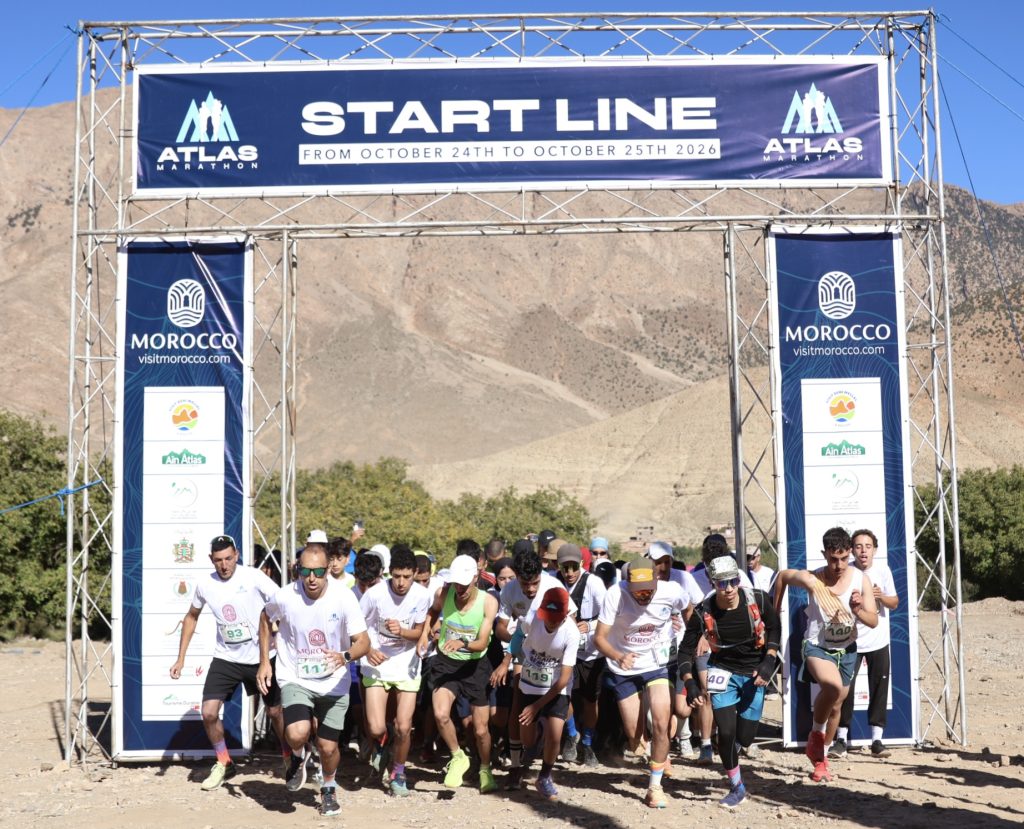
Beyond the results, the “Atlas Marathon” continues to use sport as a way of drawing attention to Aït Bougmez’s landscapes, villages, and outdoor culture.
In a valley surrounded by peaks rising above 3,000 meters, the race turns geography itself into part of the competition and part of the reason runners come.